WILLIAM BAFFIN – deep pink climbing-rambler rose - Svejda
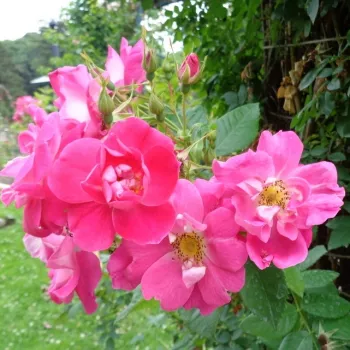
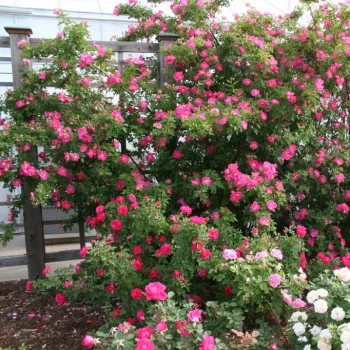
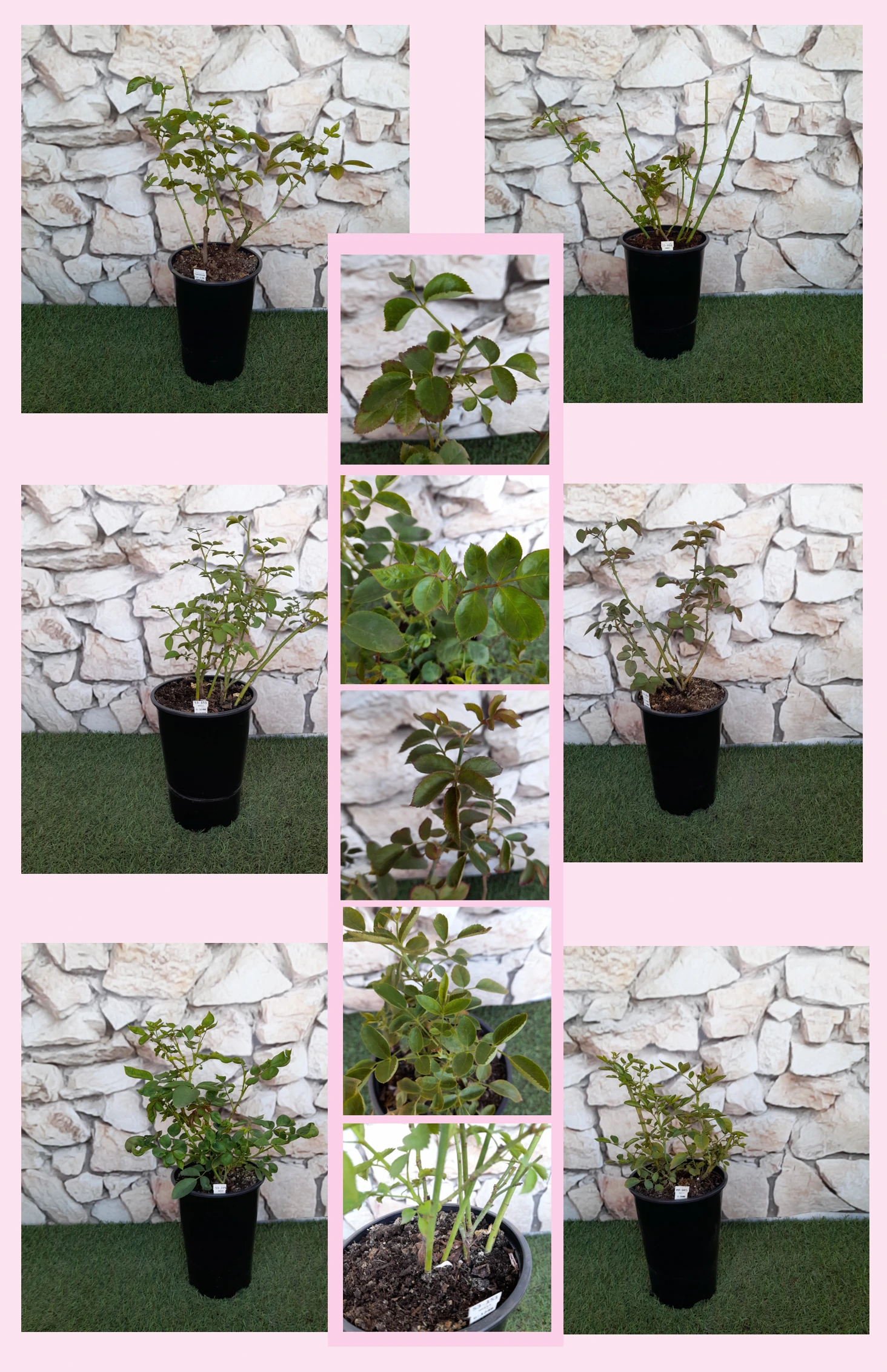
Step out to meet William in your own garden and you will find a dependable climbing partner that shrugs off wind and rain, covering fences and walls in sheets of colour with remarkably little fuss. This Canadian-bred rose feels perfectly at home in our soft Irish light and frequent showers, making it a reassuring choice when summers are short and the weather is changeable with gusty Atlantic breezes and regular downpours. The semi-double blooms open in generous clusters, bringing a gentle, rose-like fragrance and enough open centres to please visiting pollinators. On its own roots it settles in steadily, building a quiet backbone for the garden so you can enjoy long-term structure without complicated pruning. In its first year it concentrates on roots, the second on stronger shoots, and by the third it usually reaches its full ornamental presence as a reliable, romantic climber for cottage and city-front settings.
Usage options
| Target area |
Reasoning |
| Front-garden climber for Dublin terraces |
Ideal where ground space is limited but vertical impact is welcome: it clads railings, arches or house fronts in a deep pink veil, yet copes well with urban wind and rain, suiting beginners, busy town gardeners. |
| Irish cottage-garden pergola |
Long, flexible canes and dense foliage create a soft, romantic canopy over paths or seating, offering a sense of enclosure and privacy while flowering repeatedly through a short summer for country cottage owners. |
| Low-maintenance boundary fence |
Once established, its self-cleaning flowers and medium care needs mean less deadheading, while repeat clusters provide colour with modest pruning, fitting those who dislike fussy roses, time-poor homeowners. |
| Long-term focal point in family gardens |
The own-root form builds a durable framework that recovers well after hard winters or accidental damage, giving stable ornamental value over many years for long-range planners. |
| Pollinator-friendly mixed border |
Semi-double blooms and extended flowering offer regular foraging opportunities, especially when combined with bellflowers or blazing star, suiting wildlife-aware nature lovers. |
| Partial-shade side passage or gable wall |
Tolerates reduced sun on east- or north-east-facing walls, still producing good flushes where many roses sulk, matching the needs of shaded-plot gardeners. |
| Robust coastal or wind-exposed site |
Hardy Canadian breeding helps it cope with strong, damp winds and cool conditions, reassuring those gardening near open countryside and blustery shores, including Atlantic-facing owners. |
| Large container on patio or balcony (40–60 litres) |
In a generous, well-drained pot it brings height and colour to paved spaces, with own-root resilience making repotting and occasional pruning more forgiving for container beginners. |
Styling ideas
- Cottage-arch – Train it over a simple timber or metal arch, underplant with Campanula glomerata and foxgloves for a romantic, “girly” entrance – ideal for nostalgic front-garden dreamers.
- Soft-screen – Run it along a wire-tensioned fence, weaving canes for a living privacy screen with cherry laurel ‘Miki’ behind – suitable for overlooked suburban family gardens.
- Pink-column – Spiral it around a sturdy obelisk in a lawn or gravel circle, paired with low lavender for contrast – perfect for those wanting a single, striking focal point.
- Wild-corner – Let it scramble more loosely through ornamental shrubs, with Liatris spicata ‘Alba’ and hardy geraniums beneath – appealing to wildlife gardeners who like a naturalistic feel.
- Patio-haven – Grow it in a 50-litre half-barrel with a trellis, adding herbs and pots of daisies nearby – for balcony and courtyard owners seeking vertical colour in small spaces.
Technical cultivar profile
| Attribute |
Data |
| Name and registration |
Trade name William Baffin, Hybrid Kordesii climbing rose; ARS exhibition name William Baffin; part of the climbing rose collection; commercial group Rós dreapadó. |
| Origin and breeding |
Bred by Felicitas Svejda at Agriculture and Agri-Food Canada, Ottawa; ‘Kordesii’ × (‘Red Dawn’ × ‘Suzanne’); bred 1974, introduced and registered 1983. |
| Awards and recognition |
Recognised with ARS Classic Shrub Rose awards in multiple years; holds the Earth-Kind North designation from Texas A&M University, underlining proven garden performance. |
| Growth and structural characteristics |
Strong, climbing habit with dense, glossy dark green foliage and many thorns; height about 240–400 cm, spread 140–240 cm, forming an impressive vertical presence on supports. |
| Flower morphology |
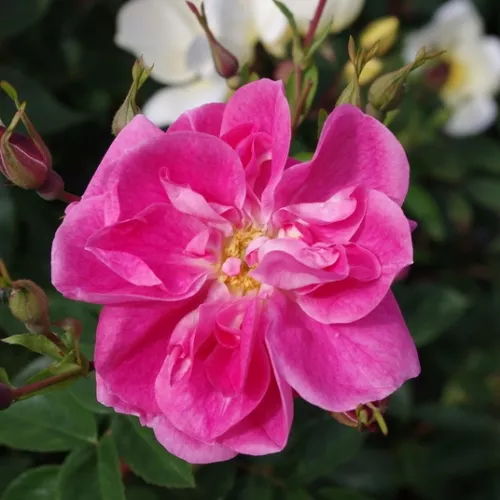
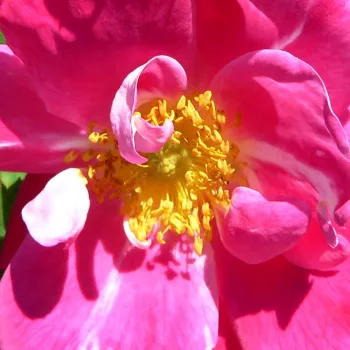
Semi-double, flat blooms with 13–25 petals, 4–7 cm across; produced in generous clusters, self-cleaning well for a tidy appearance; remontant with a notably plentiful second flush. |
| Colour data and phenology |
Deep strawberry to fuchsia pink with purplish tinge, lighter at petal base; colour holds well, paling slightly in strong sun; in cool weather remains richer and more vivid over the season. |
| Fragrance and aroma |
Very light, delicate rose-like scent, often barely perceptible in the open garden; chosen primarily for colour, vigour and hardiness rather than fragrance intensity. |
| Hip characteristics |
Moderately prolific tomato-orange hips, ovoid, around 6–11 mm, adding autumn interest and modest wildlife value without overwhelming the plant’s overall appearance. |
| Resistance and winter hardiness |
Extremely hardy to about –37 to –34 °C (RHS H7, USDA 3b); good black spot resistance, medium for mildew and rust; tolerates heat reasonably but needs watering in prolonged dry spells. |
| Horticultural recommendations |
Best on supports such as fences, pergolas or pillars; spacing 145–300 cm depending on use; suitable for partial shade; medium maintenance, occasional plant protection and regular formative tying. |
WILLIAM BAFFIN offers generous repeat flowering, impressive hardiness and long-lived own-root reliability, making it a thoughtful choice if you want lasting colour with modest care.