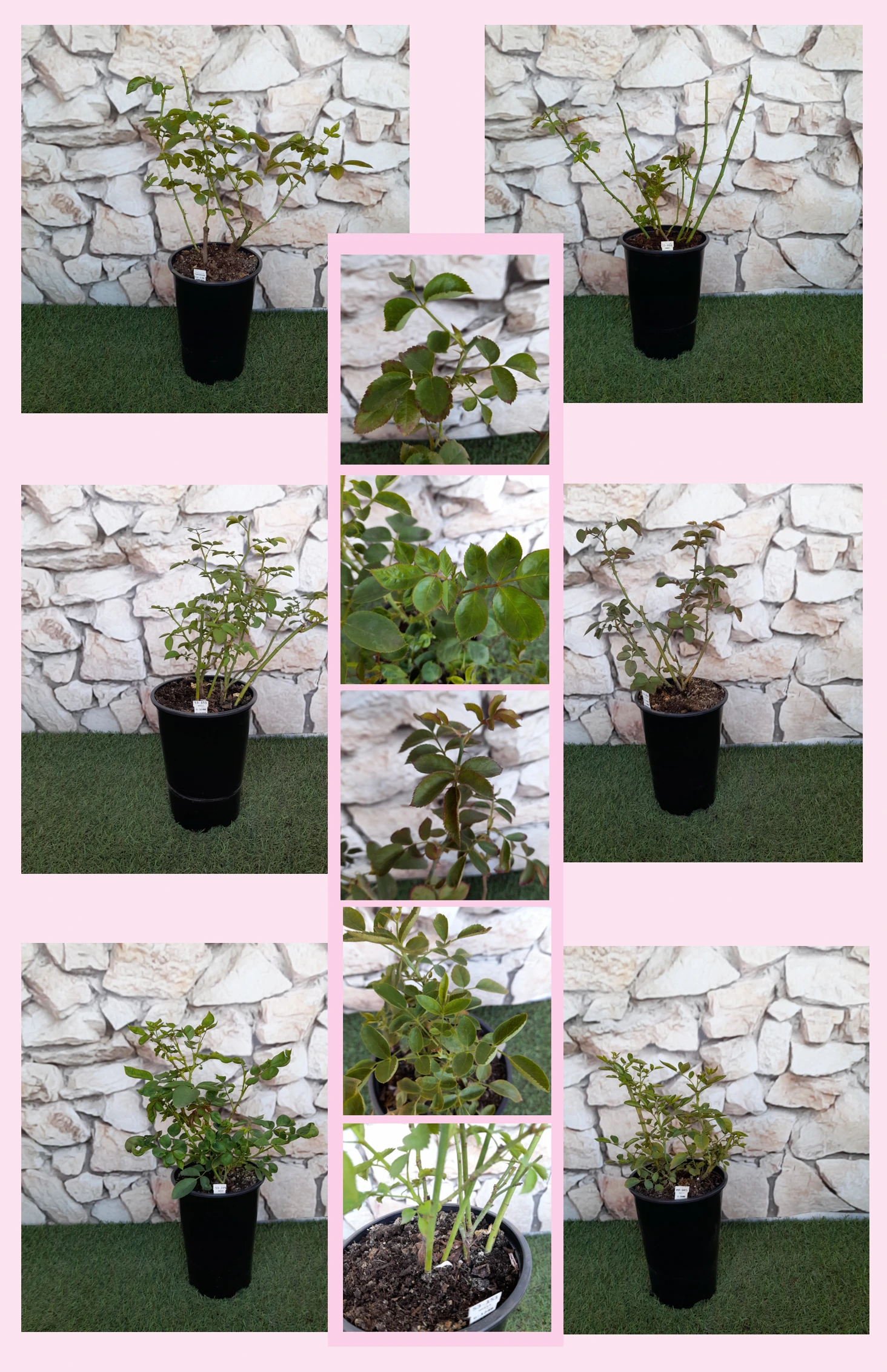
VIOLET HOOD – violet-purple park rose - Lens
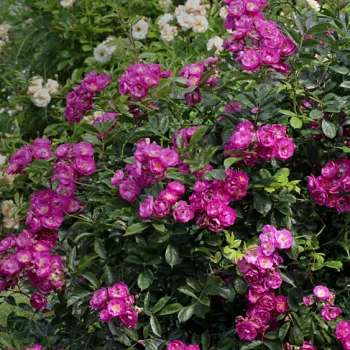
Step outside for a few peaceful minutes and let Violet Hood surround you with a soft, violet haze of bloom: small clustered flowers that repeat in generous waves through our short Irish summers, keeping borders lively even on damp days with rainfall and shifting light. This compact shrub settles in steadily, its own-root form giving quiet, long-term stability and making recovery from wind or pruning straightforward for less-experienced gardeners. In a narrow Dublin front garden or a relaxed cottage border, it holds tidy proportions yet still feels loose and natural, especially when autumn brings strings of neat red hips among dark, slightly glossy foliage. With simple soil preparation, light pruning and a touch of mulch, you can expect a calm, three-year journey from first roots to confident shoots to a full, enduring presence in the garden scene.
Usage options
| Target area | Reasoning |
|---|
| Low hedge along a front path |
Violet Hood’s compact 90–140 cm height and 50–80 cm spread make it ideal for a neat, informal hedge that still feels soft and cottage-like. Repeating purple-lilac clusters create a welcoming approach without demanding intricate pruning, suiting a busy homeowner. |
| Feature shrub in a small family garden |
As a solitary shrub at 100 cm spacing, it offers a strong focal point without overpowering a modest lawn or play space. Own-root growth means a long-lived structure that copes well with routine trimming and occasional neglect, reassuring the beginner gardener. |
| Mixed perennial border with grasses |
The semi-double, richly coloured flowers stand out beautifully against ornamental grasses such as fountain grass, while the dark foliage provides depth through the season. Petals drop cleanly enough to avoid fuss, leaving decorative hips for easy autumn interest. |
| Cottage-style planting with herbs |
Its relaxed, slightly arching habit and continuously forming small clusters suit informal Irish cottage schemes. Pairing with calamint or similar airy herbs echoes its natural charm and supports moderate pollinator activity from the open semi-double blooms, pleasing the nature-oriented buyer. |
| Urban front-garden screening |
In terraced-house front gardens, regular flowering and moderate height offer gentle privacy without shading windows. The shrub’s medium disease resistance is manageable with simple, occasional care, even in humid, built-up areas, giving confidence to city-based gardeners. |
| Container on a patio or roof terrace |
In a 40–50 litre container with good drainage, its compact framework and repeated flushes provide colour close to seating areas. The own-root form handles periodic repotting or harder pruning better than grafted roses, supporting long-term ornamental value in confined spaces. |
| Low-maintenance family border with children |
Moderate thorniness and a tidy, bushy habit make it easier to place near play spaces than very spiky, sprawling shrubs. Once established, routine care is limited to basic feeding and pruning, fitting households that value flowers but have little time for complex gardening. |
| Nature-friendly, quietly structured planting |
Semi-double flowers offer modest nectar access, while plentiful red rose hips extend interest for people and wildlife into autumn, blending well with planting that tolerates soft Atlantic breezes and frequent showers in exposed Irish gardens. |
Styling ideas
- Cottage Ribbon Hedge – Plant a soft, knee-high line along a gravel path, underplanting with calamint and low catmint to blur edges – ideal for cottage-garden lovers seeking gentle structure.
- Violet Accent Pot – Set a single plant in a 50 litre terracotta pot with trailing thyme at the base for colour beside a front door – perfect for busy urban gardeners with limited soil.
- Grassland Glow – Mix Violet Hood with fountain grass and dusky alliums for a shimmering, late-summer border – suited to design-conscious owners who enjoy movement and subtle colour.
- Family-Friendly Screen – Create a loose, chest-height row beside a play lawn, backed by taller shrubs, to mark boundaries without feeling rigid – good for families wanting soft separation, not tall fencing.
- Autumn Hip Display – Combine with New Zealand flax and bronzed perennials so its red hips shine against strong foliage forms – appealing to nature-oriented gardeners who enjoy seasonal detail.
Technical cultivar profile
| Parameter | Data |
|---|
| Name and registration |
Shrub, Hybrid Musk park rose; trade name Violet Hood, exhibition name Violet Hood; collection Park – shrub rose; commercial group Rósra páirce - toir; own-root container-grown form for gardens. |
| Origin and breeding |
Bred by Louis Lens, Belgium, from ‘Robin Hood’ × ‘Baby Faurax’; breeding year 1973, introduced and registered in 1975 by Lens Roses and Pépinières Louis Lens as a landscape and park shrub. |
| Awards and recognition |
Kortrijk International Rose Exhibition Silver Medal (1978), reflecting reliable garden performance and ornamental value in public and private plantings, with enduring popularity among shrub and park rose enthusiasts. |
| Growth and structural characteristics |
Compact shrub 90–140 cm tall, 50–80 cm spread, moderately thorny, with moderately dense, slightly glossy dark green foliage tinged brown; suitable for hedges, borders, and specimen use in small gardens. |
| Flower morphology |
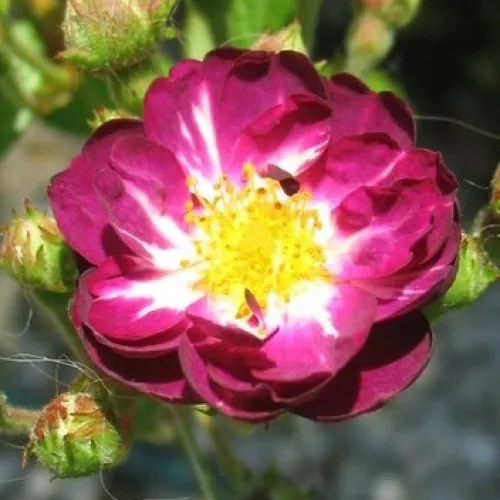
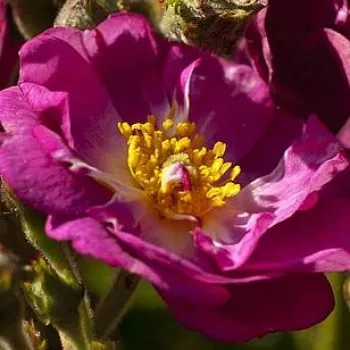
Semi-double, flat, small flowers 1–4 cm across in clusters, 13–25 petals, repeating well with an abundant second flush; petals fall after flowering and the receptacle develops decorative rose hips towards autumn. |
| Colour data and phenology |
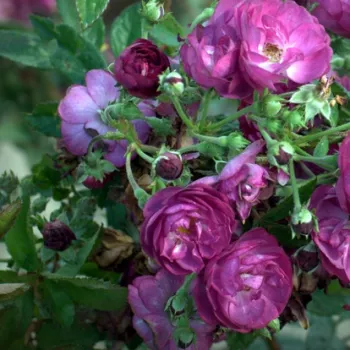
Deep, almost black-purple buds open to intense lavender purple, fading evenly to matte mauve with lighter edges and finally brownish-mauve; ARS colour code m, RHS 79A outer and 79B inner, with good colour retention. |
| Fragrance and aroma |
No noticeable fragrance; selected mainly for colour effect, clustering and garden performance rather than scent, making it a visual rather than olfactory feature in planting schemes and mixed borders. |
| Hip characteristics |
Produces numerous spherical red hips 6–10 mm in diameter in autumn, adding seasonal interest and structure; hips follow after petal fall and can be left on the plant for ornamental winter display. |
| Resistance and winter hardiness |
Hardy to around -21 to -18 °C (H7, USDA 6b, Swedish zone 3); medium resistance to powdery mildew and black spot, good rust resistance; benefits from reasonable air circulation and standard garden hygiene. |
| Horticultural recommendations |
Best in full sun with well-drained but moisture-retentive soil; spacing 60 cm for masses, 50 cm for hedges, 100 cm as solitary; medium maintenance with occasional pest and disease control and light annual pruning. |
Violet Hood offers long-season violet-purple clusters, compact structure and decorative hips on a durable own-root shrub rose; consider it if you want lasting colour with reassuringly modest care needs.