VIOLACEA – deep violet historic Gallica rose
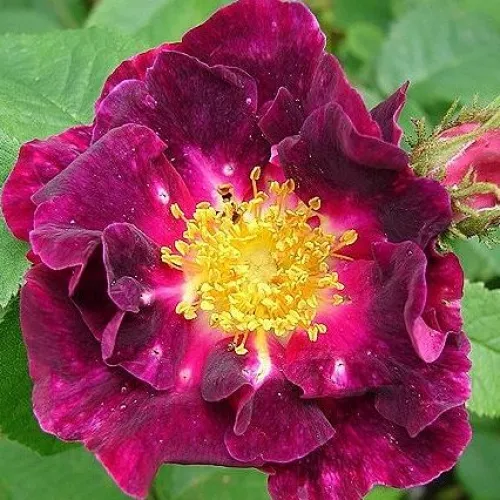
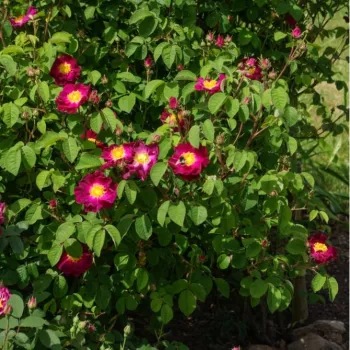
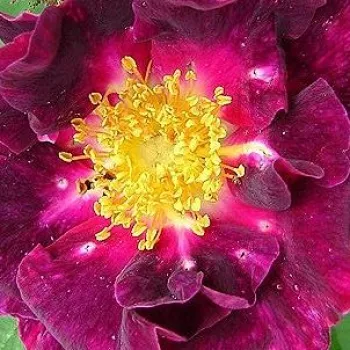
Step out to your front path after rain and meet the moody, violet glow of VIOLACEA: a heritage rose that brings old‑world charm to a small Irish garden with remarkably little fuss. Its once‑a‑year midsummer show is a concentrated burst of colour, with velvety crimson‑purple petals and a pale heart that sits beautifully against cottage‑style greenery. On its own roots it settles in steadily, building a dependable framework for decades of pleasure, ideal where damp, cool summers and frequent showers meet moderate care needs. The medium, berry‑fruity fragrance carries softly on the air, while sparsely thorned stems make day‑to‑day access and light pruning easier. Happy in flower beds or as a characterful specimen in partial shade, it suits beginners who like a natural look and are content with the gentle Year‑1 roots, Year‑2 shoots, Year‑3 full‑beauty rhythm of a long‑lived classic.
Usage options
| Target area |
Reasoning |
| Cottage-style mixed flower bed |
The upright, moderately dense shrub fills a bed with rich historic character and a single, spectacular midsummer display, then recedes into a neat green backdrop. Own-root growth matures steadily, giving a stable, long-lived structure with only moderate pruning and basic pest checks, which suits the relaxed rhythm of the family gardener looking for easy-care beauty. |
| Feature shrub in a terraced-house front garden |
Planted as a specimen at about 180 cm spacing, VIOLACEA becomes a focal point in even a narrow Dublin front garden, with its deep violet blooms and medium height giving privacy without feeling oppressive. Its once-a-year flowering simplifies expectations and maintenance, while sparse thorns make light shaping safer by the path, appealing to the time-pressed urban owner seeking low-fuss impact. |
| Loose, informal flowering hedge |
At 110 cm spacing this Gallica forms a soft, breathable hedge that marks boundaries without harsh lines. Own-root plants knit together over the years, recovering well from rejuvenation pruning and keeping a reliable seasonal show. Medium disease resistance and simple care routines mean fewer chemical inputs, matching the values of nature-minded households preferring gentle gardening. |
| Part-shaded side garden or north-east border |
Its suitability for partial shade makes it a strong candidate for side passages and half-lit corners where many roses sulk. VIOLACEA still offers flowers and scent in these conditions, while its tolerant, upright habit copes with the damp, breezy aspects so common in Irish plots, reassuring the cautious beginner hoping for reliable results. |
| Traditional heritage or period-style planting |
With origins traced back to the 18th century Netherlands, VIOLACEA is ideal for creating an authentic historic mood around older houses or in heritage-inspired gardens. The deep crimson-purple, near-black tones feel genuinely antique, and own-root stock preserves cultivar integrity over decades, which appeals to design-conscious buyers who value living history. |
| Medium-height background shrub in a mixed border |
Reaching roughly 120–190 cm with a spread up to 150 cm, it slots neatly at the back or mid-layer of a border, providing vertical structure without overshadowing companions. After flowering, its matte medium-green foliage continues to frame perennials gracefully, serving gardeners who want dependable scaffolding rather than constant fuss, especially those prioritising long-term structure. |
| Low-intervention, breathing-garden concept |
Medium disease resistance and modest maintenance needs fit a “less spraying, more enjoying” approach, while own-root resilience allows the shrub to regenerate if weather or pruning are less than perfect. This aligns well with Irish conditions of soft light and regular rain, encouraging a calmer, observational style of gardening for people inclined towards natural balance. |
| Large container on patio or gravel seating area |
In a 40–50 litre or larger container, its upright shape and intense seasonal display give a strong accent near doors or seating, then retreat into leafy privacy for the rest of the year. The medium, velvety berry fragrance is easily enjoyed at close quarters, suiting those with limited space who still want a characterful rose companion, typically the urban dweller seeking balcony charm. |
Styling ideas
- Cottage-curve – Soften a front path by underplanting VIOLACEA with Coreopsis and rock cress for a yellow–purple contrast that prolongs colour after the rose’s flush – ideal for relaxed cottage-garden enthusiasts.
- Heritage-focus – Use one shrub as a stand-alone feature by the front gate, with simple gravel and terracotta pots, to showcase its historic character and form – perfect for lovers of period style and old stories.
- Shaded-border – In partial shade, pair it with ferns and shade-tolerant perennials so the deep blooms glow against fresh greens while foliage carries the display later – suited to homeowners taming awkward side gardens.
- Breathing-hedge – Create a loose hedge, then weave in dwarf honeysuckle for evergreen cover, keeping pruning light and inputs low to fit a breathing-garden ethos – attractive to eco-aware families favouring low-intervention planting.
- Container-classic – Plant in a generous 50 litre pot on a patio, add silver-leaved herbs around the base, and let the violet flowers and fragrance frame your seating area – ideal for city gardeners with compact outdoor rooms.
Technical cultivar profile
| Property |
Data |
| Name and registration |
Gallica, Provins heritage rose marketed as VIOLACEA – deep violet historic Gallica rose; also known in exhibitions as La Belle Sultane; unregistered, traditional old garden rose type. |
| Origin and breeding |
Historic variety of unknown parentage, bred in the Netherlands and introduced around 1795; initial modern distribution via Trevor White Roses in the United Kingdom; breeder name not recorded. |
| Growth and structural characteristics |
Upright shrub reaching about 120–190 cm in height, 95–150 cm wide, with moderately dense, matte medium-green foliage and only sparse prickles, forming a gently architectural, manageable framework. |
| Flower morphology |
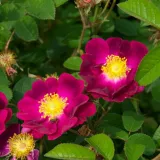
Single to lightly petalled flowers, 5–12 petals, medium size 4–7 cm, produced in small corymbs of 2–3 blooms per stem; once-flowering in early summer with a flat to cup-shaped, open form. |
| Colour data and phenology |
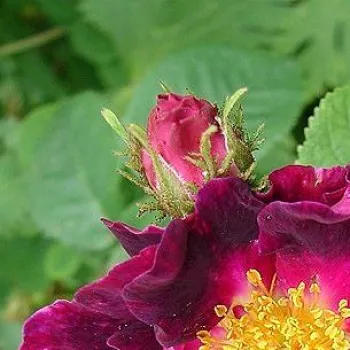
Deep crimson-purple blooms with velvety texture; whitish centre and golden stamens darken towards violet-black edges as flowers age, creating dramatic, moody tones in full bloom and as they fade. |
| Fragrance and aroma |
Medium-strength, well-scented historic rose perfume with velvety, subtly berry-fruity notes; best appreciated near paths, doors or seating areas where air movement can carry the fragrance. |
| Hip characteristics |
Occasional small, spherical rose hips 10–15 mm across, maturing to an orange-red colour; decorative in a modest way and adding seasonal interest after flowering if spent blooms are left uncut. |
| Resistance and winter hardiness |
Hardy to approximately −32 to −29 °C (USDA 4b, RHS H7, Swedish Zon 5); medium resistance to powdery mildew, black spot and rust, generally manageable under typical Irish garden conditions. |
| Horticultural recommendations |
Best in well-drained but moisture-retentive soil with neutral to slightly acidic pH; suitable for beds, hedging and specimens; allow space per guidelines and prune lightly after flowering to maintain shape. |
VIOLACEA – deep violet historic Gallica rose offers intense seasonal colour, graceful structure and steady own-root longevity for small Irish gardens, making it a thoughtful choice if you favour characterful beauty over constant maintenance.