VALENTINA™ – red-yellow hybrid tea rose – Tanjga
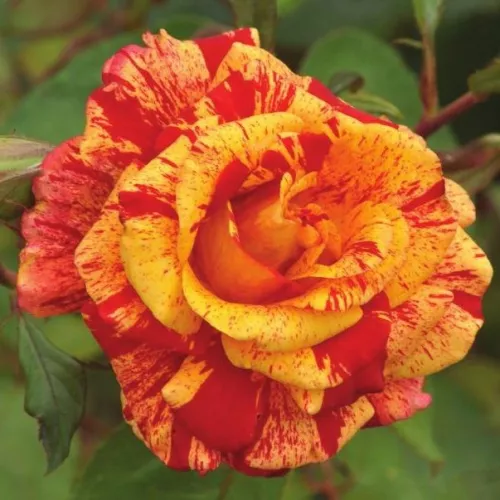
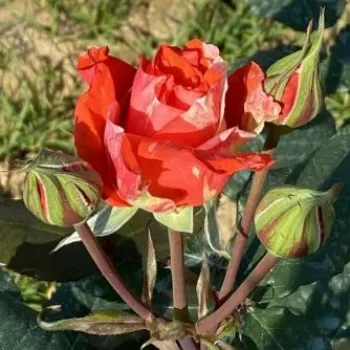
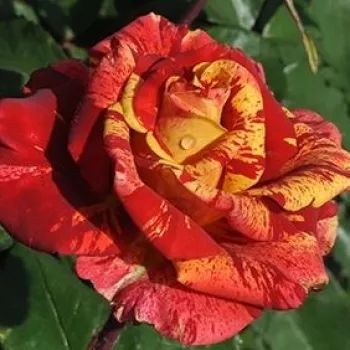
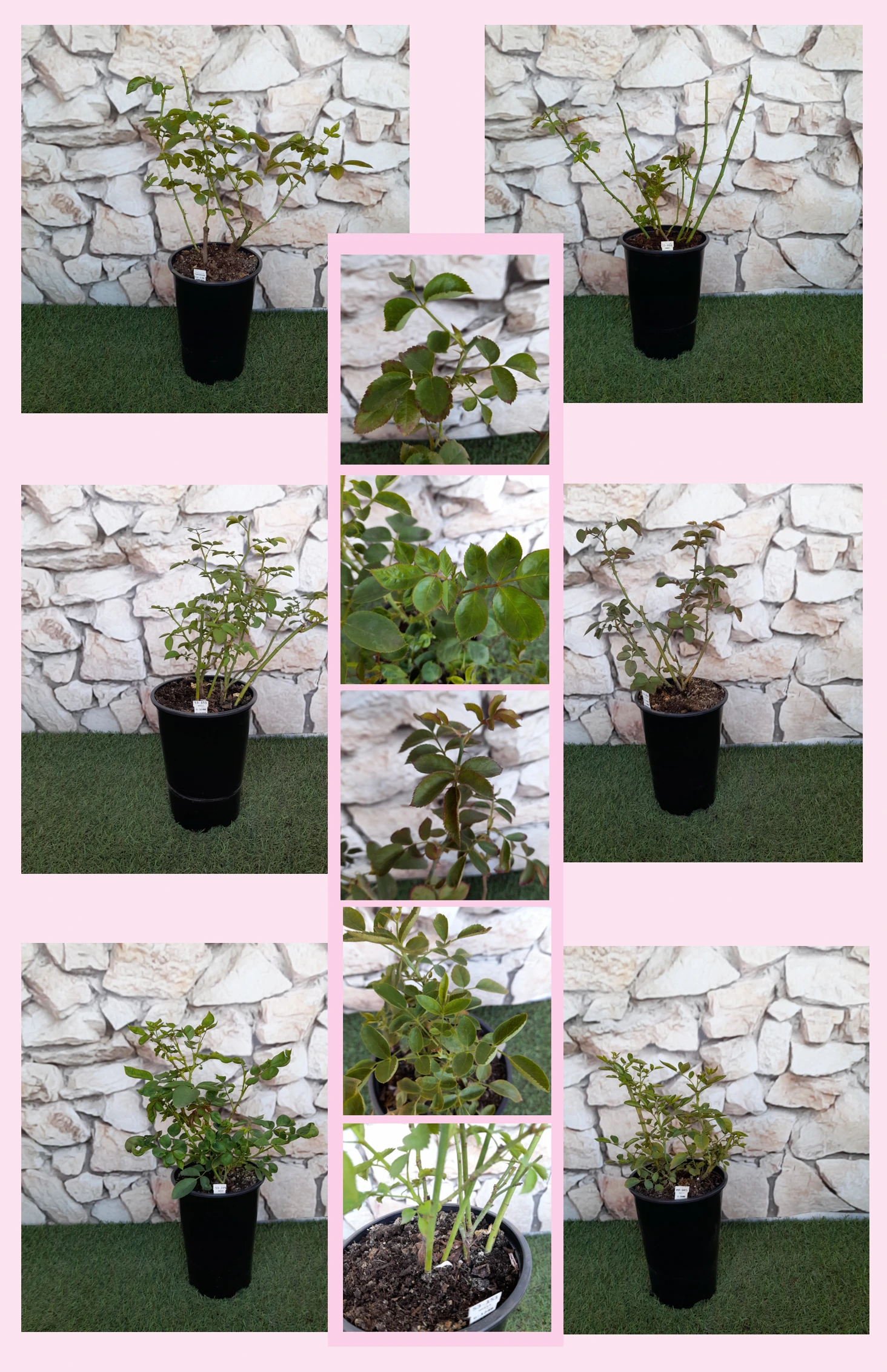
VALENTINA™ brings a touch of playful cottage-garden charm to small Irish plots, its dark red buds opening into lively marbled blooms that feel like a short walk under soft raindrops. This hybrid tea copes well with cool summers and frequent showers, rewarding you with remontant flowering from early season into autumn with very little fuss. Planted as a specimen in a Dublin front garden or beside a low cottage fence, it offers reliable structure and cheerful colour even in heavy soil once good drainage is in place. As an own-root rose it builds resilience and long-term stability, recovering more easily from weather damage or an accidental hard prune, and settling into a steady rhythm where the first year focuses on roots, the second on strong shoots, and the third on full ornamental value in your family garden.
Usage options
| Target area | Reasoning |
|---|
| Front garden specimen by the path |
The upright, medium-height shrub holds its marbled red-and-yellow blooms at eye level, giving a welcoming focal point beside a doorway or path. Individual stems are elegant enough for cutting without leaving the plant bare, suiting busy homeowners who want impact from one carefully placed rose for beginners. |
| Cottage-style mixed border |
VALENTINA™ slots neatly into a 60–90 cm gap, its dark green foliage and medium-sized flowers weaving well among perennials and grasses. Remontant flowering ensures splashes of colour between cottage favourites through the season, even when Irish summers are cool and damp, ideal for the relaxed gardener seeking ease. |
| Small hedge or row along a low fence |
With a 50–70 cm spread and recommended 50 cm spacing for hedging, this variety forms a low, upright line of colour that reads clearly from the street. The regular framework and own-root habit give lasting structure along boundaries with modest pruning, supporting those who like tidy edges with minimalism. |
| Cutting corner for home arrangements |
Originally bred as a hybrid tea with solitary, cup-shaped flowers on upright stems, VALENTINA™ lends itself to occasional cutting for the house. The distinctive marbled petals add character to simple jugs or vases without demanding floristry skills, appealing to home decorators who value casual, seasonal bouquets. |
| Large container on terrace or balcony |
Planted in a 40–50 litre pot with free-draining compost, this medium shrub maintains good vigour and colour where border space is limited. Own-root planting in a generous container supports long-term performance and easier recovery after winter, matching urban lifestyles that favour flexible, movable planting. |
| Feature rose in family lawn island bed |
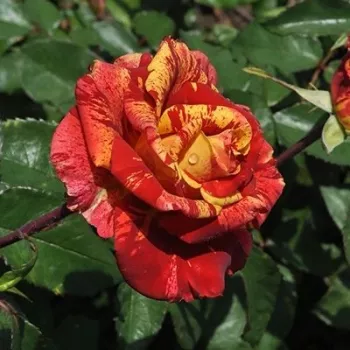
The moderately dense, dark foliage and cherry-red blooms with lemon-yellow strokes stand out well against grass, giving a strong focal point from multiple angles. As an own-root plant, it is less prone to disappointing reversion after damage, suiting family gardens where children and pets share outdoor space. |
| Clay-soil gardens with improved drainage |
Once planted into a raised or well-drained spot, VALENTINA™ handles typical Irish rainfall and humidity reliably, with good black spot resistance reducing the need for frequent spraying. This makes it a reassuring choice where heavy ground previously felt risky for roses, supporting homeowners seeking dependable longevity. |
| Low-maintenance rosy accent near seating |
Moderate maintenance needs and remontant flowering mean that, beyond occasional deadheading and light pruning, there is little to do for a steady display. The weak but pleasant rosy fragrance and colourful blooms create a soft, cheerful backdrop to evening tea, fitting those who want relaxed garden comfort. |
Styling ideas
- Cottage Charm – Underplant VALENTINA™ with low-growing Nepeta x faassenii and hardy geraniums for a frothy, pastel-edged front border – ideal for those who love relaxed, nostalgic gardens.
- Terrace Focus – Grow it in a 50 litre barrel with trailing thyme and white bacopa around the rim to highlight the marbled blooms on patios – for city dwellers wanting easy-impact colour.
- Rosy Feature – Place a small trio in a lawn island with Bupleurum ‘Garibaldi’ and soft grasses for light, meadow-inspired movement – well suited to families seeking a simple focal bed.
- Elegant Hedge – Line a low picket fence at 50 cm spacing, adding spring bulbs in front to bridge gaps before rose flowering – perfect for neat but welcoming front gardens.
- Cutting Corner – Combine with Phormium ‘Tom Thumb’ and seasonal dahlias in a sunny strip, giving varied stems for informal kitchen-table bouquets – for home florists who like spontaneous arrangements.
Technical cultivar profile
| Parameter | Data |
|---|
| Name and registration |
Hybrid tea shrub, registered as BOZvalfre, marketed as VALENTINA™ Freska® BOZvalfre; part of the Freska® collection, commercial group Rós taehibride for garden and cutting use. |
| Origin and breeding |
Bred by Biljana Božanić Tanjga of PhenoGeno Roses, Serbia; introduced by PhenoGeno Roses in 2017, with garden plant selection completed around 2019 for consumer planting. |
| Growth and structural characteristics |
Medium shrub with upright habit, 65–95 cm high and 50–70 cm wide; moderately dense, dark green, slightly glossy foliage; moderately thorny stems suited to border, hedge and specimen roles. |
| Flower morphology |
Semi-double, cup-shaped flowers with 17–25 petals, medium size 4–7 cm; mainly solitary on stems, remontant with abundant second flush, offering good cutting stems for casual arrangements. |
| Colour data and phenology |
Deep carmine-red buds striped butter-yellow open to velvety red blooms marbled with vivid lemon-yellow and creamy white; colour lightens to raspberry pink as it fades, pattern remaining lively. |
| Fragrance and aroma |
Fragrance very weak, with a light rosy character detectable only at close range; chosen primarily for visual impact and garden structure rather than for strong scent in arrangements. |
| Hip characteristics |
If not deadheaded, sets moderately abundant ellipsoid orange-red hips, 8–12 mm across, providing additional late-season interest and soft structure in informal or wildlife-friendly borders. |
| Resistance and winter hardiness |
Hardy to approximately -21 to -18 °C (H7, USDA 6b); good black spot resistance with moderate susceptibility to powdery mildew and rust, requiring only occasional protection in high-pressure seasons. |
| Horticultural recommendations |
Prefers full sun and fertile, well-drained soil; recommended spacing 60 cm in borders, 50 cm for hedges, 90 cm as specimen; plant 2.8–3.2 plants/m² for massing, with regular mulching and light pruning. |
VALENTINA™ offers long-season remontant flowering, striking marbled blooms and durable own-root growth for lasting structure in family gardens; a thoughtful choice if you hope to enjoy a reliable, characterful rose for many years.