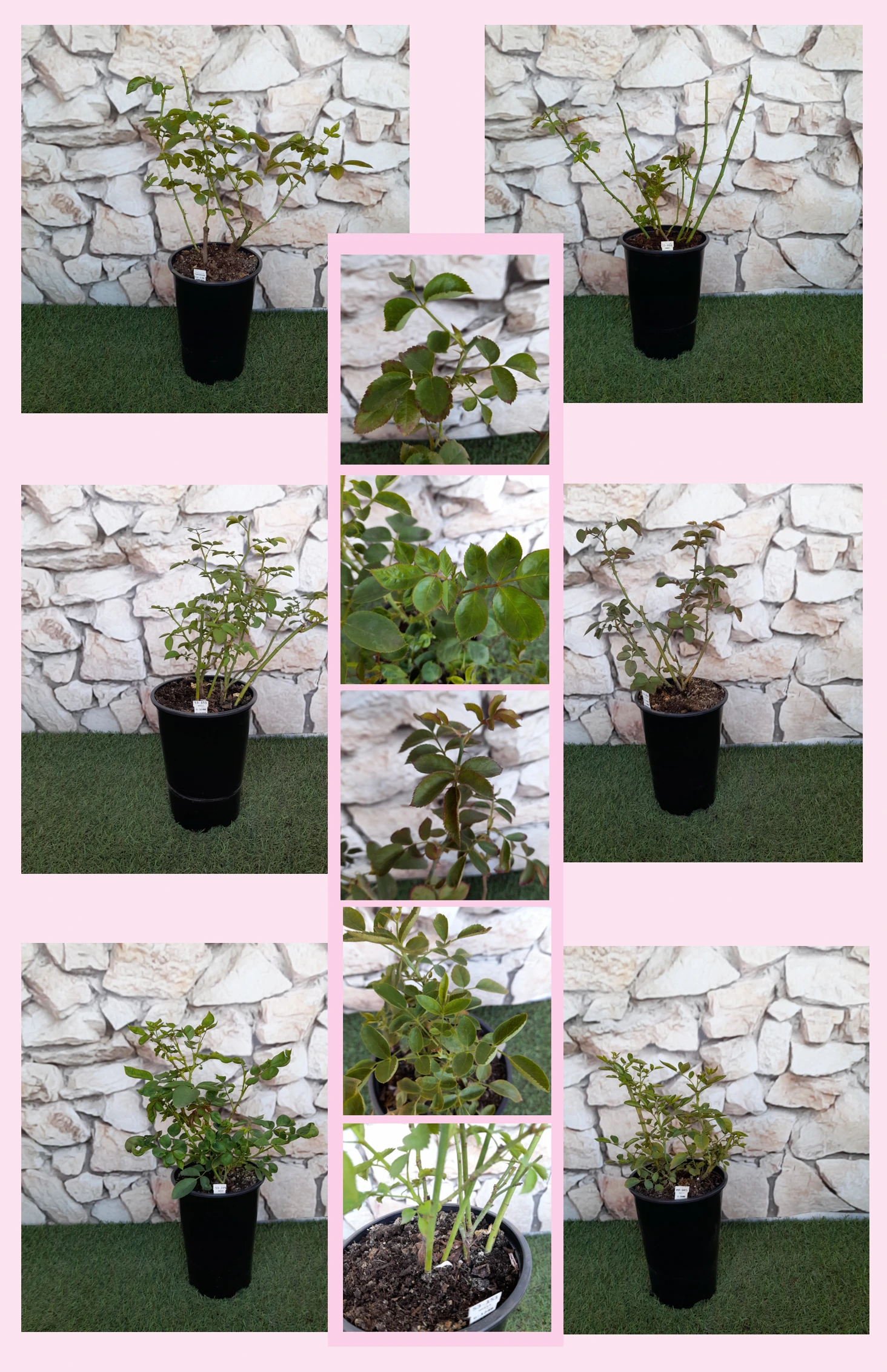
TOPOLINA® – pink groundcover rose – Kordes
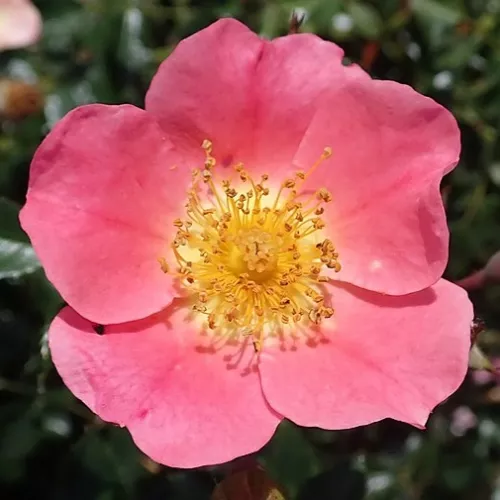
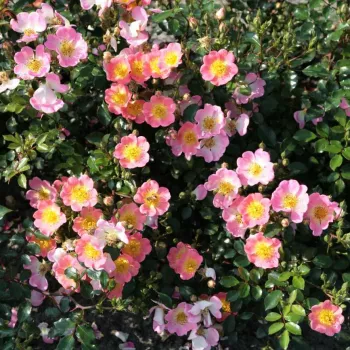
Bring a sense of cheerful ease to your garden with Topolina®, a low, spreading groundcover rose that carpets the soil with soft pink blooms and a glowing golden eye from early summer to autumn, even when days are cool and humid. Its single flowers invite bees and hoverflies, while the dense, glossy foliage quickly knits together to suppress weeds and keep borders looking neat with barely any effort. Bred by Kordes for excellent disease resistance, it shrugs off the typical Irish mix of showers and soft light, needing only basic pruning and occasional feeding. As an own-root shrub, it settles in reliably, rebuilding vitality after harsh winters and promising a long, steady life in your beds, banks or cottage-style front gardens. In the first year it concentrates on roots, the second on extra shoots, and by the third it reaches its full, easy-care ornamental rhythm.
Usage options
| Target area |
Reasoning |
| Groundcover in family borders |
Spreading 40–70 cm with dense, glossy foliage, Topolina® quickly covers bare soil, reduces weeding and keeps borders visually tidy with minimal work, ideal where time is short for busy homeowners |
| Pollinator-friendly Irish cottage garden |
Single, open blooms with bright, accessible stamens draw bees and other beneficial insects throughout its long flowering season, suiting relaxed, wildlife-friendly spaces for nature-oriented gardeners |
| Low-maintenance city front garden edging |
Compact 30–55 cm height, good self-cleaning and sparse hip set mean less deadheading and tidying on pavements and small front plots, suiting beginners and time-pressed urban residents |
| Small hedge along paths or drives |
Close planting at around 30 cm creates a low, colourful edging with repeated flushes of mid-pink flowers that stay neat without complex pruning, well suited to straightforward, family-friendly gardens |
| Slopes and banks with challenging soil |
The spreading habit and strong root system help stabilise lighter slopes, while good disease resistance supports reliable cover despite frequent Irish rain and fungal pressure, reassuring cautious starters |
| Containers and large patio pots |
Performs well in roomy containers of at least 40–50 litres, where its neat spread and continual flowering soften hard surfaces and terraces, ideal for balcony or patio-focused city dwellers |
| Durable long-term planting schemes |
As an own-root rose it regrows strongly from the base after harsh winters or accidental damage, building up a solid framework over years for low-intervention, future-proof owners |
| Wind-exposed coastal or open sites |
ADR-backed health and good resilience make it a sound choice where changeable weather, passing Atlantic showers and cool breezes are the norm, providing peace of mind for practical-minded buyers |
Styling ideas
- Cottage-Ribbon Edge – run Topolina® in a soft, wavy line along a cottage path, underplanting with low catmint for a bee-friendly, pink-and-lilac haze – for relaxed, romantic gardeners
- Front-Step Welcome – plant in a large 50-litre container by the front door with trailing ivy to soften steps and provide long-season colour – for urban homeowners with compact spaces
- Rock-Garden Drift – weave it through a sunny rock garden between boulders, paired with thrift and dwarf sedums, to create a natural pink “drift” – for lovers of informal, naturalistic schemes
- Family-Friendly Hedge – form a low, child-friendly hedge along a drive, combining with spring bulbs beneath for early colour before the roses leaf out – for families wanting structure without fussy maintenance
- Pollinator Patchwork – mass-plant Topolina® in a square or hexagonal grid and intersperse small clumps of lavender to create a continuous pollinator corridor – for nature-focused householders
Technical cultivar profile
| Trait |
Data |
| Name and registration |
Groundcover shrub rose, registered as KORpifleu, marketed as Topolina® NektarGarten®. ARS exhibition name ‘Topolina’. Commercial group Clúdach talún, own-root 2-litre container form. |
| Origin and breeding |
Bred in Germany in 1998 by Tim-Hermann Kordes from unnamed parents; introduced after 2014 by W. Kordes’ Söhne, with registration in 2014 and ongoing European garden distribution. |
| Awards and recognition |
Holds the ADR award (2010), indicating strong all-round garden performance with particular emphasis on health, reliability and ornamental value under low-spray trial conditions. |
| Growth and structural characteristics |
Low, spreading habit 30–55 cm high and 40–70 cm wide, moderately thorny shoots, dense, glossy dark green foliage and good self-cleaning of spent blooms for a tidy, ground-hugging effect. |
| Flower morphology |
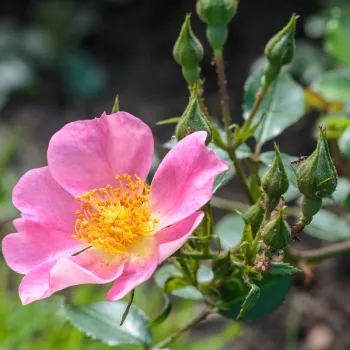
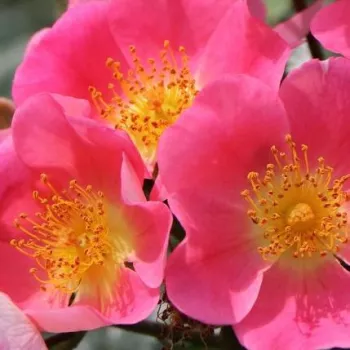
Small single flowers 1–4 cm across in clusters, with 5–12 petals and a flat form. Repeat-flowering remontant habit, with a notably strong second flush after the main early-summer display. |
| Colour data and phenology |
Mid to pastel pink petals with a warm yellow base and golden stamens, colour code RHS 56D/58C. Colour holds well, fading slightly in strong sun through salmon-pink to soft pale pink over time. |
| Fragrance and aroma |
No noticeable fragrance; prioritises floral display and pollinator access rather than scent. Simple single blooms expose abundant stamens, supporting bees and hoverflies in mixed plantings. |
| Hip characteristics |
Rose hips form only sparsely; when present they are small spherical red hips about 6–10 mm across, adding occasional late-season detail without becoming visually dominant or messy. |
| Resistance and winter hardiness |
Rated highly disease-resistant, including to black spot, powdery mildew and rust. Winter-hardy to about −26 to −23 °C (H7, USDA 5b), with good heat tolerance given watering in prolonged drought. |
| Horticultural recommendations |
Low-maintenance rose for groundcover, borders, edging, slopes, rock gardens and large containers. Space 30–55 cm depending on use; tolerates partial shade and suits beginners with modest pruning. |
TOPOLINA® combines long-season flowering, reliable disease resistance and durable own-root growth, making it a thoughtful choice for those planning an easy, attractive garden for years to come.