SOYEUSE DE LYON – orange hybrid tea rose – Ducher
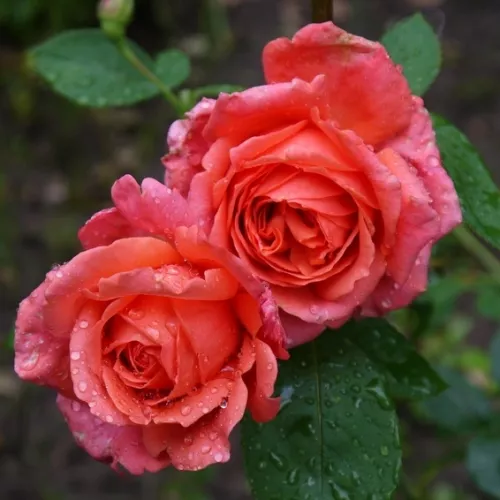
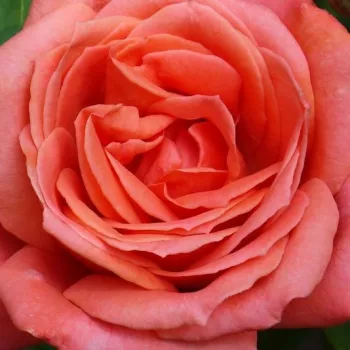
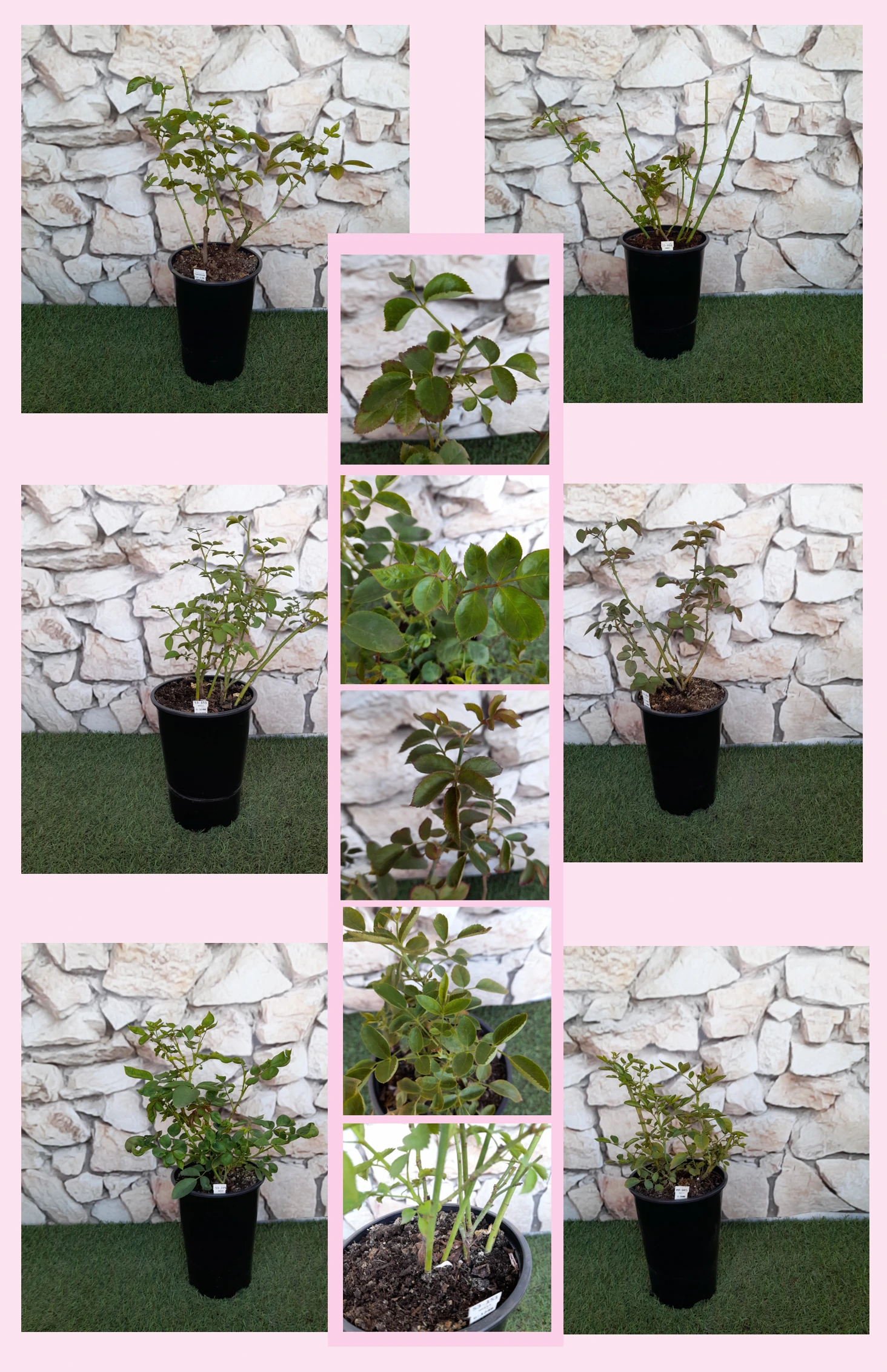
Like a short walk outside under gentle rain, SOYEUSE DE LYON surrounds you with soft colour and light, its warm salmon-orange blooms glowing even in muted Irish weather. This bushy hybrid tea offers reliably healthy growth and low-effort maintenance, perfect when you want a “girly” cottage look without constant pruning and spraying. Own-root plants establish steadily for a long-lived, stable display, coping well with our damp air and fungal pressure in the Atlantic climate. Plant once, then watch roots settle in the first year, shoot growth build in the second, and full garden impact arrive by the third, giving you lasting, quietly fragrant elegance by the front door or along a favourite path.
Usage options
| Target area |
Reasoning |
| Main feature in a small front garden bed |
The upright, bushy habit and striking salmon-orange flowers make SOYEUSE DE LYON an ideal focal point in a compact Dublin or suburban front bed, creating an immediate sense of welcome. One well-placed plant at 90 cm spacing gives a strong visual anchor without overwhelming a narrow space, suiting those who prefer a single standout rose with minimal shaping and care for beginners. |
| Mixed Irish cottage border |
The long, remontant flowering season ensures repeat flushes from early summer to autumn, weaving warm colour through herbaceous perennials and traditional cottage favourites. Its moderate height of around 1.2–1.3 m lets it sit mid-border, where blooms stay visible above geraniums, catmint or lavender. This consistent performance in short Irish summers appeals to gardeners wanting reliable colour for busy-owners. |
| Low-maintenance family back garden |
Good resistance to black spot, mildew and rust means less spraying and fewer worries in damp, changeable conditions, ideal for family gardens where children play and time is limited. Combined with low general maintenance needs, it offers dependable structure and flowers with a simple annual prune and basic feeding, matching the needs of those who like robust, forgiving plants for hobby-gardeners. |
| Own-root, long-lived specimen rose |
As an own-root plant, SOYEUSE DE LYON ages gracefully, with new shoots always true to type and better recovery if stems are damaged by wind or pruning. This supports sustainable, long-term planting plans, where a single rose can hold its place in the design for many years without the graft issues of budded plants, suiting gardeners who value enduring structure for long-term-planners. |
| Cutting patch for home bouquets |
The large, cupped, double blooms on long, upright stems make attractive cut flowers, with a pleasant but understated fragrance that works well indoors without overpowering a room. Repeat flowering means regular picking through the season, perfect for small vases in kitchens or hallways, appealing to those who enjoy bringing a little of the garden into the house for home-decorators. |
| Feature rose in heavy-clay Irish soils |
Placed in a well-prepared planting hole with added drainage and organic matter, this upright bush performs reliably even where native soil is heavy, providing structure and colour in many typical Irish gardens. Its disease resistance and sturdy framework cope well once established, supporting gardeners who face wet ground and cool summers for real-world-soils. |
| Single-species rose bed or hedge |
At 60 cm spacing in a bed, or 50 cm as a loose hedge, plants knit together into a rhythmic line of salmon-orange blooms that read clearly from the street or patio. The consistent bushy habit makes it easy to repeat along a path or boundary, needing only light annual pruning to maintain shape, matching the needs of those who like simple, unified schemes for neat-borders. |
| Large container on a patio or terrace |
In a 40–50 litre or larger pot with free-draining compost, SOYEUSE DE LYON offers a refined splash of colour close to seating, where the mild scent can be appreciated on still evenings. The remontant flowering and bushy structure give good ornamental value in small urban spaces, particularly where ground planting is limited, appealing strongly to space-conscious city dwellers for urban-gardeners. |
Styling ideas
- Cottage-Romantic – Pair with lavender and airy pink geraniums to echo the warm salmon blooms and long flowering, creating a soft, storybook edge to a path – ideal for lovers of traditional cottage charm.
- Front-Door-Welcome – Use a single plant under a hallway window with white violas and low box edging to highlight its tidy form and easy maintenance – perfect for homeowners wanting instant kerb appeal.
- Salmon-Symphony – Combine with apricot roses and peach-toned heucheras so the colour-fading from orange to soft pink is mirrored across the bed – suited to gardeners who enjoy subtle, harmonious palettes.
- Cutting-Corner – Group two or three plants with simple green foliage plants so straight stems and frequent re-blooming are easy to access for vases – great for those who love fresh flowers indoors.
- Patio-Jewel – Grow in a large terracotta container alongside dwarf lavender and thyme, showcasing its upright, bushy habit and modest fragrance near seating – ideal for balcony or small-terrace gardeners.
Technical cultivar profile
| Parameter |
Data |
| Name and registration |
Hybrid tea rose, registered as DUCsoy, traded as SOYEUSE DE LYON – orange tea-hybrid rose – Ducher; part of the Rós taehibride group, suited to garden and cutting use. |
| Origin and breeding |
Bred by Fabien Ducher, Roseraie Ducher, France; introduced and registered in 2007, with parentage unknown; created as a refined hybrid tea for both gardens and bouquets. |
| Awards and recognition |
Chosen by Lyon City Council as the official commemorative rose for the 150th anniversary of Parc de la Tête d’Or in 2007, highlighting its ornamental reliability and symbolic local value. |
| Growth and structural characteristics |
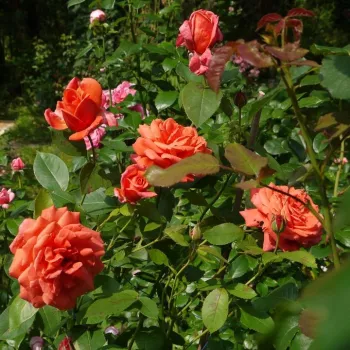
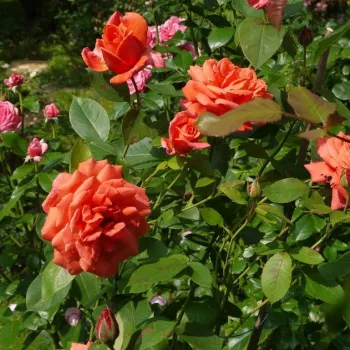
Bushy, upright shrub, approximately 105–135 cm high and 60–85 cm wide; moderately dense, dark green, slightly glossy foliage; moderately thorny stems forming a well-balanced, vertical outline. |
| Flower morphology |
Large, 7–10 cm double, cupped blooms with 26–39 petals, mainly solitary on stems; repeat flowering with abundant second flush, offering classic hybrid tea form suitable for cutting and display. |
| Colour data and phenology |
Medium salmon-orange with pink undertones; buds bright orange, opening to warm orange-salmon, then fading to peach and apricot-pink; RHS 25C outer and 25D inner tones give a soft, evolving colour show. |
| Fragrance and aroma |
Mild, pleasantly understated rose fragrance; sufficient for close enjoyment on patios or in small bouquets without dominating nearby plants or indoor spaces, suitable for mixed planting near seating. |
| Hip characteristics |
Occasional small, spherical red hips, about 8–12 mm across, forming after some flowers if deadheading is relaxed; ornamental but not a primary feature of the cultivar. |
| Resistance and winter hardiness |
Good resistance to powdery mildew, black spot and rust; hardy to around –21 to –18 °C (H7, USDA 6b, Swedish zone 3), giving reliable performance in cool, damp and frost-prone gardens. |
| Horticultural recommendations |
Best in fertile, well-drained soil with organic mulch; space 60 cm for beds, 50 cm for hedges, 90 cm as specimen; suitable for large containers and cutting, with generally low maintenance needs. |
SOYEUSE DE LYON offers repeat flowering, easy-care health and graceful cut blooms on a long-lived own-root shrub, making it a thoughtful choice for relaxed yet refined Irish gardens.