SOUVENIR DE J. MERMET – carmine-red climbing rambler rose - Mermet
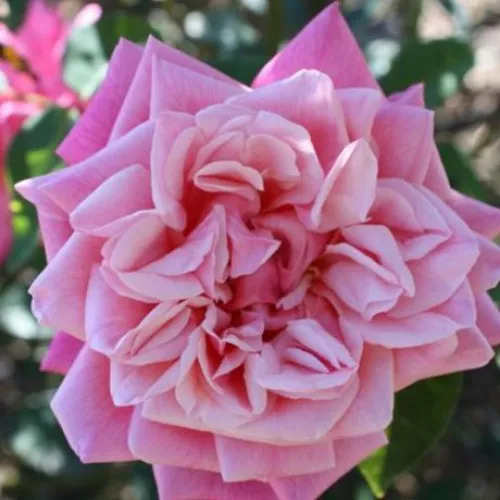
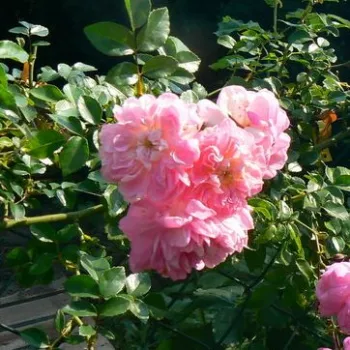
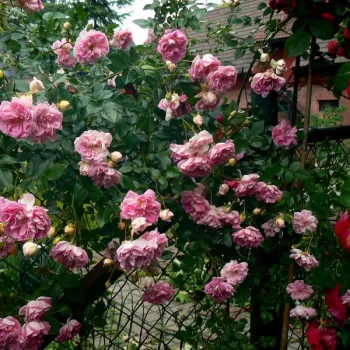
Settle a sense of contentment over your garden with SOUVENIR DE J. MERMET, a romantic rambler that loves gentle Irish rain and shrugs off our frequent showers and soft, humid days. Its airy, semi-double flowers come in clouds of pink clusters, giving you a nostalgic, cottage-garden look on arbours, pergolas and old walls without fussy pruning. As an own-root plant, it is bred for quiet longevity, rebuilding from the base if ever damaged and keeping its ornamental value season after season. In a small Dublin front garden or a country lane plot, its mid-green, glossy foliage makes a cooling backdrop for your favourite climbers. Plant once, mulch well, and let its repeat-flowering rhythm develop naturally through the classic arc of strong roots in year one, eager shoots in year two, and full garden impact by year three.
Usage options
| Target area |
Reasoning |
| Front-garden arch or arbour |
Ideal for creating a welcoming archway in small to medium Irish front gardens, where its repeat-flowering habit brings soft colour through summer with only light seasonal pruning – a charming solution for beginners. |
| Cottage-style boundary fence |
Trains beautifully along timber or wire fencing, giving that loose, romantic cottage look while own-root growth ensures a long-lived line of stems that can be renewed gradually over the years – reassuring for time-poor owners. |
| Pergola or seating area |
Its semi-double clusters and mild fragrance work particularly well over a pergola beside a seating nook, offering dappled shade and scented blooms without demanding intensive care – perfect for relaxed gardeners. |
| Climbing companion on mature tree |
The rambler habit and medium maintenance needs suit training into a sturdy old tree, where it can scramble and flower high without constant shaping, providing long-term vertical interest for nature-lovers. |
| Informal hedge in family garden |
Planted at hedge spacing, it forms a loose, flower-sprinkled screen that copes well with typical Irish rainfall and humidity, so you gain privacy and softness with only occasional health checks – ideal for busy families. |
| Feature specimen near terrace or patio |
Used as a single specimen, its pastel pink clusters and glossy foliage deliver reliable repeat shows close to the house, where own-root resilience safeguards long-term beauty around high-use spaces for homeowners. |
| Mixed wildlife-friendly climber scheme |
Although only partly pollinator-friendly, the semi-double flowers still offer some access to insects, especially when combined with nectar-rich partners, extending the season of interest for wildlife-conscious gardeners. |
| Large container on sheltered wall |
Can be grown in a very large container of at least 40–50 litres against a sunny wall, where regular watering and good drainage support repeat flowering and manageable growth – a smart choice for urban gardeners. |
Styling ideas
- COTTAGE-ARCH – Let it drape over a simple metal or timber arch with Vinca minor at the base, perfect for a storybook entrance – for cottage-style dreamers.
- ROMANTIC-WALL – Train along a sunlit brick wall and underplant with Campanula poscharskyana to fill gaps in summer – for lovers of soft, old-world charm.
- TREE-VEIL – Allow canes to ascend a sturdy small tree, where loose clusters float among the branches – for adventurous, nature-first planters.
- PERGOLA-RETREAT – Combine on a pergola with Clematis ‘Hot Love’ weaving between the canes for layered pink tones – for those creating a cosy evening retreat.
- CITY-FRONT – In a terraced-house front garden, fan-train it on wires with low perennials underfoot for a neat yet romantic façade – for design-conscious urban owners.
Technical cultivar profile
| Aspect |
Data |
| Name and registration |
Souvenir de J. Mermet is a rambler-type climbing rose, commercial name SOUVENIR DE J. MERMET – carmine-red climbing rambler rose - Mermet; unregistered cultivar used under longstanding trade name. |
| Origin and breeding |
Historic French rambler introduced by Louis Mermet in 1934; exact parentage and breeding line are unknown, but selected and distributed for ornamental garden and landscape use. |
| Awards and recognition |
Recognised in 1933 by Commission des Roses, Lyon with a Certificate of Merit and recommended for a gold medal diploma by the Société lyonnaise d’Horticulture, confirming enduring garden value. |
| Growth and structural characteristics |
Strong climbing growth 340–560 cm high with a 260–440 cm spread, dense mid-green glossy foliage and moderately thorny stems, forming an arching rambler suitable for training on supports or trees. |
| Flower morphology |
Semi-double, cupped blooms with 17–25 petals, small flower size of 1–4 cm, borne in clusters; remontant with a notable main flush followed by lighter repeat flowering later in the season. |
| Colour data and phenology |
Soft pastel pink with subtle tonal gradations, ARS code DP, RHS 53A outer and 53C inner; buds open cool pink, fading gently to powdery, slightly mauve-pink tones as the bloom matures on the plant. |
| Fragrance and aroma |
Mild, refreshing rose fragrance that is noticeable at close range without overpowering other planting; suitable near seating or paths where a gentle, classic scent is preferred over strong perfume. |
| Hip characteristics |
Hip set is generally sparse due to semi-double flowers, but occasional small orange-red, ellipsoid hips 6–10 mm in diameter may form, adding discreet seasonal interest in late season. |
| Resistance and winter hardiness |
Medium disease resistance under typical garden conditions, with average tolerance to black spot, powdery mildew and rust; hardy to approximately –21 to –18 °C, corresponding to RHS H7 and USDA zone 6b. |
| Horticultural recommendations |
Best on supports such as arbours, pergolas, fences or trained into trees; plant with generous spacing, in well-drained soil with mulch, providing occasional plant protection and structural pruning as needed. |
SOUVENIR DE J. MERMET offers romantic repeat flowering, gentle fragrance and long-lived own-root resilience for Irish arches and pergolas, making it a thoughtful choice if you want enduring, easy charm in your garden.