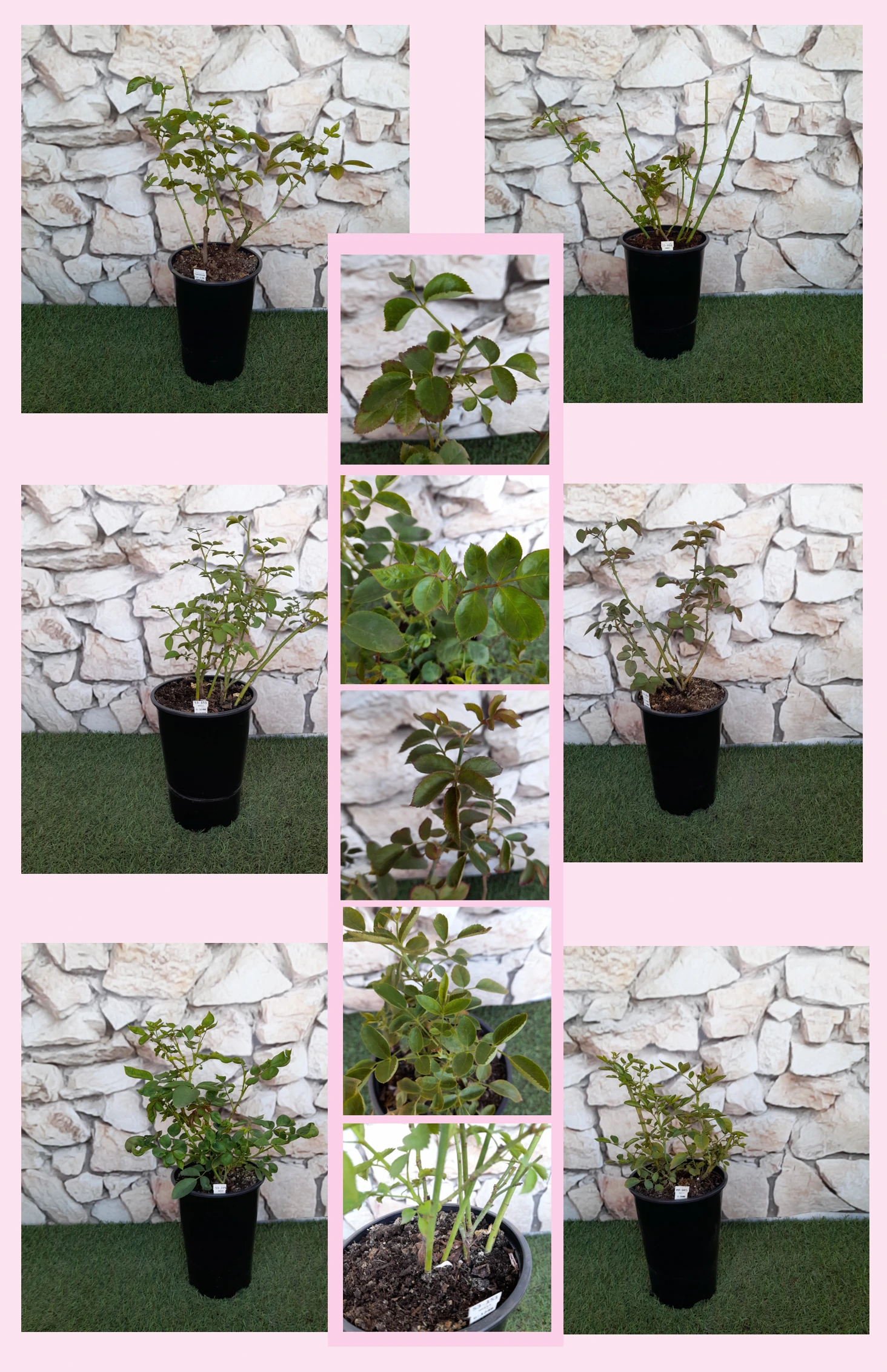
SIDNEY PEABODY™ – pink bedding grandiflora rose
Step out to your front path after light rain and let SIDNEY PEABODY™ surround you with a quietly cheerful sense of contentment. This mid‑pink grandiflora rose produces generous clusters of large, double blooms that remount, giving a long season of soft colour in smaller Irish cottage plots and tidy Dublin terraces. Its bushy, upright habit stays compact enough for narrow beds, yet tall enough to sit comfortably behind low perennials. On its own roots, it settles in steadily for a long, reliable garden life, building strong longevity below ground and sturdy flowering stems above. Over the first few years it moves naturally from root-building to fuller growth and then a mature display, bringing increasing impact without fuss. In wetter, breezier gardens where good drainage matters on heavier soils it will still offer steady performance with only modest care. Medium disease resistance and hardy structure support fuss‑free maintenance, while the double flowers and neat foliage give a consistently refined look that suits both informal borders and more formal, repeating lines.
Usage options
| Target area |
Reasoning |
| Front cottage border, beside a path |
The bushy, upright shape and mid‑pink clusters create a welcoming, traditional cottage look along paths and gateways, without overwhelming a small space. Repeat flowering means colour through much of the summer for passing householders and visitors alike, ideal for the beginner. |
| Dublin terraced-house front garden |
Its compact spread and 100–140 cm height fit shallow, street‑side beds, giving structure and privacy while staying neat. Medium maintenance and own‑root resilience suit busy city routines and limited time, particularly appealing to the urbanite. |
| Mixed flower bed with perennials |
Clustered, large double flowers provide strong pink blocks of colour that sit well among cottage perennials and grasses, offering a stable vertical accent. Own‑root planting promises dependable long‑term performance for the relaxed hobby-gardener. |
| Low informal hedge or boundary strip |
Regular spacing at around 40–50 cm forms a soft, semi‑formal pink line along drives or garden divisions. Upright, branching growth and dense foliage create a visual barrier that matures steadily and suits the practical homeowner. |
| Feature rose in a small lawn island bed |
Planted as a single specimen at about 75 cm clearance, its clustered blooms and rounded outline read clearly from all sides. Over three seasons it naturally progresses from root establishment to stronger shoots and a fuller ornamental effect, reassuring the patient planner. |
| Beds with heavier, moisture-retentive soils |
Where Irish gardens tend towards heavier ground, added drainage and a mulch layer help this hardy rose root well while its moderate disease resistance supports healthy foliage in damp summers. This balances reliability with beauty for the pragmatic gardener. |
| Own-root replacement for older grafted roses |
As an own‑root plant, it avoids graft union failures and can regenerate from its base if the top is damaged, giving a longer practical lifespan. This makes it a sensible upgrade choice for the cautious buyer. |
| Large container on patio or doorstep |
In a generously sized 40–50 litre container with good drainage, its upright framework and repeating clusters create a tidy, colourful focal point by doors or seating areas, with manageable care needs for the time‑pressed resident. |
Styling ideas
- Cottage-curve – Plant SIDNEY PEABODY™ in a gentle, curved line along a cottage path, underplant with low campanula and lady’s mantle for frothy edging – perfect for the romantic traditionalist.
- Terrace-trio – In a small Dublin front bed, group three roses in a triangle with gravel mulch and clipped box balls for structure – ideal for design-conscious city dwellers.
- Pink-partner – Combine with clematis such as ‘Sweet Morning’ or ‘Amber’ on a discreet obelisk behind the rose, letting soft mauves or creams weave through the pink – suited to vertical-space maximisers.
- Soft-screen – Create an informal hedge by repeating plants 40–50 cm apart along a low fence, finishing with spring bulbs at the base for early interest – attractive to boundary‑seeking families.
- Patio-pillar – Grow a single plant in a 50 litre clay pot with thyme and low sedums at the rim, placed by a sunny doorstep for easy enjoyment – made for container-focused gardeners.
Technical cultivar profile
| Property |
Data |
| Name and registration |
SIDNEY PEABODY™ bedding grandiflora rose, commercial type flower bed grandiflora, group Rósra bhláthchlóis; name likely honours Sidney Peabody; ARS exhibition and formal registration data not recorded. |
| Origin and breeding |
Bred in the Netherlands around 1955 by De Ruiter Innovations B.V., who also acted as initial distributor; detailed parentage is unknown and no precise introduction or registration year is documented. |
| Growth and structural characteristics |
Bushy, upright grandiflora, typically 100–140 cm tall with 55–85 cm spread; moderately thorny, with dense, slightly glossy dark green foliage (RHS 139A) providing good garden presence and structural definition. |
| Flower morphology |
Large, 7–10 cm, double, cup‑shaped blooms with 26–39 petals, produced mainly in clusters; remontant habit with a reliable second flush, offering extended seasonal display in suitable conditions. |
| Colour data and phenology |
Mid‑pink flowers, ARS MP; RHS 65C outer and 65B inner petals; colour remains fairly uniform, slowly softening to a pastel tone as blooms age, with no strong edge fading but overall limited long‑term colour retention. |
| Fragrance and aroma |
Fragrance is very weak, only lightly noticeable at close range; character described as fresh and citrus‑like rather than rich or heavy, adding a subtle sensory layer without dominating nearby seating areas. |
| Hip characteristics |
Due to the very double flower form, hips are sparse or occasional; when present they are small, 6–10 mm, globular, and orange‑red (RHS 33A), adding only modest autumnal interest to the planting. |
| Resistance and winter hardiness |
Rated hardy to approximately −21 to −18 °C (H7, USDA 6b, Swedish zone 3); disease profile medium overall, with good resistance to powdery mildew and black spot, and moderate susceptibility to rust in humid seasons. |
| Horticultural recommendations |
Best for flower beds and bedding schemes; medium maintenance needing occasional pest and disease checks; recommended spacing 40–75 cm depending on use, with 4–4.6 plants/m² for mass planting and hedging layouts. |
SIDNEY PEABODY™ offers long-season pink clusters, compact structure and durable own-root growth for years of steady presence in family gardens, making it a thoughtful choice for those refining smaller outdoor spaces.