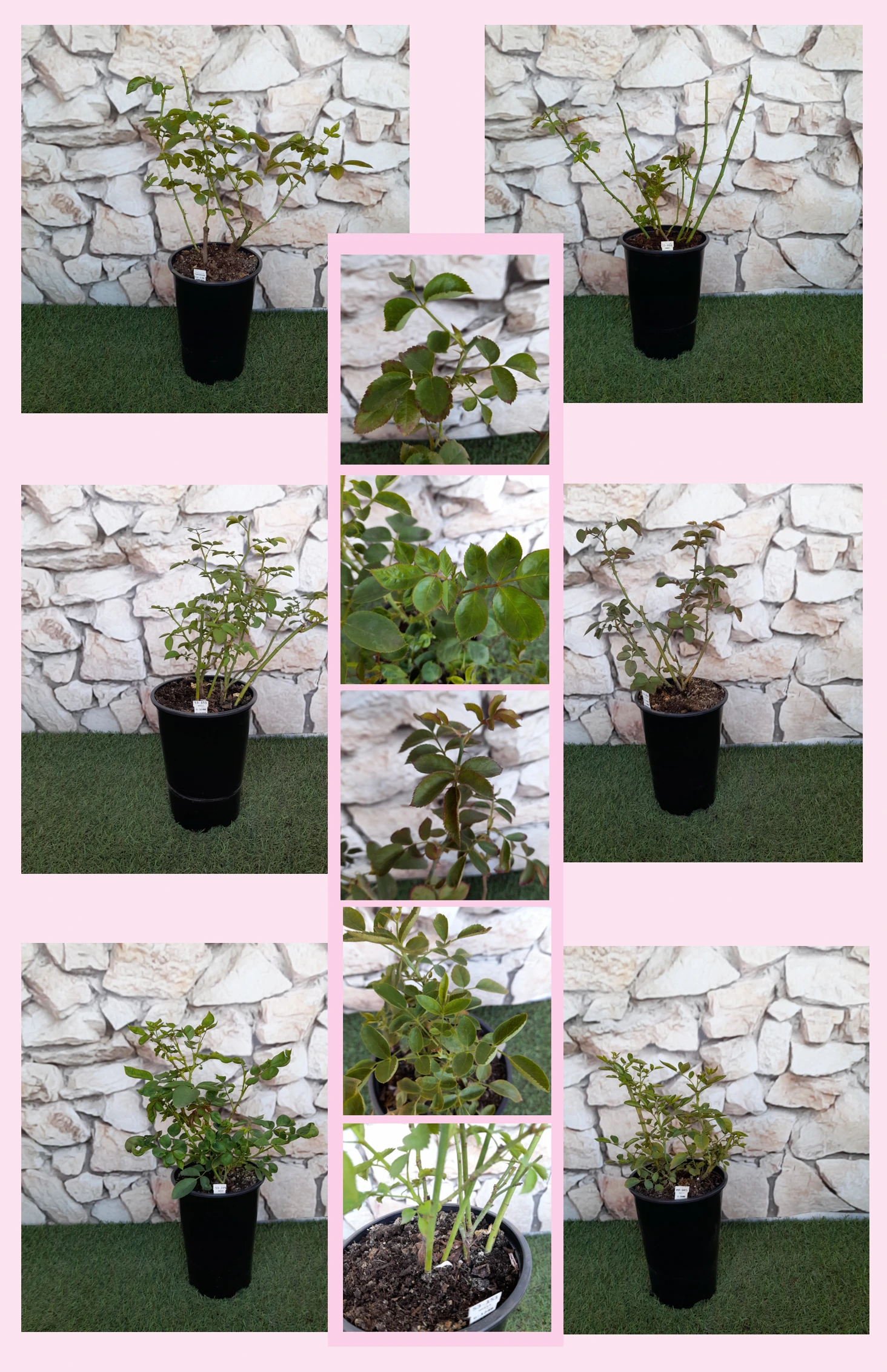
SEBASTIAN SCHULTHEIS – pink hybrid tea rose
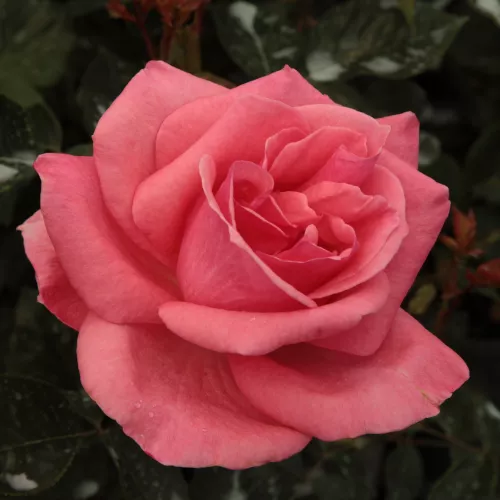
Step outside after a shower and you can imagine petals of SEBASTIAN SCHULTHEIS beaded with raindrops, lighting up a small Dublin front garden with its rich, full pink blooms. This classic hybrid tea gives you generous repeat flowering on an upright, well-shaped shrub that fits beautifully into a cosy Irish cottage-style border. Bred for reliable hardiness and modern disease resistance, it copes calmly with our cool summers and frequent rain, even where heavy soil needs attention to drainage after downpours. Low everyday maintenance keeps gardening simple, while its own-root strength promises a long-lived, steadily improving presence in your garden, naturally building from early root growth to fuller shoots and then complete ornamental character over the first three years.
Usage options
| Target area |
Reasoning |
| Front garden focal point |
The upright, 110–150 cm habit and large, cupped flowers make SEBASTIAN SCHULTHEIS an ideal “hello” rose beside a gate, front steps or path, giving clear structure without overwhelming a small space – especially suited to the style-conscious homeowner. |
| Low-maintenance family border |
Good resistance to black spot, mildew and rust means less spraying and fuss, so the plant will stay attractive in a busy family garden where you prefer to enjoy the flowers rather than work around them – perfect for the time-poor beginner. |
| Cottage-style mixed bed |
Repeat flowering with a plentiful second bloom threads pink highlights through summer, mingling well with perennials and shrubs to bring that soft, romantic cottage look – a natural choice for the relaxed garden-lover. |
| Small to medium specimen planting |
Its balanced spread of 80–110 cm makes a single plant impressive yet manageable, ideal where you want one strong feature rose on its own in a lawn pocket or near a seating area – well suited to the contemplative collector. |
| Cold and exposed sites |
With hardiness down to about –25 °C and reliable shrub structure, this variety suits cooler, wind-swept Irish spots when given a sunny position and reasonable shelter – reassuring for the weather-watching gardener. |
| Heavy-soil gardens |
Thriving in typical Irish clay once you provide decent topsoil preparation and drainage, it settles into beds that might defeat fussier roses, turning challenging ground into a dependable display for the practical planner. |
| Long-term, own-root planting |
As an own-root rose it ages gracefully, regrowing from its own base if damaged and building a stable, long-lived shrub that keeps its shape and colour without graft worries, ideal for the future-minded owner. |
| Large container display |
In a 40–50 litre or larger container with quality compost and steady watering, its strong upright form and sizeable flowers create an elegant terrace or doorstep feature, especially appealing to the space-limited urban dweller. |
Styling ideas
- Cottage-Pink Path – Line a short path with SEBASTIAN SCHULTHEIS and airy perennials like lady’s mantle to frame a front door in soft pink and lime-green – for romantically minded cottage-garden fans.
- Doorstep Welcome – Plant one rose in a large 50-litre pot beside the front step, underplanted with trailing ivy and white lobelia – for urban households wanting impact in little space.
- Pastel Harmony – Combine this pink hybrid tea with climbing hydrangea and soft blue hardy geraniums for a layered, gentle look along a boundary – for those who prefer calm, blended colours.
- Family-Friendly Feature – Use a trio in a lawn island bed with low grasses and dwarf cornus to create interest that’s easy to mow around – for busy families seeking structure without high maintenance.
- Classic Rose Corner – Mix SEBASTIAN SCHULTHEIS with other repeat-flowering shrub roses in matching tones to form a long-season rose corner near a seating area – for fragrance-lovers who enjoy traditional charm.
Technical cultivar profile
| Property |
Data |
| Name and registration |
SEBASTIAN SCHULTHEIS hybrid tea rose, trade name by Schultheis & Bennett; hybrid tea group, shrub-form garden and cut-flower type; no specific registered code data available. |
| Origin and breeding |
Hybrid from ‘The Queen Elizabeth Rose’ and ‘Mabel Morrison’ × ‘E.Y. Teas’; bred by the Schultheis family and Henry Bennett; first introduced 1882 in Great Britain, later 1979 in Germany. |
| Growth and structural characteristics |
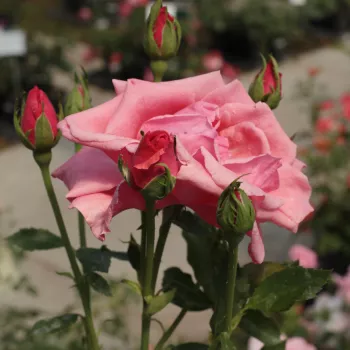
Upright, bushy hybrid tea shrub reaching about 110–150 cm tall and 80–110 cm wide; moderately dense, mid-green, slightly glossy foliage; moderately thorny stems; best growth in open, sunny sites. |
| Flower morphology |
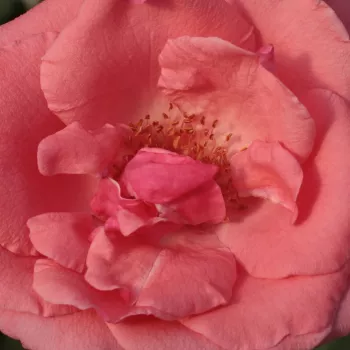
Large, double, cupped hybrid tea blooms, 7–10 cm across, generally borne singly on stems; 26–39 petals per flower; repeat-flowering through the season with notably abundant second flush over summer. |
| Colour data and phenology |
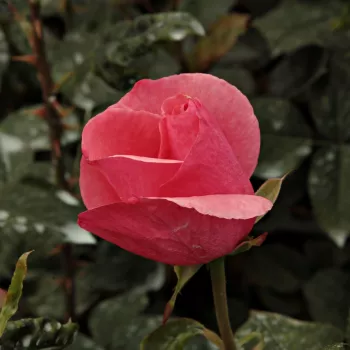
Rich pink with carmine undertone; buds coral-salmon, opening to warm coral and pink with golden base; ageing through peach-cream and powder pink to ivory-edged tones; ARS dp, RHS 57B–57C shades. |
| Fragrance and aroma |
Classic rose fragrance of variable intensity, from very light on some blooms to notably strong on others; predominantly traditional rosy notes rather than fruity or spicy tones; best appreciated in still air. |
| Hip characteristics |
Produces hips only sparsely and irregularly; when present, rounded to slightly oval fruits about 12–18 mm in diameter; ornamental effect limited, with no strong colour or heavy clustering display recorded. |
| Resistance and winter hardiness |
Shown as resistant to powdery mildew, black spot and rust under normal care; winter hardy to approximately –26 to –23 °C (RHS H7, USDA 5b, Swedish zone 4), suitable for most exposed Irish gardens. |
| Horticultural recommendations |
Best performance in fertile, well-drained but moisture-retentive soil; prefers full sun; space at 50–100 cm depending on use; mulch clay soils for drainage; feed annually; ideal for beds, borders and specimen use. |
SEBASTIAN SCHULTHEIS offers generous repeat pink blooms, dependable disease resistance and long-lived own-root growth, making it a thoughtful choice if you want a classic rose that quietly earns its place over many years.