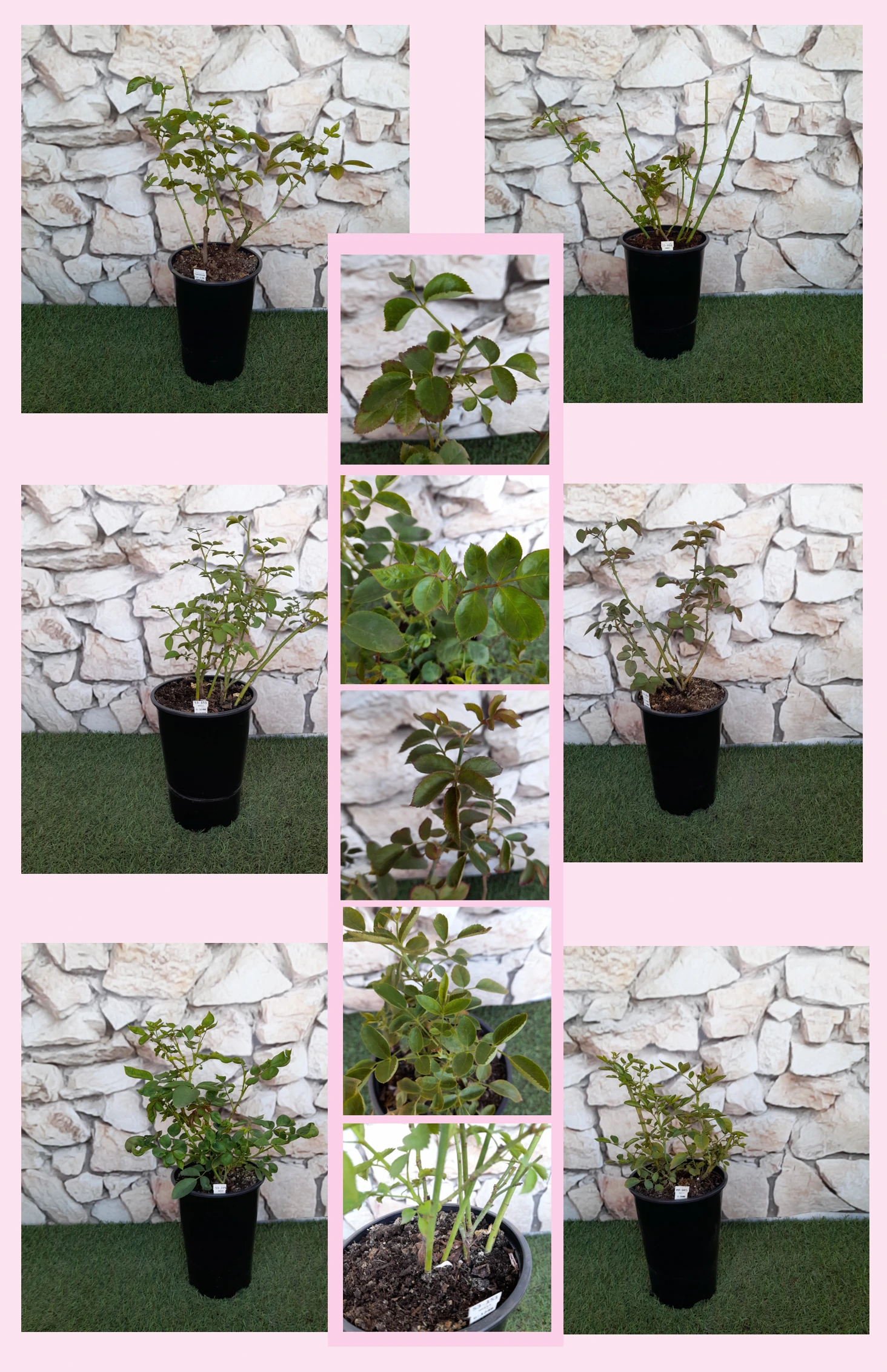
WAKANA – greenish-white hybrid tea rose - Kimura
Imagine a soft stroll past elegant blooms after a shower, the petals still beaded with rain, their greenish shimmer catching the soft light. ‘Wakana’ brings this gentle, uplifting mood into everyday Irish gardens, while coping calmly with humid summers where fungal problems are common and flowers must endure changeable weather. As an own‑root rose in the pharmaROSA® ORIGINAL 2‑litre pot, it settles in reliably for the long term, developing first its roots, then stronger shoots, and by the third year a full, stable display that needs only simple care. The upright, well‑branched plant stays pleasantly compact, ideal for cottage borders and small front gardens where you want maximum charm from minimum space.
Usage options
| Target area |
Reasoning |
| Small Irish cottage front garden |
The upright, 85–120 cm growth and 50–70 cm spread make Wakana a neat choice for narrow front gardens, giving graceful structure without overwhelming the space; its compact habit simplifies pruning and keeps paths clear for beginners. |
| Mixed cottage border with perennials |
The long, remontant flowering season provides repeat waves of large, 7–10 cm blooms, weaving calmly through the year alongside cottage perennials so beds never look bare, even if you can only visit the garden at weekends as a busy. |
| Low-maintenance suburban family garden bed |
With resistant foliage against powdery mildew and black spot, Wakana stays presentable through wet spells, limiting spray needs and keeping maintenance manageable for those who want beauty rather than constant chores, especially useful for a time-poor. |
| Decorative feature rose near seating |
Elegant, double, ball-shaped blooms and dense, dark green foliage create a refined focal point beside a bench or patio, offering a serene view in all weathers while requiring only occasional deadheading for an appreciating but relaxed homeowner. |
| Cutting patch for home arrangements |
As an exhibition-type hybrid tea with strong, upright stems and large, formal flowers, Wakana lends itself beautifully to cutting for vases, letting you bring its unusual greenish-white tones indoors without needing specialist florist skills as a hobbyist. |
| Container on a sunny terrace or balcony |
Wakana’s moderate size suits a substantial pot; in Ireland, a 40–50 litre container with good drainage allows it to cope with variable rainfall and still make a refined statement, convenient for a paved or rented space tended by an urban gardener. |
| Feature planting in rainy, disease-prone areas |
In regions where long, damp spells and soft Atlantic light favour fungal issues, its disease-tolerant foliage and weather-resilient flowers keep the plant attractive with relatively little intervention, a reassuring choice for a cautious buyer. |
| Long-term structural rose in family garden design |
As an own-root plant, Wakana establishes steadily, rebuilding from its own base after any setbacks and maturing into a lasting feature that maintains its character year after year, appealing to those planning a stable, enduring garden as a planner. |
Styling ideas
- Cottage-porch welcome – Plant two Wakana either side of a path, underplanted with Nepeta x faassenii, to frame the front door with soft green and lavender tones – ideal for cottage-front romantics.
- Green-and-white calm – Combine Wakana with Lychnis viscaria 'Alba' and airy grasses for a restrained, nearly monochrome border – suited to lovers of understated elegance.
- Terraced-city charm – Grow a single Wakana in a 50 litre pot with low thyme or creeping campanula at the base to soften brickwork – perfect for small Dublin terraces.
- Cutting-corner trio – Plant three Wakana in a triangle, spacing at 60 cm, with Scabiosa caucasica nearby to supply complementary stems for vases – attractive for home flower arrangers.
- Evening-seat focal point – Place Wakana near a favourite bench, edged with pale pink hardy geraniums, so the silvery-green blooms catch the late light – appealing to contemplative evening sitters.
Technical cultivar profile
| Characteristic |
Data |
| Name and registration |
Hybrid tea garden rose from the Rosa Orientis collection; registered cultivar name Wakana, commercial name Wakana Rosa Orientis Wakana; classified as Rós taehibride hybrid tea rose. |
| Origin and breeding |
Bred by Takunori Kimura in Japan from ‘Tineke’ × ‘Princesse de Monaco’; introduced by Keihan Gardening Co., Ltd. in 2006 as part of the Rosa Orientis range for discerning gardeners. |
| Growth and structural characteristics |
Upright, medium-sized bush, around 85–120 cm tall and 50–70 cm wide; moderately thorny, with dense, slightly glossy dark green foliage providing good background for the large flowers. |
| Flower morphology |
Large, double, ball to pompon-shaped blooms, typically 26–39 petals; solitary on stems, 7–10 cm across; remontant flowering, with a notably abundant second flush under good garden care. |
| Colour data and phenology |
Opalescent pale greenish-white flowers; buds light yellowish-green; lime-green outer edges and creamy-white inner petals, fading towards silvery white; lime tones intensify in cooler conditions. |
| Fragrance and aroma |
Very weak, barely noticeable scent with a light tea-like character; primarily grown for its refined flower form and unusual colour rather than for strong fragrance in the garden. |
| Hip characteristics |
Rose hips form only occasionally due to double flowers; when present, they are 12–18 mm, ellipsoidal, orange-red, and generally not significant for ornamental or wildlife value in most gardens. |
| Resistance and winter hardiness |
Hardy to approximately −21 to −18 °C (H7, USDA 6b); good heat tolerance with watering in long dry spells; foliage resistant to powdery mildew and black spot, with moderate rust susceptibility. |
| Horticultural recommendations |
Best in sunny sites with well-drained soil; space 50–100 cm depending on use; suitable for borders, specimens, cut flowers and larger containers; occasional deadheading and health checks recommended. |
Wakana offers compact, upright growth, long-season exhibition-style blooms and resilient own-root longevity, making it a thoughtful choice for those planning a quietly elegant, low-fuss garden feature.