RUBRIFOLIA – pink wild rose - Pourret
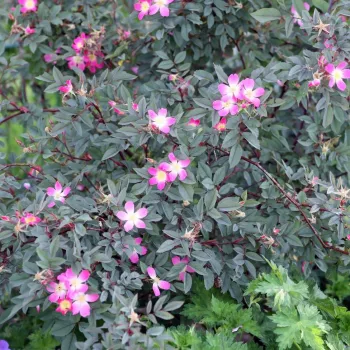
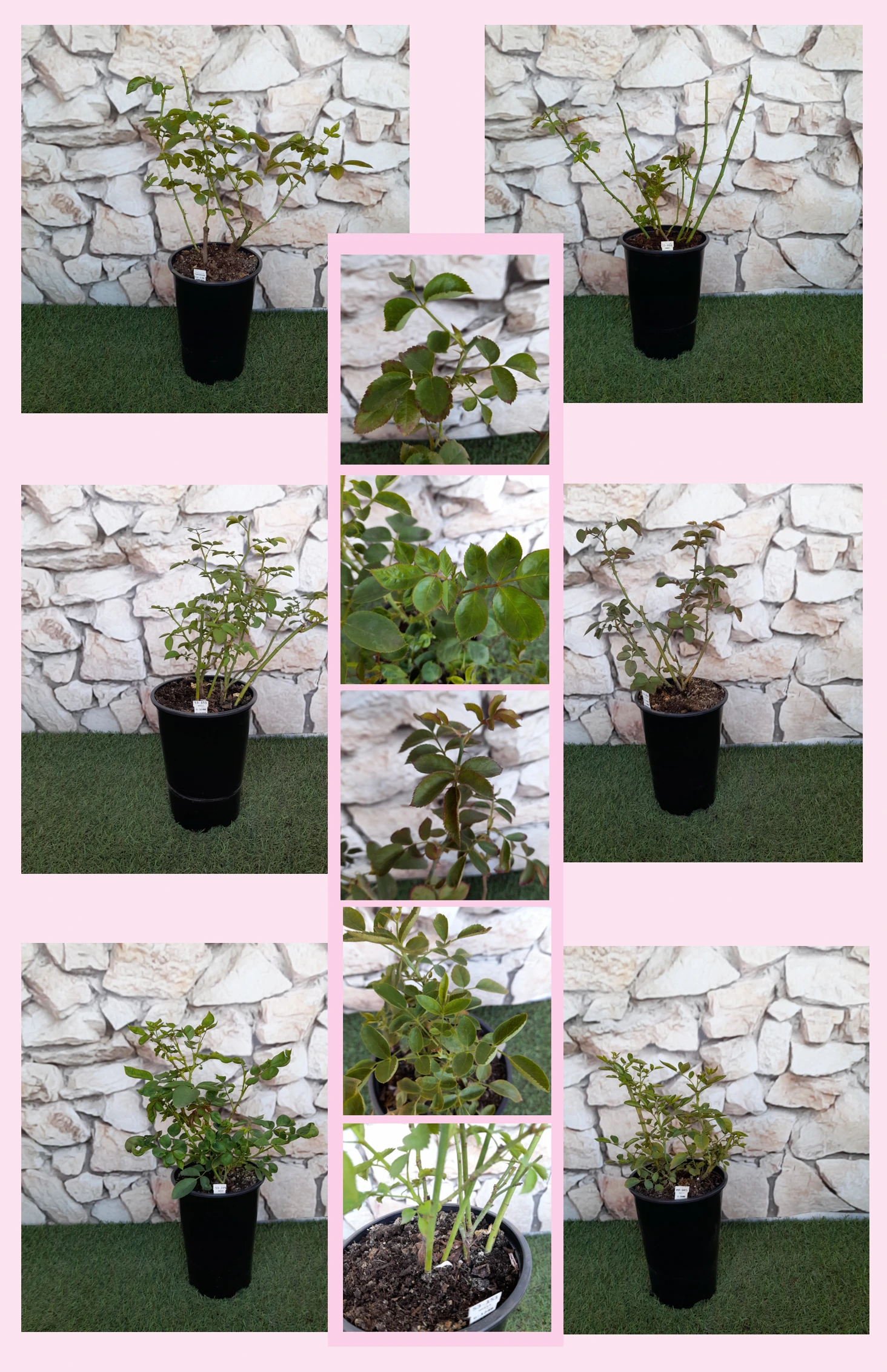
If you dream of a quietly romantic, “girly” Irish cottage or Dublin front garden, RUBRIFOLIA brings naturally graceful structure, soft colour and a hint of wild hedgerow charm with very little fuss. Its glaucous blue‑green, red‑tinted foliage stays attractive for months, while simple pink blooms and dark hips invite bees and birds, even when summer is cool and the rainfall feels relentless in your family garden. This own‑root shrub settles in steadily, building roots in year one, strong framework in year two and full ornamental presence by year three for a long, reliable life. Once established, its drought tolerance and good self‑cleaning habit mean less pruning and deadheading, and more time simply enjoying the garden. Plant it as a hedge or solitary feature for low‑maintenance, naturalistic structure that feels both relaxed and quietly refined.
Usage options
| Target area |
Reasoning |
| Naturalistic cottage border in a small family garden |
The species character, arching habit and soft pink flowers give a gentle, rural look without demanding complicated care, making it ideal for relaxed cottage-style borders that still feel tidy enough for everyday life for beginners. |
| Dublin terraced-house front garden hedge |
The upright, bushy shape and recommended 90 cm spacing create a light, informal hedge that offers privacy without overshadowing narrow paths, with foliage interest, flowers and hips across the seasons for urban-owners. |
| Low-input, long-lived structure plant |
As a tough own-root wild rose with excellent winter hardiness, it forms durable framework planting that comes back strongly after pruning and can outlast many modern shrubs with minimal replacement needs for long-term-planners. |
| Pollinator-friendly wildlife corner |
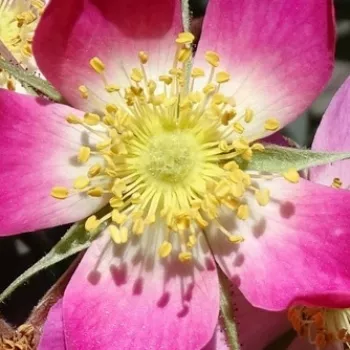
The single flowers with exposed stamens are especially attractive to bees and hoverflies, while the decorative hips offer autumn food for birds, supporting a small but vibrant wildlife area for nature-lovers. |
| Heat- and drought-tolerant sunny bank or slope |
Once established, it copes very well with heat and periods of dryness, so it suits sunny, free-draining sites or sloping ground that can be hard to water regularly for busy-gardeners. |
| Mixed shrub border on heavier Irish clay |
With good self-cleaning flowers and strong, arching growth, it provides height and texture above perennials; in typical Irish clay soils, thoughtful drainage and mulching help it thrive even where rain is frequent for family-gardeners. |
| Decorative rose-hip feature for autumn colour |
The numerous, dark red spherical hips stand out beautifully against its glaucous foliage, carrying interest well beyond the brief flowering season and pairing well with late grasses and dogwoods for seasonal-planners. |
| Large container on patio or balcony (over 50 litres) |
In a 50–70 litre container with good drainage, it becomes an architectural, low-fuss feature shrub; its foliage colour and natural form keep the display appealing even in cool, wet summers for small-space-gardeners. |
Styling ideas
- Cottage-Romantic – Underplant with coral bells and hardy geraniums for soft layers of pinks, plums and bronzes – ideal for cottage-border enthusiasts.
- Front-Hedge – Create a loose, knee-to-shoulder-high hedge, edging with low grasses to soften paths – perfect for Dublin terrace fronts.
- Wildlife-Haven – Combine with native hawthorn, dogwood and a small meadow patch to boost nectar, shelter and hips – great for nature-focused families.
- Foliage-Contrast – Pair its blue‑green leaves with Japanese forest grass and dark-leaved perennials for a refined, textural look – suited to design-conscious urban owners.
- Autumn-Glow – Set behind Cornus sanguinea 'Midwinter Fire' so hips and winter stems shine together – appealing to gardeners who love extended seasonal interest.
Technical cultivar profile
| Attribute |
Data |
| Name and registration |
Rosa rubrifolia / Rosa glauca, wild species shrub rose, commercial type wild rose; unregistered cultivar, also listed as Botanical rose Pourret in Rós luibheolaíoch collection. |
| Origin and breeding |
Natural species rose of unknown origin, historically associated with Pierre André Pourret; introduced to cultivation around 1830 and now widely grown in temperate regions. |
| Awards and recognition |
Royal Horticultural Society Award of Garden Merit (1993) and Great Plant Picks selection (2002), confirming its reliability and ornamental value in diverse garden settings. |
| Growth and structural characteristics |
Upright, arching, bushy shrub reaching 200–300 cm high and 120–190 cm wide; moderately dense, matt foliage with glaucous blue‑green to purplish tint; moderately thorny stems. |
| Flower morphology |
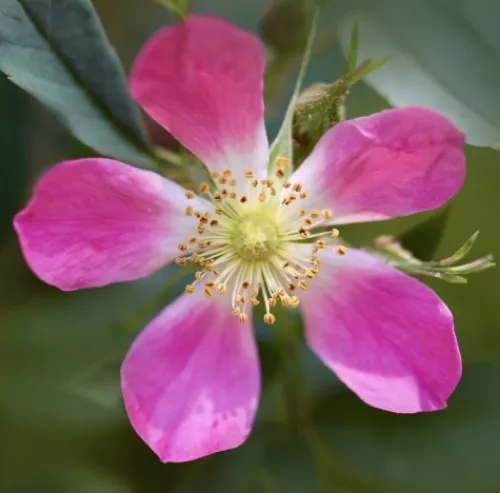
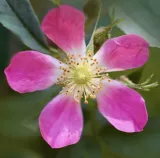
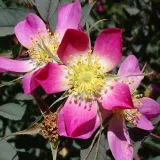
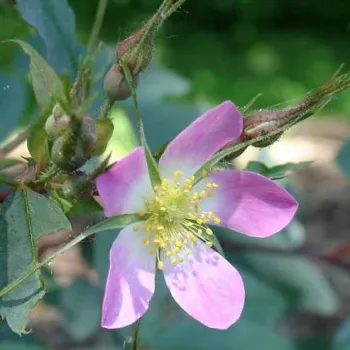
Single, flat flowers with 5–12 petals, small at 1–4 cm diameter, borne in clusters; once-flowering, non-remontant display in early to mid-summer, followed by decorative hips. |
| Colour data and phenology |
Deep pink flowers with paler centre; buds dark carmine pink, opening vivid, then fading towards pale pink or whitish; ARS DPk, RHS 55C and 65D, with colour lightening as blooms age. |
| Fragrance and aroma |
Mild, restrained scent with a delicately rosy character; not overpowering but noticeable on still days, adding a gentle fragrance layer in mixed planting or near seating areas. |
| Hip characteristics |
Moderately abundant spherical hips, 12–18 mm diameter, dark red when ripe; add strong late-season colour and wildlife value, particularly attractive in low autumn and winter light. |
| Resistance and winter hardiness |
Very hardy to around −46 to −43 °C (RHS H7, USDA 2a, Swedish Zon 7); medium disease resistance, generally coping well in average gardens with modest preventative care. |
| Horticultural recommendations |
Use as specimen, hedge or in naturalistic plantings at 90–165 cm spacing; tolerates partial shade; medium maintenance with occasional pruning and pest or disease checks as needed. |
RUBRIFOLIA offers natural cottage-garden charm, wildlife-friendly single flowers and hips, and durable own-root growth that rewards patient gardeners seeking a resilient, quietly distinctive shrub; it is well worth considering for your next planting plan.