ROTILIA® – carmine-red bedding floribunda rose – Kordes
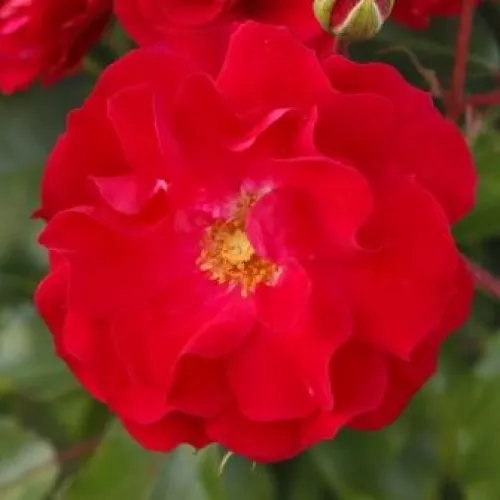
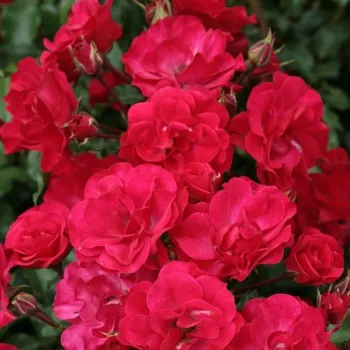
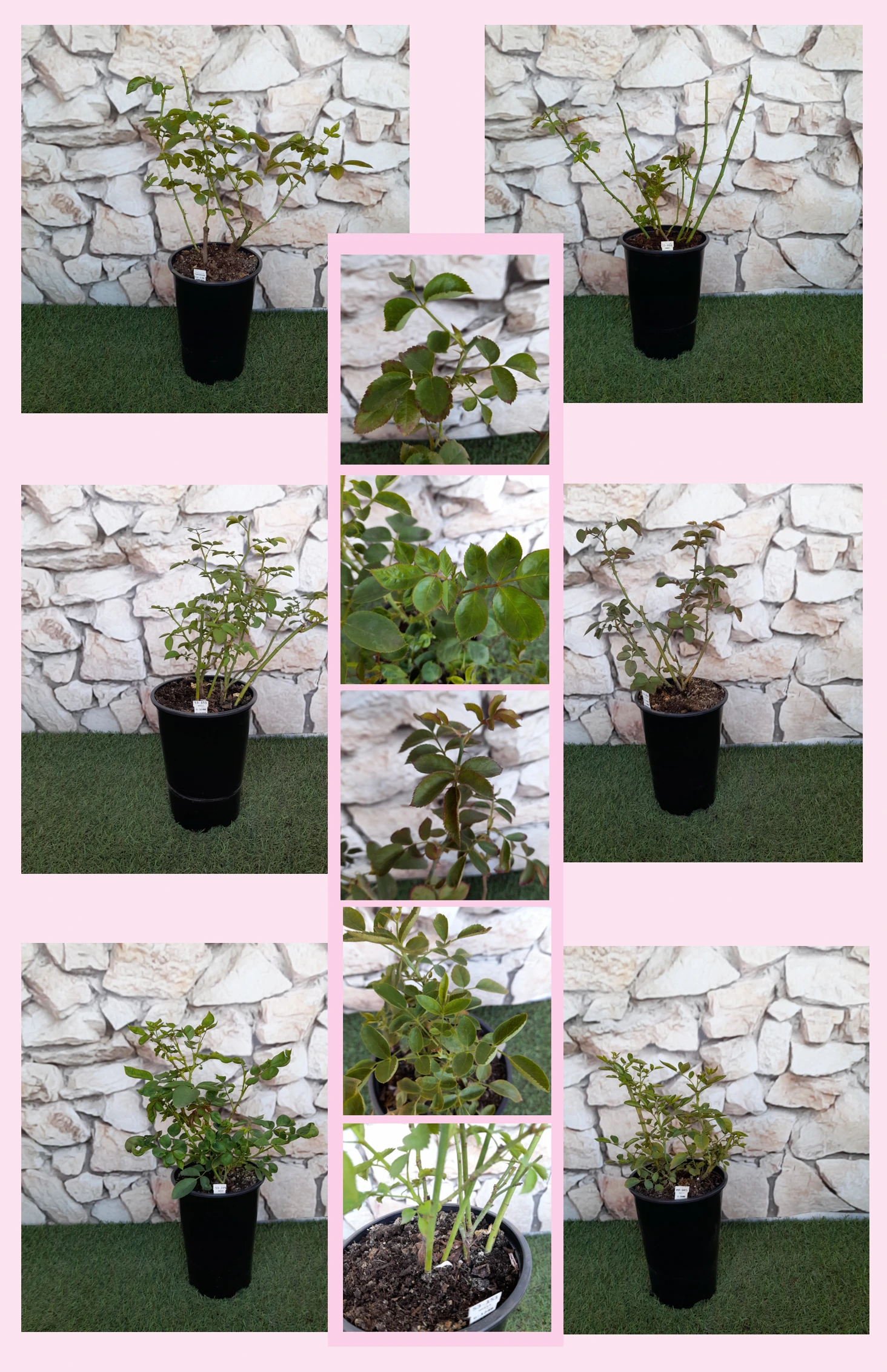
If you dream of a cheerful, cottage-style front garden that copes gracefully with Irish showers and breezes, Rotilia® is a remarkably accommodating choice. Its compact, bushy habit gives instant structure, while waves of vivid carmine-red, semi-double blooms create long-lasting colour from early summer into autumn. Flowers are naturally self-cleaning, so there is no constant deadheading – ideal when time is short or the weather is unsettled. Bred for high disease resistance and proven in international trials, this own-root plant settles steadily, rooting in the first year, building shoots in the second, and reaching full display by the third for a dependable, long-lived feature. Its open flower form offers gentle pollinator support, and the glossy dark foliage keeps beds looking fresh and tidy between flushes. Adaptable to typical Irish garden conditions, it handles cool summers and regular rain while still repeat-flowering with relaxed ease.
Usage options
| Target area | Reasoning |
|---|
| Front garden cottage border |
Use Rotilia® near the front gate or path for a welcoming edge of compact, bushy plants that give reliable shape without outgrowing a narrow border, creating neat structure with minimal pruning for the time-pressed city homeowner. |
| Long-season colour strip |
Plant as a low hedge or ribbon along a driveway or terrace; the prolific, repeat-flowering carmine-red clusters provide a long season of colour, staying eye-catching even in cloudy weather to please colour-loving urban gardeners. |
| Low-maintenance flowerbed |
Thanks to good self-cleaning, most spent blooms drop away on their own, so beds stay smart without weekly deadheading, keeping maintenance light for busy families who want impact rather than ongoing chores. |
| Healthy rose display in humid gardens |
Rotilia® was bred and awarded for excellent disease resistance, so leaves stay glossy and green with little spraying, a real advantage in damp, fungus-prone Irish gardens for environmentally aware, low-intervention gardeners. |
| Own-root investment planting |
As an own-root rose, the plant regenerates reliably from its base and maintains its varietal character over many years, giving stable ornamental value that rewards patient, quality-conscious buyers. |
| Pollinator-friendly family corner |
The semi-double, open flowers leave stamens partly accessible, offering light forage to bees and other insects while still looking full and decorative, suiting families who want wildlife interest alongside traditional roses. |
| Glossy green backdrop for perennials |
Dense, dark green foliage forms an attractive backdrop for softer perennials and grasses, helping borders look full and tidy even between flowering flushes, ideal for gardeners seeking an orderly yet naturalistic look. |
| Reliable colour in cool, wet summers |
Rotilia® keeps producing flower clusters even when summers are cool and showery, offering dependable colour despite frequent Irish rain and soft light, particularly reassuring for cautious buyers in changeable coastal climates. |
Styling ideas
- Cottage-curve – Sweep a low, curving line of Rotilia® along a front path, underplant with catmint and hardy geraniums for a soft-edged cottage look – ideal for homeowners wanting romance without fussy upkeep.
- Ruby-ribbon – Create a bold carmine-red strip beside a driveway, interspersing clumps of silver grasses like Panicum ‘Sangria’ for movement – suits urban gardeners seeking strong colour and clean structure.
- Family-hedge – Form a knee-high, child-friendly hedge along a lawn, spacing plants closely and mulching well so they knit together into a tidy, low screen – perfect for families wanting easy boundaries and flower power.
- Pollinator-patch – Group Rotilia® with Agastache ‘Blue Fortune’ and lavender in a sunny bed, mixing red, blue and purple while providing nectar through the season – great for nature-oriented, bee-friendly planting.
- Clay-corner – On improved, well-drained clay, mass-plant Rotilia® in a tricky side bed and edge with daylilies for extra summer colour – excellent for beginners taming awkward, damp-prone garden spots.
Technical cultivar profile
| Trait | Data |
|---|
| Name and registration |
Floribunda shrub rose Rotilia®, RigoRosen® collection, registered as KORvillade, commercial flowerbed floribunda type; American Rose Society exhibition name Rotilia®, group Rósra bhláthchlóis. |
| Origin and breeding |
Bred by Wilhelm Kordes III, W. Kordes’ Söhne, Germany, from unknown parentage; breeding year 1992, registration 2006, introduced commercially after 2006 by W. Kordes’ Söhne. |
| Awards and recognition |
Highly decorated floribunda with multiple Gold and Silver medals across Europe between 2001–2003, including Dublin Gold Medal and Den Haag Gold Rose, plus ADR (2002) and Gold Standard (2008) certifications. |
| Growth and structural characteristics |
Compact, upright, bushy shrub reaching about 60–85 cm high and 40–60 cm wide, with dense, glossy dark green foliage and moderate prickliness; ideal for edging, bedding and small garden hedging. |
| Flower morphology |
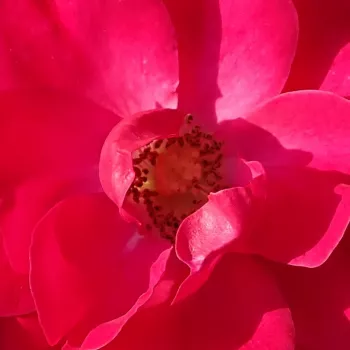
Semi-double, flat, cluster-flowered blooms, medium-sized at 4–7 cm with roughly 9–16 petals; produces abundant flushes and is remontant, giving generous repeat flowering after the main early-summer display. |
| Colour data and phenology |
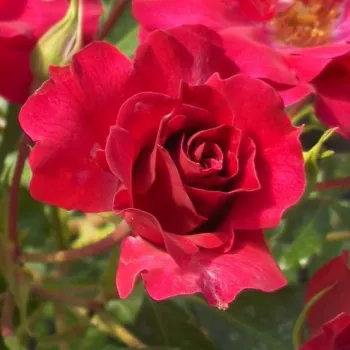
Vibrant, cool-toned carmine-red flowers (RHS 53B–53C), opening fiery red then lightening slightly to raspberry red; colour holds reasonably well in sun, with a soft silvery sheen developing on petal edges as blooms age. |
| Fragrance and aroma |
Very light, short-lived scent with a simple wild-rose character, noticeable mainly at close range on freshly opened blooms; chosen more for visual impact and reliability than for strong fragrance in the garden. |
| Hip characteristics |
Produces moderate numbers of small, spherical rose hips, 7–10 mm in diameter, developing to a bright scarlet-red tone (RHS 46A); hips add discreet late-season interest without overwhelming the plant’s habit. |
| Resistance and winter hardiness |
Rated resistant to powdery mildew, black spot and rust; hardy to around −21 to −18 °C (USDA 6b, RHS H7, Swedish zone 3), with good tolerance of summer heat and moderate drought once established. |
| Horticultural recommendations |
Suited to beds, edges, groundcover and mass plantings; prefers well-drained soil with organic matter, spacing 30–55 cm depending on use, and benefits from mulching plus watering in extended dry spells. |
Rotilia® offers compact structure, long-lasting carmine-red colour and healthy, low-maintenance growth on its own roots for years of dependable garden pleasure, making it a thoughtful choice for your next Irish cottage-style planting.