ROSENGARTEN ZWEIBRÜCKEN – purple-lilac climbing rose - Warner
Step out to your front door and meet a curtain of colour and rich, velvety blooms: Rosengarten Zweibrücken is a romantic climbing rose that copes calmly with rainfall and damp Irish air while filling small urban gardens with a warm, berry-spiced fragrance. Its semi-double flowers invite visiting bees, offering a gently pollinator-friendly presence on pergolas, walls, and cottage-style arches. On its own roots this climber settles in steadily, building long-lived stability and the ability to regenerate after pruning or weather damage. Ideal for beginners, it rewards light, regular care with generous repeat flowering from summer into autumn. Plant once, then enjoy the natural rhythm of year-one rooting, year-two structural growth and year-three full ornamental performance as it becomes the softly glowing backdrop to family life.
Usage options
| Target area |
Reasoning |
| Cottage-style pergola or rose arch |
Perfect for dressing a modest pergola or arch with romantic, velvety crimson‑purple clusters that repeat through the season, creating a welcoming garden “room” with very strong, spicy-berry scent drifting along the path for fragrance-lovers. |
| Front-garden wall or railings in town |
Climbs 2,2–3,4 m with a relatively narrow spread, making it ideal for softening boundary walls and railings in Dublin terraces, while its own-root longevity means you can train and re-shape it over many years without replanting for busy-owners. |
| Family seating area backdrop |
Trained on a fence behind a bench, it forms a scented, mid-green backdrop whose repeat flushes keep colour going through short Irish summers, so you do not need complicated pruning to enjoy years of relaxed evening sitting for hobby-gardeners. |
| Statement pillar or obelisk feature |
Its climbing habit and medium-sized, cup-shaped blooms suit vertical structures, letting you create a characterful column of colour without demanding detailed rose knowledge, while own-root growth recovers well after structural pruning for beginners. |
| Large container on patio or balcony |
In a 40–50 litre pot with good drainage it becomes a portable scented screen, ideal where soil is poor or space is tight; own-root resilience and medium maintenance needs keep care simple for urban-gardeners. |
| Mixed cottage border with perennials |
Semi-double clusters and moderate hips sit beautifully among obedient plant, marigolds and blue globe thistle, offering partial support to pollinators while adding movement and seasonal interest that fits naturally into informal borders for nature-lovers. |
| Family play garden boundary |
Sparsely thorned growth and moderate disease resistance make it a practical choice along garden edges, creating a soft, colourful boundary that copes well with frequent Atlantic-breeze and shower changes typical of Irish weather for family-gardens. |
| Cut-flower corner near the house |
Planted close to the door, its remontant flowering provides richly coloured, highly perfumed stems for cutting, so you can bring that full-bodied, berry-fruited scent indoors repeatedly with only light deadheading for rose-enthusiasts. |
Styling ideas
- Cottage-arch romance – Train along a wooden arch with foxgloves and obedient plant beneath for a lilac-purple, bee-friendly entrance – ideal for nostalgic cottage-garden dreamers.
- Terraced-softening screen – Let it climb railings with low marigolds at the base to soften hard lines and add year-on-year colour – suited to compact Dublin front gardens.
- Scented-seating nook – Grow on a pergola over a small bench, underplanted with blue globe thistle and grasses for evening fragrance – perfect for relaxation-focused homeowners.
- Pillar-of-colour – Spiral stems around a metal obelisk in a mixed border for an upright accent that repeats flower through summer – good for design-conscious beginners.
- Patio-privacy pot – Plant in a 50 litre container with trailing herbs to form a movable, perfumed screen beside outdoor dining – great for renters and balcony gardeners.
Technical cultivar profile
| Characteristic |
Data |
| Name and registration |
Climbing rose from the Rós dreapadó group; registered as CHEwpurplex, marketed as Rosengarten Zweibrücken Climbing rose CHEwpurplex for garden and decorative use. |
| Origin and breeding |
Bred in the United Kingdom by Christopher H. Warner in 2009; introduced after 2013 via Rosen-Union e.G., with plant variety protection registered in New Zealand in 2013. |
| Awards and recognition |
Holder of a Goldmedaille from Baden-Baden trials in 2010, confirming its ornamental value and performance for discerning gardeners and collectors of premium climbing roses. |
| Growth and structural characteristics |
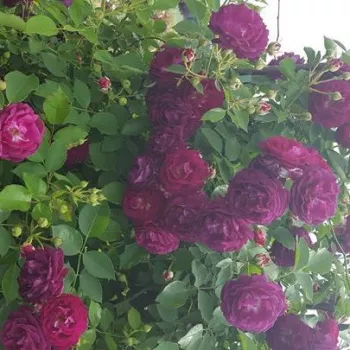
Vigorous climbing habit, typically 220–340 cm high and 150–260 cm wide, with moderately dense, mid-green, slightly glossy foliage and relatively sparse prickles for easier handling and training. |
| Flower morphology |
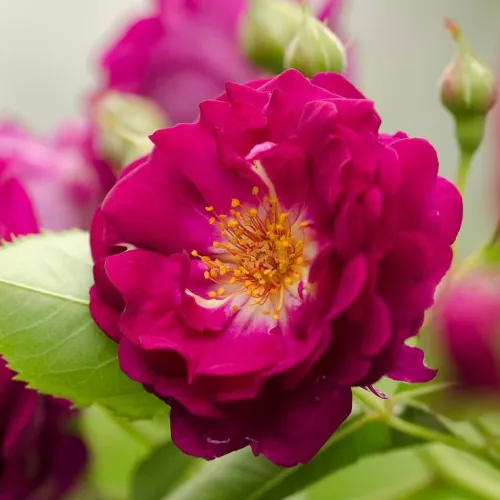
Semi-double, cup-shaped clusters with 13–25 petals per bloom and medium 4–7 cm flower size; remontant, carrying an abundant second flush that extends seasonal display with regular deadheading. |
| Colour data and phenology |
Deep crimson-purple with violet tones; bud dark and velvety, opening to velvety deep violet-red, then lightening to pinkish-purple; RHS 77A outer, 77B inner, with medium colour retention before petal drop. |
| Fragrance and aroma |
Very strongly scented, garden-filling perfume with a full-bodied, spicy, berry-fruited character; best appreciated near paths, doors or seating, where air movement can carry the distinctive aroma. |
| Hip characteristics |
Produces moderate quantities of small, spherical red hips, around 6–10 mm in diameter, extending seasonal interest into autumn and providing a modest additional resource for wildlife visitors. |
| Resistance and winter hardiness |
Winter hardy to about −21 to −18 °C (USDA 6b, RHS H7, Swedish zone 3); moderate resistance to black spot, mildew and rust, benefiting from good air circulation and sensible preventive care. |
| Horticultural recommendations |
Suited to pergolas, arches, walls, fences, pillars, large containers and park use; prefers well-drained soil, spacing of 140–220 cm, and partial-shade tolerance for flexible siting. |
ROSENGARTEN ZWEIBRÜCKEN offers richly perfumed repeat flowering, characterful cottage-garden colour and long-lived own-root reliability, making it a thoughtful choice if you would like a graceful, easygoing climbing rose.