ROSA VIRIDIFLORA – green historic China rose - Smith
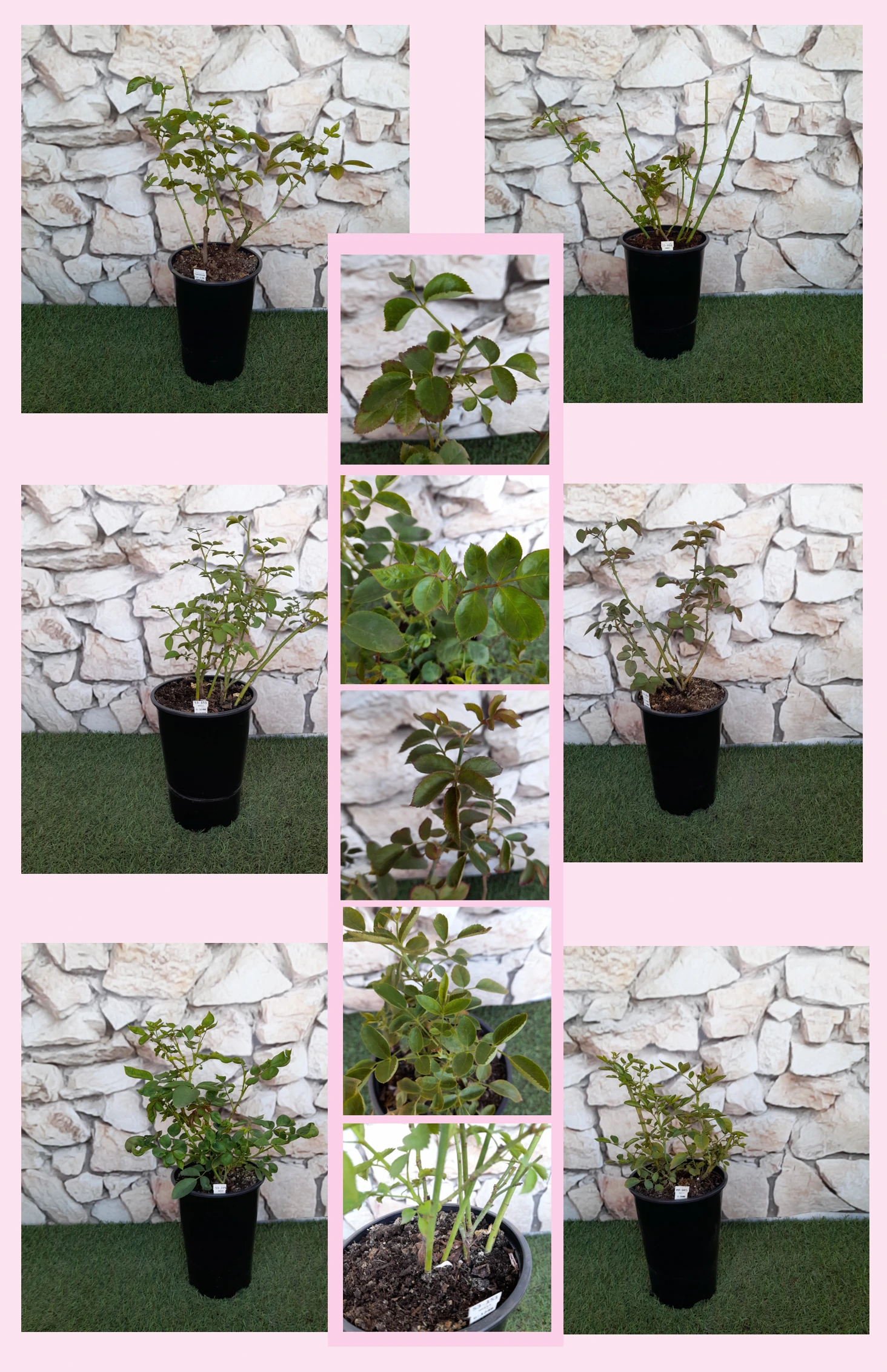
Step out to a world of soft green light with Rosa viridiflora, the famous “Green Rose” that turns every Irish cottage border or Dublin terrace into something quietly special. Its truly unique green pompon blooms flower repeatedly through our short summers, offering a gently quirky focal point even when the weather feels more moist than sunny. This historic China shrub handles cool, damp Irish conditions with reassuring reliability, provided you give it decent drainage on heavier clay and a spot with some shelter from the strongest Atlantic breeze. As an own‑root plant it settles in steadily and rewards you with a long, stable life in your garden: first it concentrates on roots, then builds generous new shoots, and by the third year reaches its full ornamental character, giving you low‑effort, long‑term green-flowered interest.
Usage options
| Target area | Reasoning |
|---|
| Feature shrub in a small front garden |
Perfect where you need a talking‑point plant without fussy upkeep: the unusual green flowers and tidy, upright habit make a single shrub stand out, yet it remains compact enough for terraced front gardens and small drives, suiting the curious homeowner. |
| Cottage‑style mixed border |
Repeat flowering and the restrained height allow it to weave into traditional cottage plantings; its green blooms calm bright perennials, while own‑root vigour supports a long garden life with minimal replacement, ideal for the relaxed cottage‑gardener. |
| Container or large patio pot (40–50 L+) |
Performs well in a generous container where drainage can be controlled on heavy Irish soils; a 40–50 litre pot with quality compost and mulch keeps maintenance moderate and colour close to eye level, perfect for the time‑pressed urbanite. |
| Part‑shaded side passage or narrow bed |
Tolerates partial shade better than many roses, so it works along side passages or between houses where sun is limited; the mid‑green foliage and flowers stay attractive, serving the practical yet style‑aware gardener. |
| Small informal hedge or low boundary line |
Its bushy, upright growth and moderate spread suit a loose, low hedge; regular trimming and some deadheading keep the line neat while preserving the historic character, appealing to design‑conscious owners. |
| Specimen in a clay‑based lawn border |
Well adapted to our cool, damp climate if planted on a slight mound with added grit, helping it cope with heavier clay and persistent rainfall common in many Irish gardens, which reassures the cautious beginner. |
| Historic or “collector’s corner” planting |
This 19th‑century China rose adds genuine heritage interest; its sport origin and preserved form lend authenticity to period‑style gardens and rose collections, rewarding the historically minded collector. |
| Low‑input, long‑term garden structure |
Moderate disease resistance and own‑root durability mean that once established it offers many years of consistent structure and colour with only occasional plant protection, suiting the busy but quality‑seeking buyer. |
Styling ideas
- Cottage contrast drift – Plant in a loose group near lavender and hardy geraniums to let the green blooms act as a soft foil to blues and purples – for romantic cottage‑garden lovers.
- Terraced focal pot – Use a single shrub in a 50 L terracotta pot by the front door, underplanted with trailing bellflower, to keep the quirky flowers at eye level – for style‑conscious city dwellers.
- Green-on-green tapestry – Combine with Midwinter Fire dogwood and textured grasses, creating year‑round structure where the rose provides summer depth – for fans of subtle, naturalistic schemes.
- Shady side passage – Line a side bed with one or two plants interspersed with ferns and hostas so the green flowers glow softly in partial shade – for homeowners making the most of every metre.
- Heritage highlight bed – Place it centrally in a small heritage rose bed surrounded by low box or thyme edging to emphasise its historic status – for collectors and history‑minded gardeners.
Technical cultivar profile
| Parameter | Data |
|---|
| Name and registration |
ROSA VIRIDIFLORA – historic China shrub rose, also known as Green Rose; part of a heritage collection, exhibited as shrub rose / old garden rose in specialist classes. |
| Origin and breeding |
Spontaneous sport of ‘Slater’s Crimson China’ (Rosa chinensis); discovered in the United States before 1827, introduced to Europe in 1855, breeder recorded as John Smith. |
| Growth and structural characteristics |
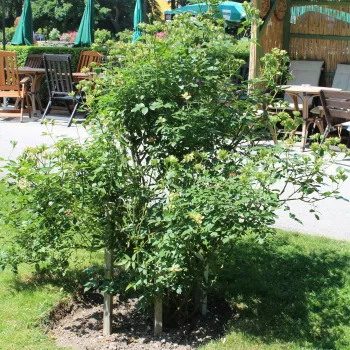
Bushy, upright shrub typically 80–130 cm tall and 60–100 cm wide, with moderately dense, glossy mid‑green foliage and only slight prickliness, suitable for beds, hedges and containers. |
| Flower morphology |
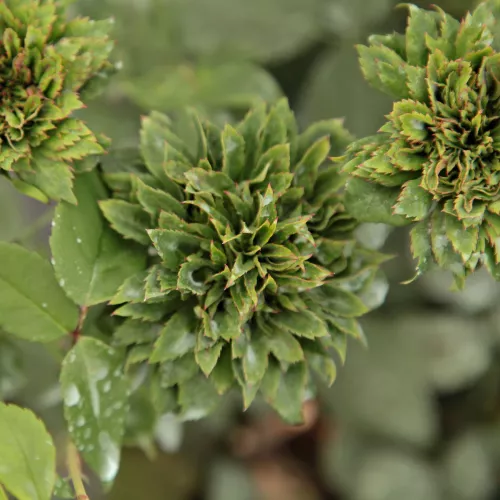
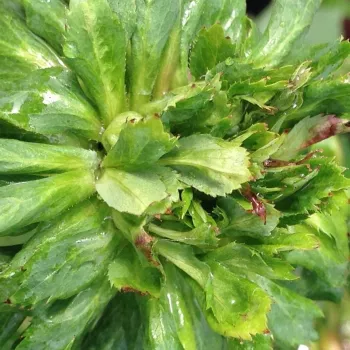
Strongly remontant, small double blooms 1–4 cm wide, 26–39 petalled, borne in clusters; ball to pompon form with poor self‑cleaning, so regular deadheading improves appearance and flowering. |
| Colour data and phenology |
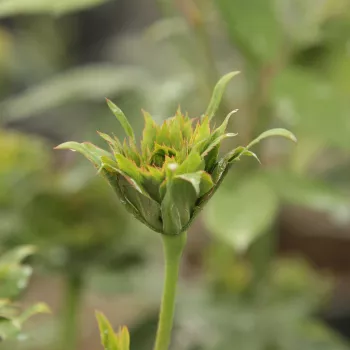
Distinctive green flowers: buds deep oil‑green, opening vivid mid‑green with yellowish tips; later pale yellow‑green with bronzed edges, usually retaining green tones even in strong summer light. |
| Fragrance and aroma |
Fragrance is very weak and often barely perceptible, with a subtle spicy character rather than classic rose sweetness; grown mainly for visual interest and botanical curiosity rather than scent. |
| Hip characteristics |
Occasionally forms small spherical hips 6–10 mm across; usually green to brownish in colour, partially hidden by foliage, with little ornamental value compared to the distinctive green flowers. |
| Resistance and winter hardiness |
Hardy to approximately −21 to −18 °C (USDA 6b, RHS H7); good resistance to powdery mildew and black spot, moderate rust sensitivity, medium heat tolerance and needs watering in prolonged drought. |
| Horticultural recommendations |
Plant in well‑drained soil, spacing 55–100 cm depending on use; thrives in sun or partial shade with moderate feeding, mulching on clay, and occasional plant protection in humid seasons. |
ROSA VIRIDIFLORA offers uniquely green blooms, steady repeat flowering and long‑term own‑root reliability, making it a distinctive yet easy shrub to consider for your Irish garden.