ROBUSTA® – red park rose - Kordes
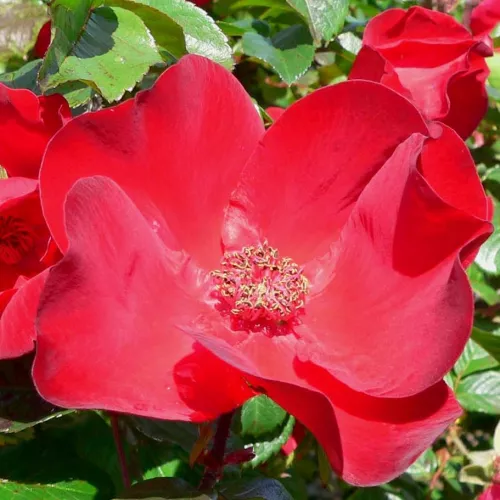
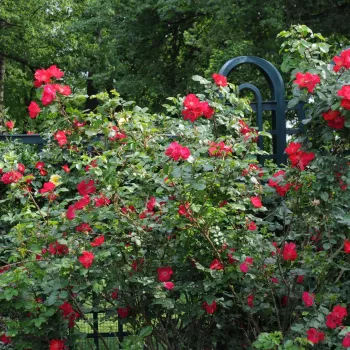
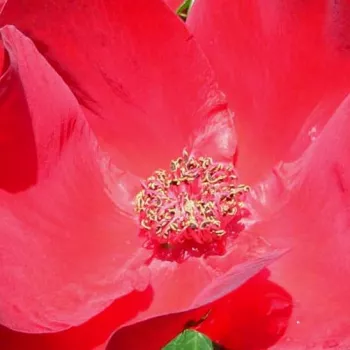
Step outside to meet Robusta as a bright, easy shrub that shrugs off wind and wet, naturally suiting Irish gardens where summers are short yet rewarding for repeat bloom. Its single, scarlet flowers and open centres are loved by pollinators, while the mild, fruity fragrance adds a gentle note along paths and cottage-style fronts. Growing on its own roots, this rose settles in steadily and offers a reassuringly long lifespan, regrowing strongly if ever cut back hard or nipped by weather. With good disease resistance and self-cleaning blooms, there is little for you to do beyond basic care. Expect a simple rhythm: the first year building roots, the second pushing stronger shoots, and by the third it becomes a full, glowing feature in your family garden.
Usage options
| Target area |
Reasoning |
| Cottage-style front garden hedge |
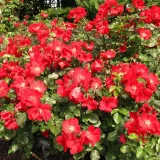
Robusta forms a tall, dense, upright shrub with glossy dark foliage, ideal for an informal flowering hedge that screens the street while still feeling friendly and welcoming for small Dublin terraces; its dependable shape suits beginners. |
| Pollinator-friendly mixed bed |
The single, open scarlet blooms offer easy pollen access from early summer into autumn, keeping bees active even when other plants are fading, and pairing well with hardy perennials for nature-focused gardens and fragrance-lovers. |
| Low-maintenance family border |
Good resistance to common fungal problems means less spraying and fewer worries in humid, changeable weather, so you can enjoy colour without constant attention, which is especially reassuring for busy-owners. |
| Long-lived structural specimen |
As an own-root shrub, Robusta matures into a durable framework that reshoots strongly from the base, maintaining its shape and presence for many years, supporting a stable layout prized by long-term-minded homeowners. |
| Urban verge or coastal front strip |
This sturdy rugosa hybrid copes well with exposed sites, tolerating Atlantic breezes, salt-tinged air and rainy spells, making it a reliable choice for challenging city or seaside positions valued by practical gardeners. |
| Season-long colour anchor |
Repeat flowering with an especially generous second flush keeps fresh red clusters coming for months, so one shrub can anchor a border’s colour scheme, a benefit much appreciated by compact-garden owners. |
| Simple-care “plant and enjoy” area |
Self-cleaning flowers that drop neatly with minimal deadheading, combined with modest feeding needs, mean day-to-day care stays light, which suits those who want beauty first and tasks second, particularly new gardeners. |
| Screening with seasonal rose hips |
The large, robust framework delivers privacy in summer, and occasional orange hips add autumn interest for wildlife-friendly schemes, especially when underplanted with low perennials planned by nature-conscious planners. |
Styling ideas
- Cottage-hedge – Line a low front boundary with Robusta and weave in Cheddar pinks for soft edging and scent – ideal for cottage-style terrace owners.
- Wildlife-ribbon – Plant a curving row with gaps for Caucasian stonecrop and native grasses to feed bees and frame paths – perfect for nature-first families.
- Crimson-focus – Use a single shrub as a bold red focal point in a small lawn, underplanted with spring bulbs – suited to compact, design-aware homeowners.
- Urban-screen – Combine Robusta with evergreen Ceanothus for a layered, wind-filtering screen along driveways – good for exposed suburban front gardens.
- Rain-garden – Set Robusta in a free-draining mound within heavier soil, circling with sedums for late colour – useful for clay-soil gardeners.
Technical cultivar profile
| Parameter |
Data |
| Name and registration |
Robusta® park shrub rose, shrub Hybrid Rugosa group, registered as KORgosa, ARS exhibition name Robusta, commercial type park rose, premium silver rated cultivar. |
| Origin and breeding |
Bred by Reimer Kordes, W. Kordes’ Söhne, Germany, from an unknown seedling × Rosa rugosa regeliana, breeding completed 1978, introduced and registered internationally in 1979. |
| Awards and recognition |
Received the ADR award in 1980 for performance and garden worthiness; this distinction was later withdrawn as criteria evolved, but the variety remains widely respected in practice. |
| Growth and structural characteristics |
Vigorous upright shrub, typically 160–220 cm high and 100–160 cm wide, with dense, dark green glossy foliage and many prickles, forming a solid, hedge-capable framework over time. |
| Flower morphology |
Single to semi-double flat blooms with 5–12 petals, medium sized at 4–7 cm, carried in clusters, self-cleaning so spent flowers usually drop without deadheading, remontant with a strong second flush. |
| Colour data and phenology |
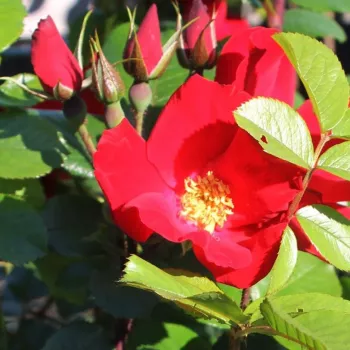
Buds dark crimson, opening brilliant scarlet that deepens slightly to the centre; ARS red MR, RHS 46A–46B, colour holds reasonably but lightens a little in strong sun, flowering over an extended season. |
| Fragrance and aroma |
Fresh, mild fruity scent that complements rather than dominates, noticeable at close range along paths or seating areas, suitable for gardeners preferring a gentle, unobtrusive fragrance profile. |
| Hip characteristics |
Produces occasional ellipsoid orange hips, about 18–26 mm in diameter, adding a light touch of autumn interest and potential wildlife value without overwhelming the plant’s overall appearance. |
| Resistance and winter hardiness |
Very hardy, tolerating about −32 to −29 °C (USDA zone 4b, RHS H7), generally resistant to powdery mildew and rust, with moderate black spot susceptibility that may need occasional attention. |
| Horticultural recommendations |
Best in well-drained soil, including improved clay, with full sun or light shade; space 110–180 cm depending on use, water in dry spells, and in pots choose at least a 40–50 litre container for stability. |
ROBUSTA® – red park rose - Kordes offers easy repeat colour, pollinator-friendly single blooms and long-lived own-root reliability, making it a thoughtful choice if you favour resilient structure with minimal fuss.