RAUBRITTER® – pink park rose - Kordes
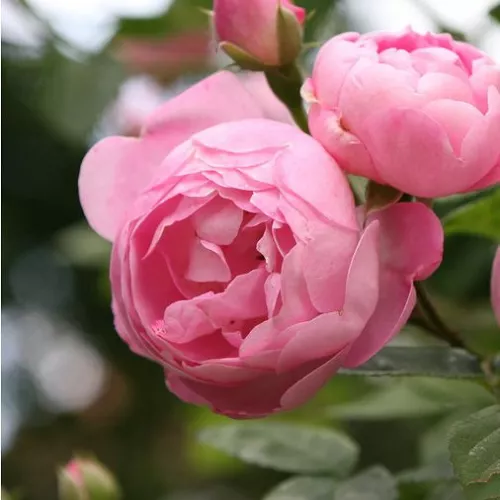
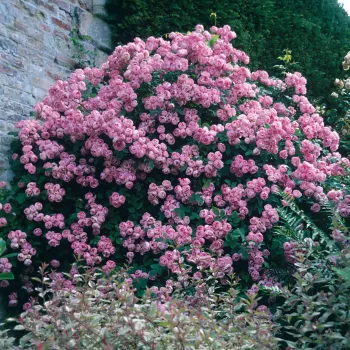
Let RAUBRITTER® bring a touch of storybook romance to your Irish garden: a once-a-year cascade of tiny pompon blooms, arching over walls and hedges in soft pink waves. Its bushy, arching habit and spreading growth make it perfect for relaxed cottage borders or a charming Dublin front-garden screen that copes calmly with cool summers and frequent rainfall. This is a low-fuss rose with notably strong disease resistance, so you spend more time enjoying flowers and less time worrying about sprays. Planted on its own roots, it settles in for the long term, building a reliable framework of branches and a stable show of flowers year after year. Give it reasonable drainage, a bit of space to stretch, and watch it mature from a modest young shrub to a full, graceful presence, offering quiet endurance and a gentle, nostalgic scent along your daily path.
Usage options
| Target area |
Reasoning |
| Cottage-style hedge or front boundary |
The bushy, arching habit and 160–260 cm spread create a soft, romantic hedge that suits both rural cottage lanes and tighter Dublin terraces, giving privacy without feeling formal; low maintenance suits the time‑pressed home gardener |
| Pergola or archway walk-through |
Long, flexible shoots can be lightly tied to a pergola or arch, forming a tunnel of small pompon blooms during the main flush, echoing the feel of a short, rain‑freshened garden walk for rose enthusiasts |
| Wall or fence backdrop |
Excellent for clothing an unsightly fence or gable with an informal curtain of foliage and flowers; good disease resistance means it stays attractive through typical humid Irish spells for busy owners |
| Groundcover on banks and slopes |
The naturally spreading shape and dense branching allow it to spill down low walls or stabilise gentle slopes, reducing weeding and mowing while giving a soft, cottage‑garden look for practical gardeners |
| Standalone specimen in lawn or gravel |
Planted alone with its full spacing, it forms a broad, fountain‑like shrub that becomes a seasonal focal point; own‑root vigour supports a long garden life with steady ornamental value for long-term planners |
| Mixed shrub border with perennials |
The once‑flowering habit pairs well with later‑blooming perennials and small shrubs, extending interest after the main flush; tolerant of partial shade, it suits typical Irish family plots for creative planters |
| Large container on patio (40–60 litres) |
In a very large, well‑drained container of at least 40–50 litres, its controlled height and spreading shape bring cottage charm to paved spaces; own‑root plants regenerate well if pruned back by the urban gardener |
| Low-care park or communal planting |
Heat and moderate drought tolerance, together with strong resistance to black spot, mildew and rust, make it ideal where regular attention is limited, even in exposed, rain‑washed coastal settings for the shared community space |
Styling ideas
- Cottage-arch romance – Train RAUBRITTER® over a simple metal arch, underplant with lavender and catmint to cover the base and extend colour – for lovers of classic cottage walks
- Soft boundary screen – Plant as a loose hedge along a front boundary, weaving in spring bulbs and hardy geraniums to blur edges – for homeowners seeking gentle privacy
- Storybook slope – Let the arching canes spill down a sunny bank, mixed with Liatris spicata ‘Kobold’ and ornamental grasses – for gardeners taming awkward levels
- Romantic wall veil – Fan branches against a low wall or fence, backed by Ceanothus thyrsiflorus and bluebeard for layered pink and blue – for those who enjoy painterly colour
- Patio focal pot – Grow one plant in a deep 50–60 litre container with trailing thyme and small heucheras at the rim – for balcony and courtyard rose keepers
Technical cultivar profile
| Parameter |
Data |
| Name and registration |
Shrub, Hybrid Macrantha park rose marketed as RAUBRITTER®; exhibition name Raubritter; no registered code; part of the park and shrub rose collection for garden and landscape use. |
| Origin and breeding |
Bred by Wilhelm J. H. Kordes II in Germany from ‘Daisy Hill’ × ‘Solarium’; introduced by W. Kordes’ Söhne in 1936; an unregistered but historically established garden variety. |
| Awards and recognition |
Historical shrub rose of enduring popularity, valued by collectors and cottage-garden designers; appreciated for its distinctive pompon blooms and reliable garden performance over many decades. |
| Growth and structural characteristics |
Bushy, arching shrub to about 80–130 cm high and 160–260 cm wide; moderately dense, matte dark grey‑green foliage; densely thorned stems; self‑cleaning is moderate, especially in drier weather. |
| Flower morphology |
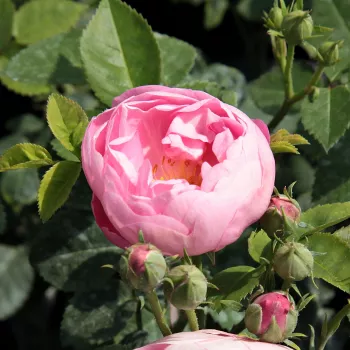
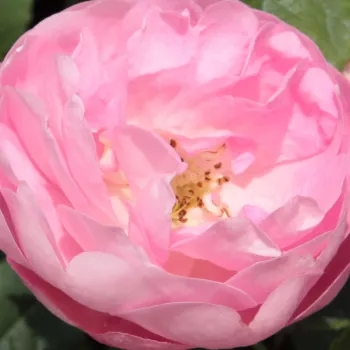
Small ball‑shaped, pompon flowers, around 1–4 cm across; very full with 40 or more petals; produced in large clusters; once‑flowering with a generous early‑summer flush rather than repeat blooms. |
| Colour data and phenology |
Deep pink with a slight purplish cast; buds dark pink, opening to rosette blooms with lighter centres; colour lightens in strong sun and deepens in cooler weather, fading evenly to pastel pink tones. |
| Fragrance and aroma |
Mild, soft rosy fragrance with a gentle, nostalgic character; pleasantly noticeable at close quarters without overwhelming nearby seating, making it suitable for paths and intimate garden corners. |
| Hip characteristics |
Produces small spherical red hips, around 6–10 mm across, in moderate quantities; hips add subtle autumn interest and can complement late‑season perennials in informal plantings. |
| Resistance and winter hardiness |
Hardy to approximately −34 to −32 °C (RHS H7, USDA 4a); good tolerance of heat and moderate drought with watering in prolonged dry spells; resistant to black spot, powdery mildew and rust. |
| Horticultural recommendations |
Best in well‑drained soil with full sun or light shade; space 120–220 cm depending on use; allow room for arching growth; minimal pruning needed, mainly shaping after flowering on established plants. |
RAUBRITTER® offers nostalgic pink pompon cascades, strong disease resistance and durable, own-root reliability for relaxed Irish gardens, well worth considering if you favour long-lived beauty with little fuss.