QUEEN OF WARSAW – pink bedding floribunda rose – Rojewski
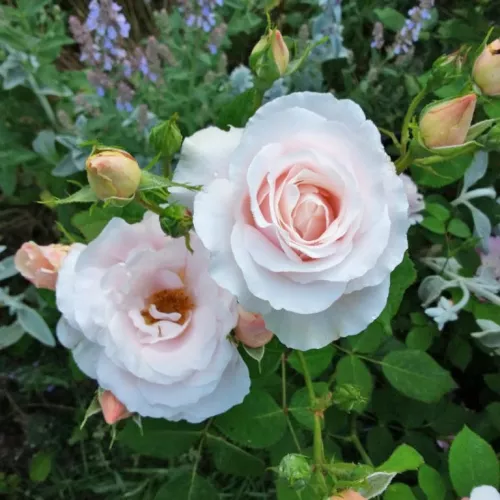
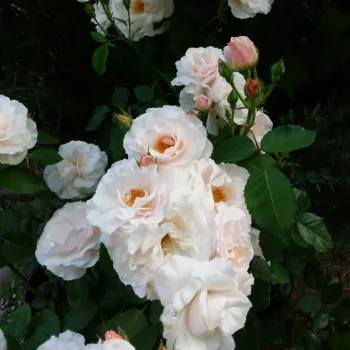
Step outside to QUEEN OF WARSAW and you are greeted by pearlescent petals and a softly spicy perfume that sit beautifully in a “girly” cottage-style border or a Dublin terraced front garden. Its semi-double blooms are gently romantic, yet open enough to tempt visiting bees, bringing a touch of wildlife charm to your everyday view. Self-cleaning flowers keep it looking tidy with very little effort from you, ideal when showers sweep in off the Atlantic and the air stays damp and cool through much of summer, yet the plant still strives to repeat flower reliably. On its own roots it offers reassuring longevity and the ability to regrow strongly if cut back hard, giving stable beauty in a family garden over many years. Think of it as a gentle investment: in year one it is all about building roots, in year two the plant pushes more confident shoots, and by year three it settles into its full ornamental rhythm.
Usage options
| Target area |
Reasoning |
| Front cottage-style flowerbed by the path |
The semi-double, pearlescent pink flowers bring a romantic, old-world note that suits small Irish cottage frontages, while the bushy, 80–110 cm habit naturally fills gaps without complex pruning. Self-cleaning blooms reduce deadheading, leaving more time for everyday life for the busy homeowner |
| Urban terraced-house front garden |
QUEEN OF WARSAW offers repeat flushes of soft pink colour through the season, giving a welcoming face to the street even where space is tight. Its moderate height works well behind a low wall or railings, and semi-double flowers offer some interest for passing pollinators, pleasing the nature-loving city-dweller |
| Mixed “girly” border with perennials |
The translucent pastel tones blend effortlessly with soft perennials and cottage favourites, creating a feminine, layered effect without overwhelming the bed. Clustered, cup-shaped blooms provide rhythm and structure among looser plants, ideal for those learning to compose borders, supporting the beginner gardener |
| Feature rose in a 40–50 litre patio container |
In a large, well-drained container, QUEEN OF WARSAW becomes an easy focal point near a door or seating area, where its medium-strength spicy fragrance can be enjoyed at close quarters. Own-root growth copes well with renewal pruning, suiting the balcony-and-patio owner |
| Small informal flowering hedge |
Planted about 55 cm apart, its bushy habit and dense foliage create a soft-edged, flowering line that feels more romantic than formal. Repeating blooms add colour waves over the season, while own-root construction helps the hedge recover from occasional hard trims valued by the practical family-gardener |
| Pollinator-accented corner with climbers |
Partnered with vertical accents like clematis or honeysuckle, its semi-double flowers with exposed stamens act as a nectar stop below taller climbers, and it keeps the bed decorative even between peak perennial displays during our often damp, short summers, reassuring the wildlife-conscious planter |
| Cut-flower patch in a family garden |
The large, 7–10 cm blooms and pleasant spicy fragrance make pretty, informal bunches for the kitchen table. Own-root plants tolerate regular cutting back for stems and can live on to provide flowers for many seasons, rewarding the home bouquet enthusiast |
| Long-term structural rose in a mixed shrub border |
With hardy performance down to about −30 °C and own-root resilience, this shrub can act as a long-lived pink accent among other shrubs, regrowing from the base if winter or pruning are severe, a reassuring choice for the long-term planner |
Styling ideas
- Cottage-curve – Plant QUEEN OF WARSAW along a gently curving path with catmint and soft geraniums for a romantic “girly” welcome – ideal for nostalgic front-garden lovers
- Pastel-duet – Combine with pale foxgloves and airy grasses so the pearlescent blooms float among vertical spires and soft movement – perfect for relaxed country-style gardeners
- Porch-parfum – In a 40–50 litre terracotta pot by the front door, underplanted with trailing thyme, the spicy fragrance greets you on arrival – suited to busy urban homeowners
- Blush-hedge – Create a low, informal hedge with repeating plants, weaving in lavender for scent and bees, to frame a lawn with soft pink ribbons – attractive to families wanting gentle structure
- Romantic-arch – Place QUEEN OF WARSAW at the base of a light climber like honeysuckle on an arch, so clustered pink blooms echo the climber’s flowers – appealing to lovers of storybook garden views
Technical cultivar profile
| Parameter |
Data |
| Name and registration |
QUEEN OF WARSAW – pink bedding floribunda rose, shrub floribunda group, trade name QUEEN OF WARSAW Bedding rose Rojewski; collection: bedding rose; commercial group: Rósra bhláthchlóis. |
| Origin and breeding |
Bred by Łukasz Rojewski, Poland, from (‘Morgengruss’ × ‘Constance Spry’) × (‘Morgengruss’ × ‘Comte de Chambord’); bred 2014, registered 2024, introduced after 2024 by Rojewski Roses. |
| Awards and recognition |
Certificat de Mérite at the International New Roses Competition, Switzerland, 2022; EU plant variety protection granted under CPVO 67090 in 2024, indicating recognised ornamental value. |
| Growth and structural characteristics |
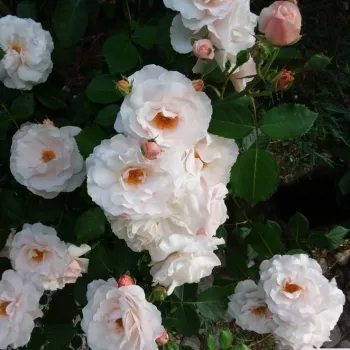
Bushy, well-branched shrub reaching 80–110 cm in height and spread, with dense, slightly glossy medium-green foliage, RHS 137A; moderately thorny stems and good self-cleaning of spent blooms. |
| Flower morphology |
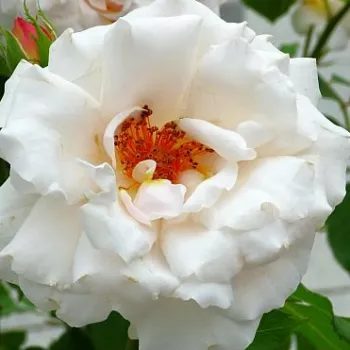
Semi-double, clustered, cup-shaped blooms, 7–10 cm across, carrying 13–25 petals; repeat flowering with a strong second flush; good self-cleaning so most faded flowers drop naturally without deadheading. |
| Colour data and phenology |
Delicate, translucent pearlescent pale pink; outer petals RHS 65C, inner 69D; buds milky white flushed medium pink, fading with age to almost white, leaving a soft, barely visible pink veil in full openness. |
| Fragrance and aroma |
Medium-strength, well-scented rose fragrance with a distinct spicy character; best appreciated at close range in still, mild weather, making it suitable for seating areas and near frequently used paths or doors. |
| Hip characteristics |
Produces moderately abundant, spherical orange-red hips, about 8–12 mm diameter; hips have decorative value in autumn and are considered edible, adding seasonal interest for wildlife-friendly planting schemes. |
| Resistance and winter hardiness |
Very susceptible to powdery mildew, black spot and rust, requiring regular plant protection; winter hardy to around −32 to −29 °C (RHS H7, Swedish zone 5, USDA 4b) with reliable wood survival in cold climates. |
| Horticultural recommendations |
Best in full sun, in fertile, well-drained soil; allow 55–100 cm spacing depending on use; suitable for flowerbeds, parks, urban green spaces and cutting; monitor closely for foliar diseases and treat preventively. |
QUEEN OF WARSAW rewards you with pearlescent repeat-flowering blooms, gentle fragrance and long-term own-root resilience in a manageable shrub, a thoughtful choice if you wish to anchor a romantic, low-fuss corner of your garden.