POMPONELLA® – deep pink bedding floribunda rose – Kordes
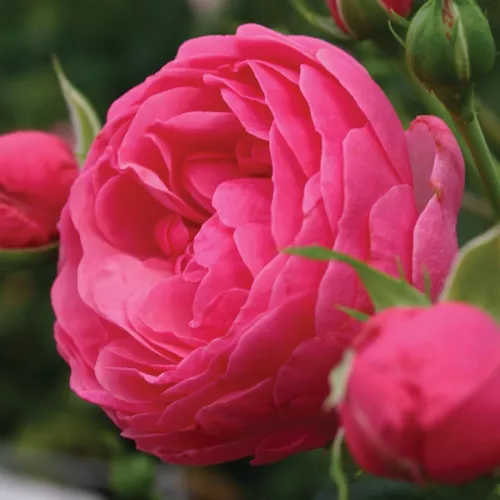
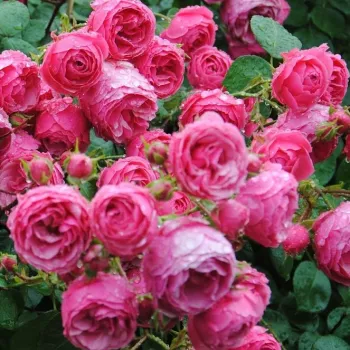
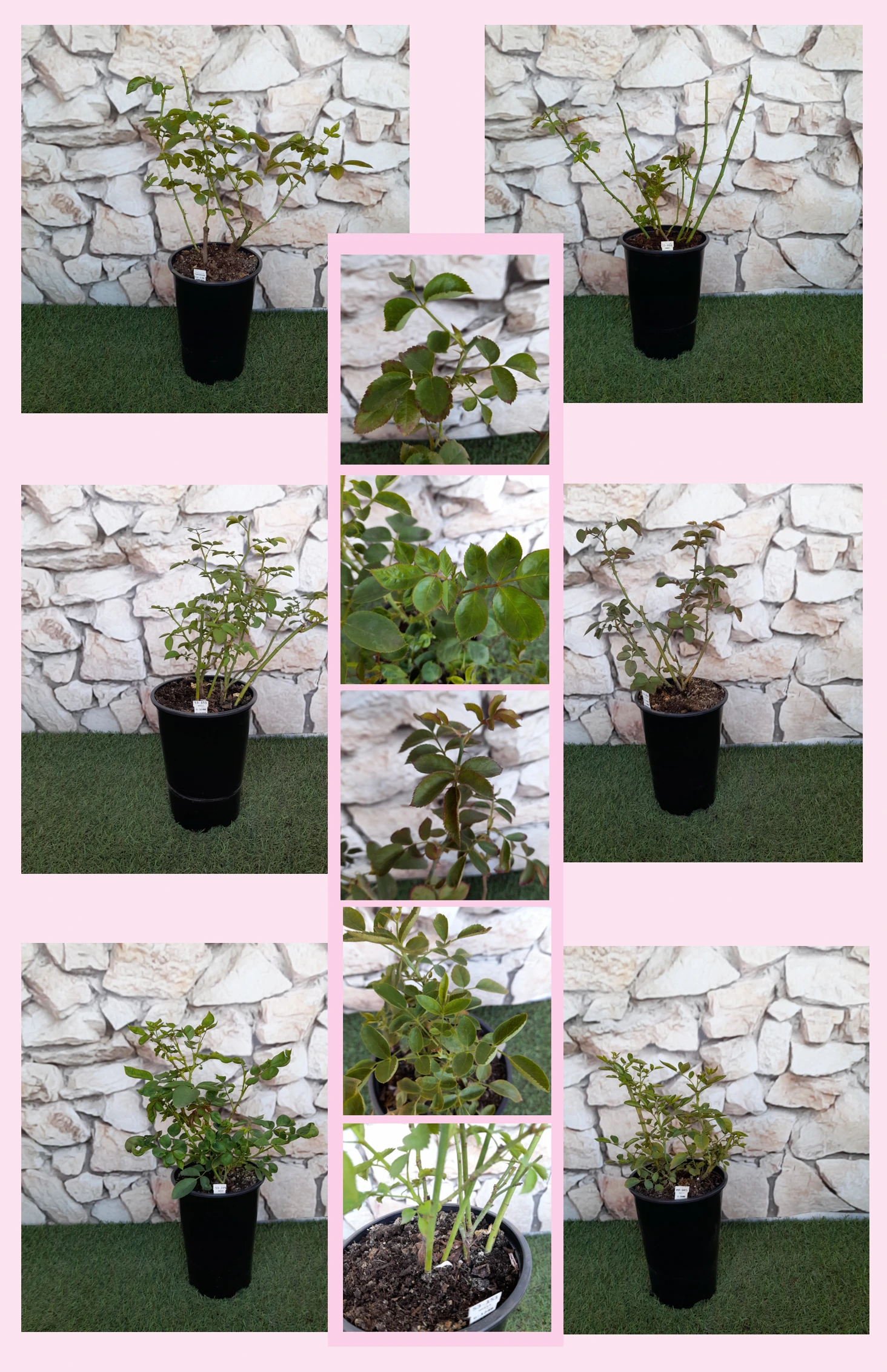
Imagine stepping outside after a shower of soft summer rain, the air clear, the garden washed clean, and clusters of pompon blooms glowing a rich deep pink against dark green foliage – this is Pomponella® bringing quiet cheerfulness to even the smallest Irish front garden. Its upright, bushy habit and dense leaves create a tidy, low hedge or cottage-style border that stays orderly with very little effort, while its floribunda clusters keep flowering in generous flushes from early summer well into autumn. Bred for strong disease resistance, it is reassuringly reliable through damp, changeable weather and mild fungal pressure along our coasts, so You spend less time spraying and more time enjoying. Own-root plants give a stable shape and long life, calmly regenerating after any wind damage and settling in for years of colour. In the first year it concentrates on roots, in the second on leafy shoots, and by the third year it reveals its full ornamental character, transforming a plain path or terrace-front into a storybook scene.
Usage options
| Target area |
Reasoning |
| Low cottage-style front-garden hedge |
The bushy, upright habit and 70–95 cm height make Pomponella® ideal for a neat, low hedge that frames a path or defines a small front garden without feeling heavy. Dense foliage hides leggy stems and gives a soft, traditional cottage look with very limited trimming for the beginner. |
| Continuous colour in mixed borders |
As a remontant floribunda with very double, cluster-flowered blooms, Pomponella® offers one of the longest flowering windows in a typical Irish summer, picking up again after each flush if lightly deadheaded. This makes it perfect for keeping mixed borders lively and colourful for the busy-owner. |
| Family garden play-area backdrop |
Its hardy, upright structure and moderately thorny stems form a robust, long-lived backdrop that copes well with family life, from footballs to the odd broken branch. Own-root growth means damaged shoots regrow from the base, preserving the planting over many years for the homeowner. |
| Dublin terraced-house front beds |
The compact spread of 55–85 cm and strong visual impact from deep pink pompon blooms suit small, high-visibility urban spaces where every plant must earn its place. Reliable disease resistance keeps foliage clean and attractive near entrances for the urban-gardener. |
| Irish cottage garden edging |
Planted at 40–50 cm intervals, Pomponella® forms a charming edging along gravel paths or lawns, its dark green, glossy foliage and rounded flowers fitting perfectly into relaxed cottage-style schemes. Minimal maintenance requirements suit those favouring informal beauty for the hobby-gardener. |
| Large containers on patios or balconies |
In a 40–50 litre or larger container with good drainage, Pomponella® becomes a long-lived patio feature, its own-root vigour supporting steady renewal of shoots and flowers. Regular watering and feeding are typically all that is needed for the time-poor. |
| Family-friendly long-term planting scheme |
With hardiness down to about -25 °C and strong resistance to powdery mildew, black spot and rust, Pomponella® is a dependable structural plant for long-term schemes that must cope with humid, cool Irish seasons and soft Atlantic light, reassuring the cautious planner. |
| Low-care rose bed in coastal or rainy gardens |
Bred and awarded for garden performance, Pomponella® keeps its colour and foliage quality even through cool, wet spells and gentle coastal influences, handling moist air and frequent showers without fuss. This makes it especially attractive to those wanting beauty with few tasks for the minimalist. |
Styling ideas
- Cottage-Romance – Thread Pomponella® as a low hedge along a front path, underplant with Geranium macrorrhizum for scented groundcover and soft pink contrast – ideal for lovers of storybook cottage gardens.
- Terrace-Jewels – Plant one Pomponella® in a 50-litre terracotta pot, with trailing thyme at the rim, to create a long-flowering focal point beside a doorway – perfect for small Dublin terraces.
- Playroom-Backdrop – Use a row of Pomponella® behind a lawn or play area, mixing in spring bulbs for extra seasons of interest – suited to young families seeking resilient structure.
- Border-Glow – Place groups of three Pomponella® among perennials in raspberry, white and soft blue tones to keep colour going when other blooms pause – great for relaxed hobby gardeners.
- Romantic-Frame – Combine Pomponella® with a light Clematis viticella on an obelisk behind it, creating height and texture while the rose anchors the scene – attractive to design-conscious urban owners.
Technical cultivar profile
| Property |
Data |
| Name and registration |
Floribunda bedding rose from the Märchenrosen® collection; registered as KORpompan, marketed as Pomponella® / Pomponella™; exhibition category exhibition floribunda with deep pink pompon-style blooms. |
| Origin and breeding |
Bred by W. Kordes & Sons in Germany, with parentage not publicly disclosed; introduced and registered in 2005 and supplied in Ireland as own-root, container-grown plants for reliable garden use. |
| Awards and recognition |
Holds ADR (Germany, 2006) and Gold Standard (UK, 2012); multiple international medals including Geneva Gold (2005), Lyon Grande Rose du Siècle (2006) and further merits in major European rose trials. |
| Growth and structural characteristics |
Upright, bushy shrub reaching 70–95 cm high and 55–85 cm wide, with dense, dark green glossy foliage and moderate prickliness; partly self-cleaning but benefits from occasional deadheading for neatness. |
| Flower morphology |
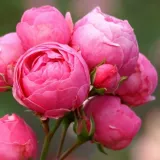
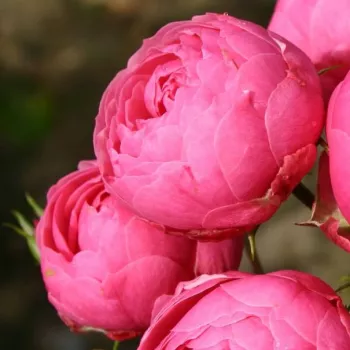
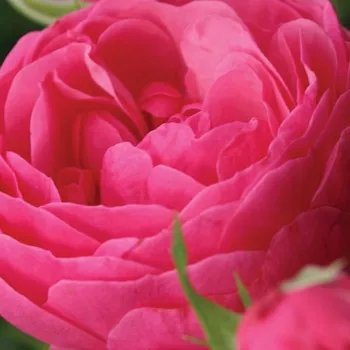
Very double, ball-shaped pompon blooms with over 40 petals and medium 4–7 cm diameter, produced in clustered floribunda trusses; remontant flowering with particularly strong second and later flushes in season. |
| Colour data and phenology |
Deep raspberry-pink flowers (RHS 57B–57C) opening from glossy crimson buds, gradually fading to softer powder pink in strong sun; excellent colour retention and repeated flushes from early summer into autumn. |
| Fragrance and aroma |
Fragrance is very weak, with only a delicate rosy hint discernible in warm, still conditions; grown primarily for its strong visual impact, classical form and consistent flowering performance rather than scent. |
| Hip characteristics |
Forms small spherical orange-red hips 6–10 mm across in moderate numbers; ornamental in autumn without becoming dominant, and usually removed where regular deadheading is practised for repeat flowering. |
| Resistance and winter hardiness |
Rated H7, hardy to around -26 °C (USDA 5b, Swedish zone 4); very good resistance to powdery mildew, black spot and rust, with clean foliage in typical Irish humidity when grown in reasonably open conditions. |
| Horticultural recommendations |
Prefers sunny sites with well-drained soil, including improved heavier clays; space 40–75 cm depending on use; water and feed regularly, especially in containers, keeping a mulch layer to stabilise moisture and roots. |
POMPONELLA® offers long-season deep pink clusters, strong disease resistance and durable own-root growth, making it a thoughtful choice for those seeking reliable beauty with little effort.