PLAISANTERIE – pink park rose - Lens
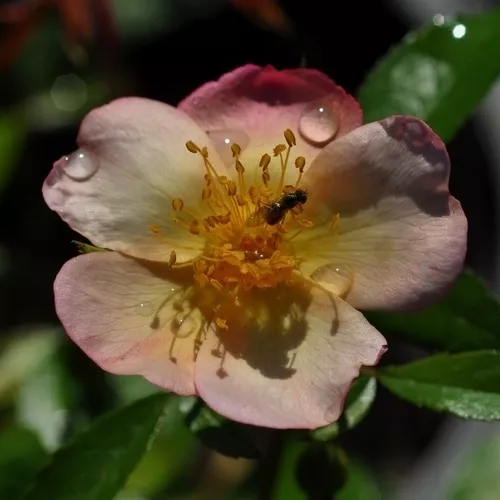
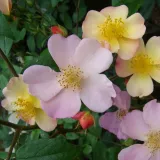
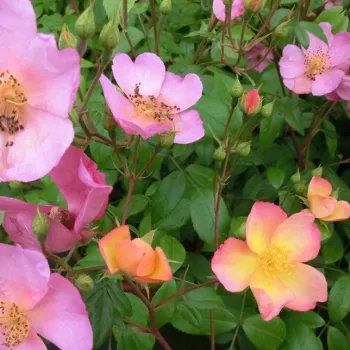
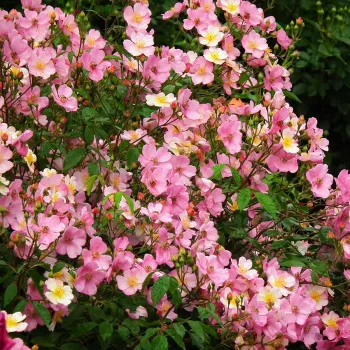
Bringing a sense of playful colour to small and medium Irish gardens, Plaisanterie is a graceful shrub-climber whose clusters of single blooms shift from orange to yellow and pink, giving constant visual interest even in unsettled weather. Its naturally arching habit suits cottage-style borders, pergolas and Dublin terrace fronts, where the good self-cleaning of the flowers keeps things tidy with little fuss. Own-root growth means a reassuringly long-lived, stable plant that can quietly regenerate after harder pruning or weather damage. Once settled, Plaisanterie offers dependable repeat flowering through our short Irish summer, coping well with breezy, rainy conditions near the coast and strong Atlantic winds. Plant it where you can enjoy that soft, shifting light on the petals – Year 1 for roots, Year 2 for shoots, and by Year 3 a full, romantic garden presence.
Usage options
| Target area |
Reasoning |
| Cottage-style front garden climber |
Use Plaisanterie on a low wall, porch pillar or light trellis to bring changing colour right to the front of the house. The naturally arching, climbing habit creates height without overwhelming a small garden, ideal for an easy-care cottage look for the busy beginner. |
| Relaxed shrub for mixed border |
In a mixed border, its moderate height and spreading habit fill space with soft structure while the single flowers add airy lightness among perennials. Reliable repeat flowering gives ongoing colour without complicated pruning, suiting the time-pressed homeowner. |
| Informal flowering screen or hedge |
Planted at the recommended spacing, Plaisanterie knits into a loose, semi-transparent hedge that offers privacy without feeling heavy. Own-root plants thicken gradually from the base, giving a long-lived, regenerating screen that suits the family-garden planner. |
| Feature rose on pergola or arch |
The climbing tendency and flexible shoots allow you to fan stems along an arch or small pergola for a shower of colour over a path. Good self-cleaning means fewer spent blooms to remove overhead, which simplifies upkeep for the urban garden owner. |
| Light, repeating colour for short Irish summers |
Because Plaisanterie remounts reliably with an abundant second flush, it makes the most of our relatively short summer, keeping borders lively between showers. With sensible watering in dry spells, it flowers steadily, rewarding the occasional gardener. |
| Coastal or wind-exposed family plots |
This robust shrub-climber copes well with blustery, wet conditions common in many Irish gardens, including those touched by Atlantic winds and rain-blown salt, provided the soil drains reasonably. Its resilient framework appeals to the practical homeowner. |
| Low-maintenance rose for beginners |
Once planted at the right spacing and supported where needed, Plaisanterie largely looks after itself: own-root resilience, natural arching form and good self-cleaning all reduce detailed pruning and deadheading, reassuring the nervous beginner. |
| Long-term structure in evolving gardens |
As an own-root shrub, Plaisanterie builds a durable framework that can be reshaped over time, responding well to harder pruning and sending up new, healthy shoots. This long lifespan supports evolving planting plans for the design-conscious gardener. |
Styling ideas
- Cottage-porch welcome – Train Plaisanterie around a doorway or rail, underplant with Phlox paniculata for fragrance from companions and a soft, romantic entrance – ideal for sociable hosts.
- Soft-pink border arc – Let its arching stems frame a border edge with Lychnis alpina ‘Magenta’ for contrast and loose, natural colour drift – perfect for relaxed cottage-garden fans.
- Playful colour screen – Use several plants as a see-through hedge, with Lythrum salicaria weaving between stems for a meadowy feel and summer movement – suited to nature-oriented families.
- Compact pergola veil – Guide stems along a modest pergola or washing-line frame, keeping the base open for herbs or low perennials – good for space-conscious city gardeners.
- Seasonal focal feature – Place a single plant near a seating area as a changing-colour accent, allowing hips to form for late-season interest – attractive to contemplative evening sitters.
Technical cultivar profile
| Property |
Data |
| Name and registration |
Shrub, Hybrid Musk park rose; registered as LENtrimera, trade name Plaisanterie. ARS exhibition name Plaisanterie. Part of the Park - shrub rose collection for garden and show use. |
| Origin and breeding |
Bred by Louis Lens (Belgium) from ‘Trier’ × Rosa chinensis ‘Mutabilis’. Raised 1988, introduced and registered 1996 by Lens Roses NV / Louis Lens N.V. as a distinctive colour-changing shrub. |
| Awards and recognition |
Classic shrub rose at Mother Lode Rose Society show (2001), highlighting its value as an exhibition-quality show shrub rose with attractive habit and distinctive, playful bloom effect. |
| Growth and structural characteristics |
Vigorous shrub-climber 150–210 cm tall, 170–230 cm spread, with moderately dense, slightly glossy green-bronze foliage. Growth is arching and flexible, moderately thorny, suitable for light training or free-standing form. |
| Flower morphology |
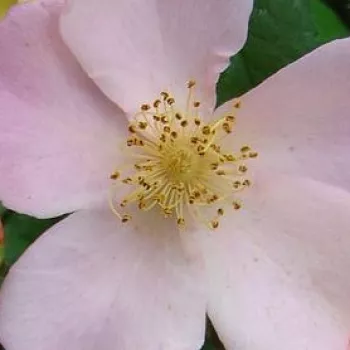
Single, flat blooms in small clusters, 1–4 cm across with 5–12 petals. Remontant, with an abundant second flush after the main flowering, and good self-cleaning as most spent blooms fall naturally. |
| Colour data and phenology |
Bud orange, opening yellowish-pink, then deepening through medium pink to purplish-pink tones. RHS 54A–54B, ARS pink blend; colour fades and shifts noticeably as blooms age, giving a multi-tone display. |
| Fragrance and aroma |
No noticeable fragrance; grown primarily for its changing colour effect and flower form rather than scent. Visual interest and long seasonal display make up for the absence of perfume in most garden settings. |
| Hip characteristics |
Forms moderate quantities of small, bottle-shaped hips, 8–12 mm, orange-red when ripe. Hips add late-season colour and a light wildlife interest in borders and informal planting schemes. |
| Resistance and winter hardiness |
Hardy to about −21 to −18 °C (H7, USDA 6b, Swedish zone 3). Disease resistance is weak; very sensitive to powdery mildew and rust, moderate to black spot, so regular protection is advised. |
| Horticultural recommendations |
Suited to specimens, borders, pergolas, fences and walls; can provide cut stems. Plant about 120–220 cm apart depending on use, in well-drained soil with regular feeding and disease management where pressure is high. |
PLAISANTERIE offers playful colour-changing blooms, reliable repeat flowering and a long-lived own-root structure that regenerates after pruning, making it a thoughtful choice for effortless charm in Irish family gardens.