Pink Grootendorst – pink park rose
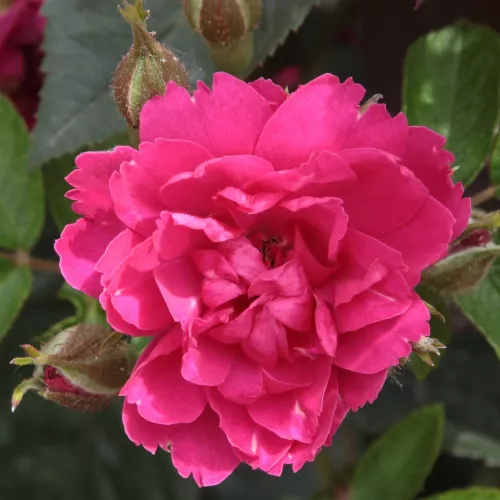
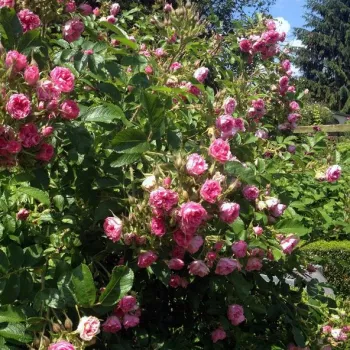
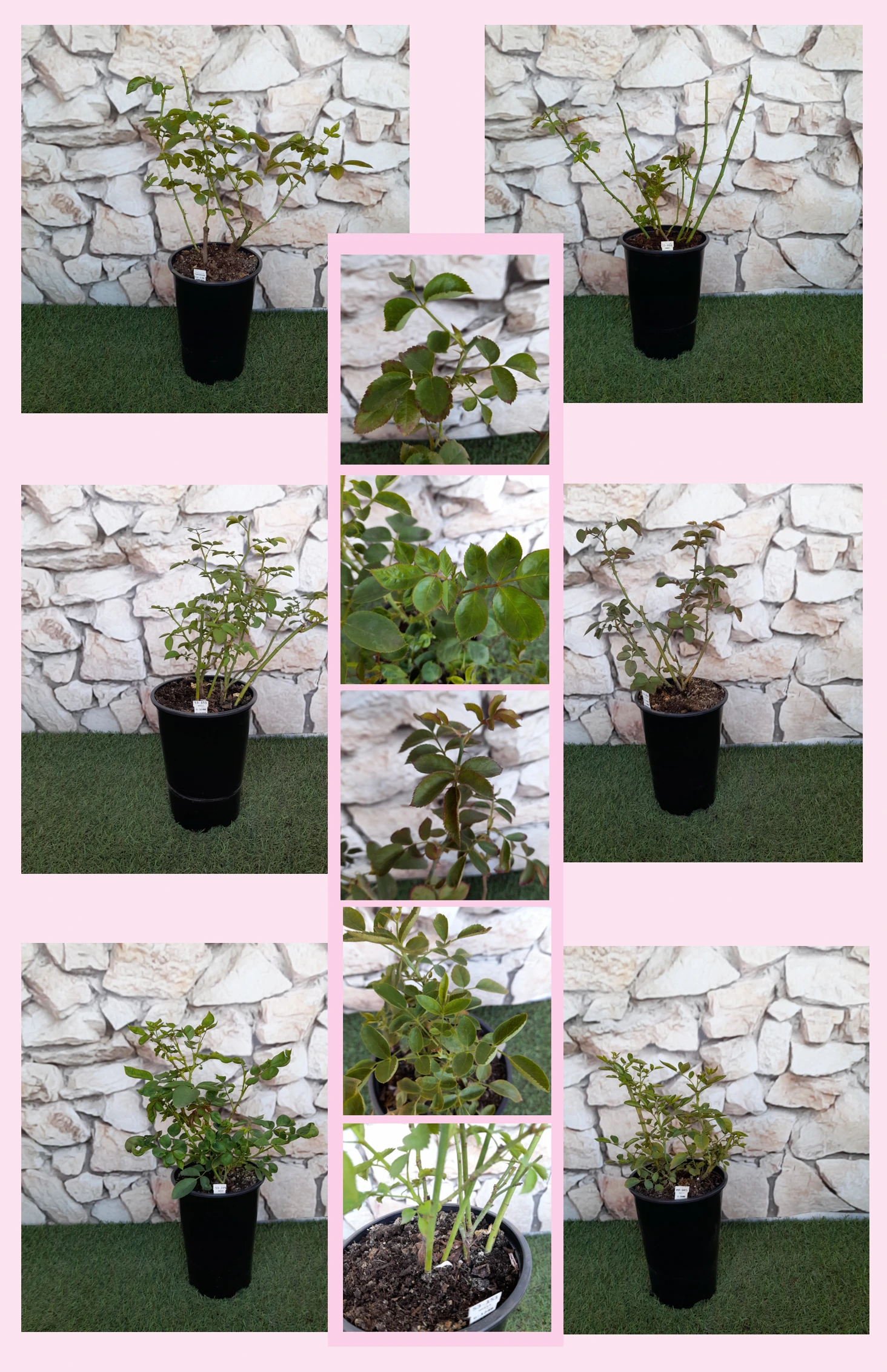
Step outside and let Pink Grootendorst bring a feeling of soft, rain-washed contentment to your garden: its frilly, carnation-like blooms keep coming in generous flushes, even through our changeable summers with their humid air and frequent showers. This sturdy hybrid rugosa shrub forms a naturally bushy hedge or stand-alone feature that copes well with wind and coastal influence, while its own-root form promises steady longevity and the ability to regenerate if cut back hard. In the first year it quietly builds roots, in the second it pushes up strong shoots, and by the third it settles into its full ornamental value as a cottage-style classic you can enjoy with very little fuss.
Usage options
| Target area |
Reasoning |
| Cottage-style front garden hedge |
Pink Grootendorst’s bushy, thorny growth and 120–180 cm height make a charming, practical boundary that flowers repeatedly through the season. Space plants about 110 cm apart for an airy but effective line that softens walls or low railings in small Dublin terraces, ideal for the beginner. |
| Low-maintenance park and family-garden shrub |
As a hybrid rugosa, this shrub is tough, long-lived and forgiving, ideal for busy households that want flowers without complicated pruning. Its moderate disease resistance and medium self-cleaning mean only occasional deadheading is needed to keep it blooming well, suiting the time-poor. |
| Specimen rose in a mixed border |
Use it as a focal shrub in a sunny to lightly shaded bed, where the dense, mid-green foliage and frilly mid-pink pompon blooms provide structure and a romantic look from early summer onwards. Allow up to 180 cm space around a single plant for best effect, pleasing the stylist. |
| Flower bed for extended colour |
The remontant habit delivers a generous second flush after the first summer flowering, giving months of interest even in short Irish summers. Regular light deadheading encourages further clusters, so a family flower bed stays colourful well into autumn for the colour-lover. |
| Urban green space and community planting |
With its robust rugosa background and RHS Award of Garden Merit, this variety suits exposed or public settings, coping with variable care levels while still forming a reliable mass of foliage and bloom. It settles in steadily year by year, rewarding the patient community. |
| Wind-tolerant coastal or exposed gardens |
The tough, well-branched shrub form and good heat and drought tolerance once established make it a sound choice where Atlantic winds and frequent rainfall can challenge more delicate roses, particularly in open suburban plots, reassuring the coastal gardener. |
| Informal wildlife-friendly corner |
Although only moderately attractive to pollinators, the clustered blooms still draw some insect activity, and the orange-red hips that follow add autumn interest and modest wildlife value. Leave some spent flowers to set hips in a quieter corner for the nature-focused owner. |
| Large container on patio or terrace |
Where soil is heavy clay, plant in a 40–50 litre container with free-draining compost to reduce waterlogging risk and simplify care. Its moderate maintenance needs and tolerant nature make it a good long-term potted shrub for the small-garden dweller. |
Styling ideas
- COTTAGE-HEDGE – Create a loose, flowering boundary along a front path, underplanting with Vinca minor for evergreen groundcover and easy care – suited to relaxed family households.
- PINK-CLOUD – Mass three shrubs in a triangle in lawn or gravel, letting their pompon flowers billow together for a soft pink “cloud” effect – ideal for romantic gardeners.
- RUGOSA-MIX – Combine with other rugosa-type shrubs and ornamental grasses to form a resilient, low-maintenance screen that still looks pretty from the street – perfect for busy commuters.
- HIP-HARVEST – In a back corner, pair with autumn-colouring shrubs where its orange-red hips can shine against turning foliage – appealing to wildlife-conscious planters.
- PATIO-STATEMENT – Grow one plant in a generous terracotta pot beside the front door, with trailing clematis woven through for layered bloom – attractive to urban terrace owners.
Technical cultivar profile
| Characteristic |
Data |
| Name and registration |
Pink Grootendorst, a shrub Hybrid Rugosa park rose, sold under the trade name Pink Grootendorst – pink park rose – Grootendorst; unregistered cultivar with ARS exhibition name Pink Grootendorst. |
| Origin and breeding |
Sport of ‘F.J. Grootendorst’ (R. rugosa rubra × ‘Madame Norbert Levavasseur’), bred by F. J. Grootendorst & Sons Nursery, Boskoop, Netherlands, introduced 1923 and first distributed by Hazlewood Bros. Pty. Ltd. |
| Awards and recognition |
Holds the Royal Horticultural Society Award of Garden Merit, first granted in 1993, recognising reliable garden performance, strong ornamental value and suitability for a wide range of ordinary garden conditions. |
| Growth and structural characteristics |
Bushy, densely thorned shrub reaching about 120–180 cm high and 100–150 cm wide, with dense, mid-green, slightly glossy foliage providing strong structural presence for hedges, beds and mixed shrub plantings. |
| Flower morphology |
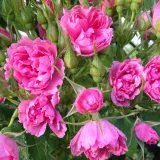
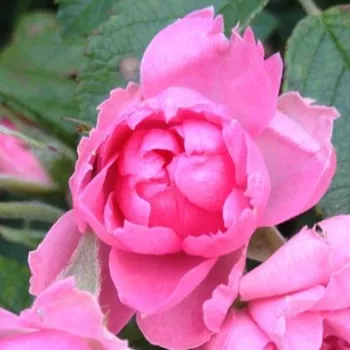
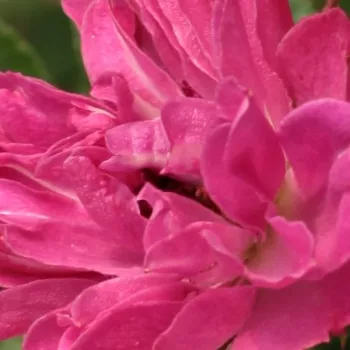
Double, pompon, spherical blooms with 26–30 petals, borne in clusters, medium-sized at 4–7 cm across; remontant habit gives an abundant second flowering period following the main early summer flush of blooms. |
| Colour data and phenology |
Mid-toned, saturated pink flowers, ARS mp, RHS 62C outer, 62D inner; colour may fade slightly in strong sun, edges paling to pastel pink while the centre remains medium pink, overall effect staying harmonious. |
| Fragrance and aroma |
Fragrance is very weak and barely perceptible, so the variety is chosen mainly for its distinctive carnation-like flower form, generous cluster flowering and robust shrub habit rather than for any scented garden effect. |
| Hip characteristics |
Produces moderate quantities of spherical orange-red hips, approximately 14–23 mm in diameter, extending ornamental value into autumn and offering additional seasonal interest in informal or wildlife-style planting schemes. |
| Resistance and winter hardiness |
Hardy to about −37 to −34 °C (USDA 3b, RHS H7, Swedish zone 6); medium resistance to black spot, powdery mildew and rust; tolerates heat and moderate drought once established, with generally reliable garden performance. |
| Horticultural recommendations |
Use for hedges, specimen shrubs, park and urban plantings; space 110–180 cm depending on use. Tolerates partial shade; prefers well-drained soil. Maintenance moderate, with occasional pest control and deadheading improving flowering. |
Pink Grootendorst offers durable shrub structure, generous repeat flowering and autumn hips in a resilient own-root form that suits long-term family gardens and is well worth considering for your next planting.