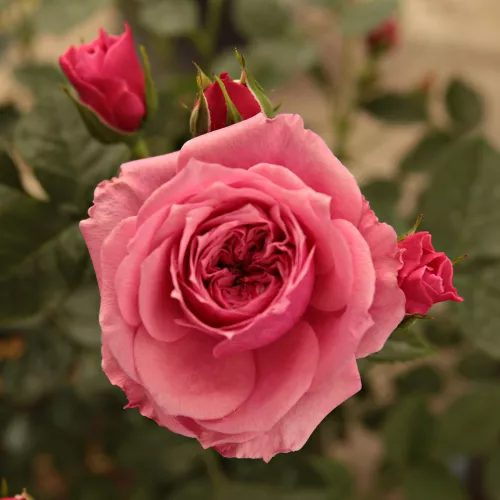
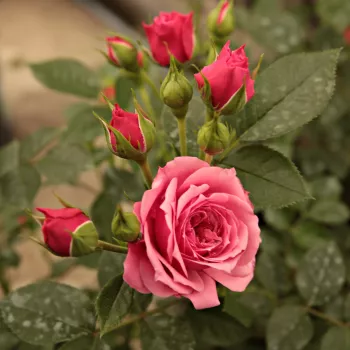
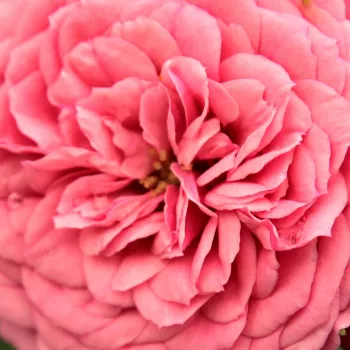
PINK BABYFLOR® – pink dwarf-mini rose
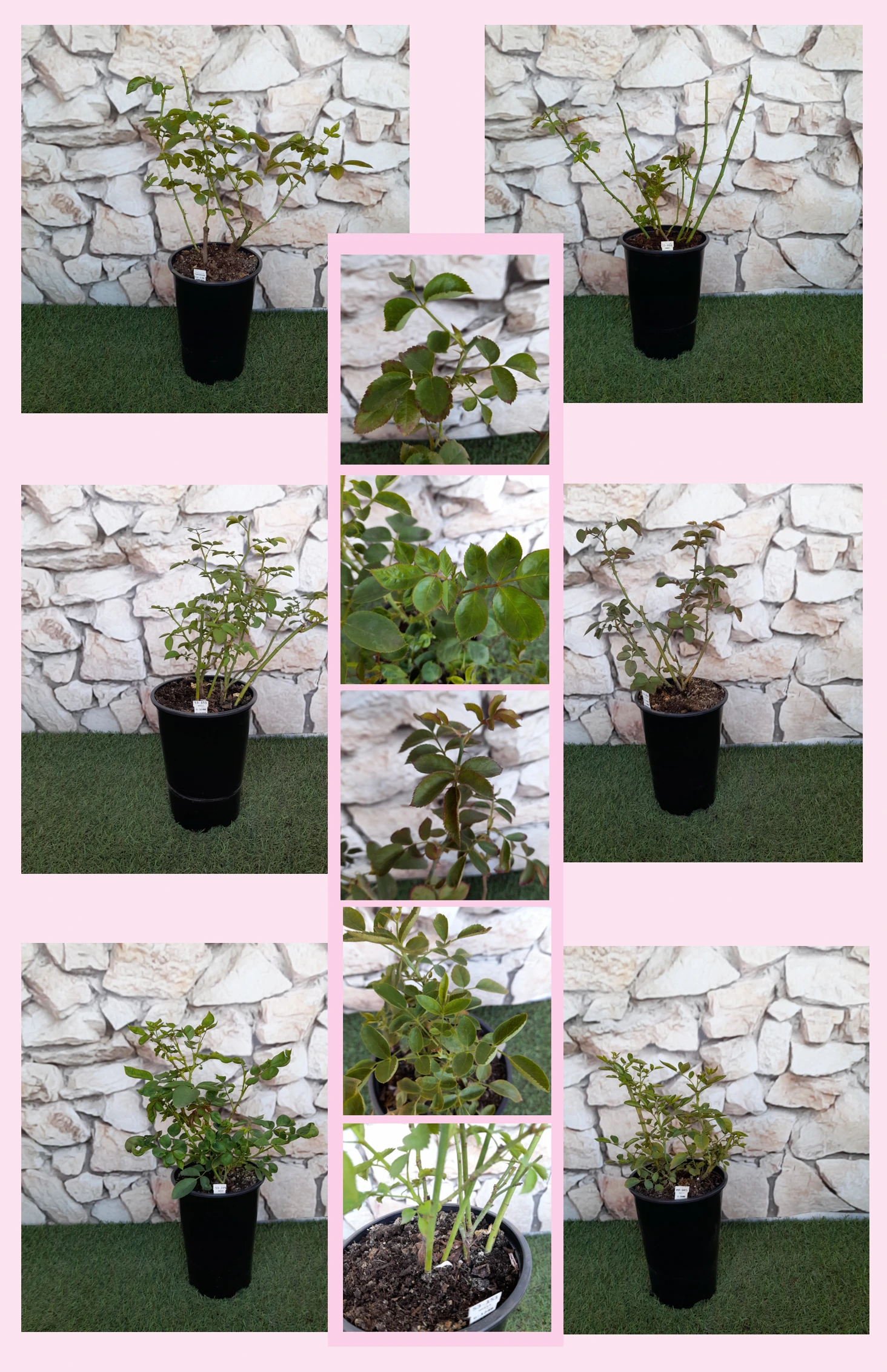
Step outside to a world of cheerful pink rosettes where the mood is soft, green and gently lit, like a short walk under drizzling rain and misty skies; this low, compact miniature rose brings easy charm to Irish cottage borders and tiny Dublin front gardens, thriving even where heavy soils need good drainage and space is at a premium. Neatly rounded growth and dense fresh-green foliage keep your beds looking tidy with minimal effort, while the good self-cleaning habit means far fewer spent blooms to pick. Repeat-flowering clusters appear from early summer onwards, giving months of colour without complicated pruning, and the own-root form offers reassuring longevity, steady regrowth after any winter knock-back and a stable shape that suits busy lives. Plant once, mulch well, and let this playful rose quietly settle in as roots strengthen in year one, top growth fills out in year two and by the third season it becomes a fully fledged feature in your family garden.
Usage options
| Target area |
Reasoning |
| Small front garden border in town or city |
The naturally compact habit and 50–70 cm height make this rose ideal for neat frontage beds where space is limited and plants must stay in scale with terraces. It fills out into a rounded mound without flopping, suiting low-maintenance, time-poor beginners |
| Irish cottage-style mixed flowerbed |
Clusters of mid-then-pastel pink rosettes repeat through the season, weaving gentle colour among perennials without overpowering the scheme. It partners beautifully with catmint or lady’s mantle and copes reliably with our showery, overcast seasons for cottage-gardeners |
| Low flowering edging along paths or drives |
Dense foliage and self-cleaning blooms form a tidy, low hedge-like strip, with fewer deadheads to remove after rain. Regular repeat flowering keeps entrances welcoming for most of the summer, making everyday comings and goings more pleasant for homeowners |
| Containers and large patio pots (40–50 litres+) |
The dwarf, bushy structure performs very well in larger pots where its shallow spread and moderate height stay balanced. In a 40–50 litre container with free-draining compost, it offers reliable colour with simple seasonal care suited to busy urban gardeners |
| Family gardens with children and pets |
Its moderate prickliness, low stature and rounded shape are easier to place away from play routes than taller, rangy roses. The gradual own-root development arc gives a resilient, long-lived shrub that copes with everyday knocks, reassuring cautious parents |
| Groundcover patches on sunny, visible slopes |
The spreading 40–60 cm habit and dense foliage help quilt the soil surface, softening slopes and suppressing some weeds. In sunny spots with improved drainage it forms a colourful carpet of pink clusters, rewarding patient, design-minded gardeners |
| Urban green spaces and shared lawns |
Medium maintenance and decent self-cleaning suit communal beds where regular, detailed deadheading is unrealistic. Its repeat flowering brings ongoing interest for residents and visitors, while own-root durability supports long-term planting plans for communities |
| Mixed pollinator-friendly planting schemes |
Although very double and only partly attractive to pollinators, its season-long bloom helps visually hold together borders that feature nectar-rich partners like catmint and lamb’s ear, even in damp areas with heavier soils needing improved drainage, pleasing nature-aware buyers |
Styling ideas
- Cottage-Ribbon – Thread small groups of PINK BABYFLOR® along a path with lady’s mantle and foxgloves to create a romantic, low edging – ideal for cottage-style enthusiasts
- Pastel-Pocket – Fill a tiny, sunny front bed with three plants at 35 cm spacing and underplant with catmint for a soft pink-and-blue pocket – perfect for city-terrace owners
- Patio-Jewel – Plant one shrub in a 45–50 litre terracotta pot with gritty compost and a catmint skirt for a long-flowering patio centrepiece – suited to balcony and courtyard gardeners
- Family-Carpet – Use a loose grid on a gentle slope, interwoven with lamb’s ear, to make a low, walk-by carpet that stays neat without constant clipping – good for busy family households
- Neighbourly-Stripe – Line a shared front boundary with a single row, backed by evergreen box or yew, for a welcoming pink stripe that looks cared-for with modest effort – great for time-pressed neighbours
Technical cultivar profile
| Property |
Data |
| Name and registration |
Miniature dwarf rose, Babyflor® collection; registered as TANyrolf, traded as PINK BABYFLOR® / Babyflor® / TANyrolf; ARS exhibition name Pink Babyflor; exhibition miniature category. |
| Origin and breeding |
Bred by Hans Jürgen Evers, Rosen Tantau, Germany; introduced and registered in 1993. Parentage not recorded; selected for compact habit, abundant flowering and reliable garden performance. |
| Growth and structural characteristics |
Compact, bushy shrub 50–70 cm high with 40–60 cm spread; dense, fresh-green, slightly glossy foliage. Moderately thorny stems; rounded, cohesive outline suits edging, mass planting and container use. |
| Flower morphology |
Very double, rosette-shaped blooms with 40+ petals, medium-sized at 4–7 cm. Flowers borne in clusters of 6–15 per stem. Strong repeat-flowering, with a particularly abundant second flush in suitable conditions. |
| Colour data and phenology |
Medium pure pink with ARS lp, RHS 65C outer and 63B inner petals. Buds mid-pink, lightening gently to pastel toward petal edges; in bright sun colour fades moderately yet retains an overall soft pink impression. |
| Fragrance and aroma |
Classified as unscented with no noticeable perfume; grown primarily for colour, form and habit rather than scent. Suitable where fragrance is not essential, or combined with scented perennials for aroma. |
| Hip characteristics |
Produces small, spherical red hips 5–7 mm in diameter in limited numbers. Decorative at close range but not a major ornamental feature; hips may provide minor seasonal interest and wildlife value. |
| Resistance and winter hardiness |
Medium disease resistance to powdery mildew, black spot and rust; benefits from good air circulation and hygiene. Winter-hardy to approximately −21 to −18 °C (H7, USDA 6b) in well-prepared garden soil. |
| Horticultural recommendations |
Best in full sun with free-draining yet moisture-retentive soil; improve heavy clay with organic matter. Space 30–55 cm depending on use; 8.2–9.5 plants/m² for massed schemes; suitable for large containers and borders. |
PINK BABYFLOR® offers compact, long-season colour, neat self-cleaning clusters and durable own-root growth for small Irish gardens; a thoughtful choice if you prefer lasting charm with modest effort.