PIERRE CARDIN® – pink tea-hybrid rose – Meilland
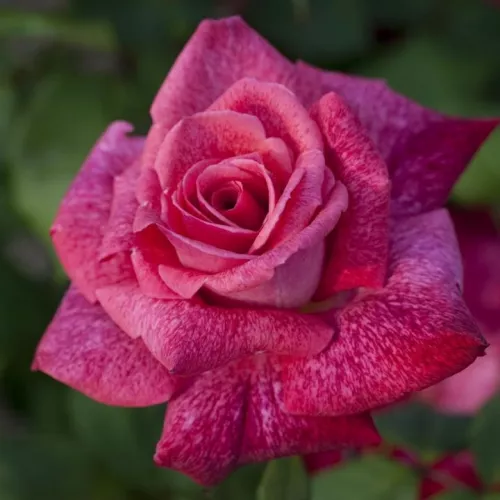
Step outside for a moment of gentle contentment with PIERRE CARDIN®, a premium hybrid tea rose that dresses your garden in soft, silvery-pink petals and refined, fashion-house elegance. Its very strong, spicy, old-rose fragrance carries beautifully on damp air, even when showers pass and breezes arrive from the Atlantic, while dense mid-green foliage gives a calm, well-finished structure in a small Irish front garden. Bred for reliable disease resistance, this own-root rose is designed to settle in for the long term, rewarding you as roots establish, shoots build up, and by the third year a rounded bush of repeat-flowering blooms becomes a quietly luxurious garden feature.
Usage options
| Target area |
Reasoning |
| Front-of-house feature for Dublin terraces |
Use as a single specimen by the front step or gate, where its very strong, old-rose, spicy fragrance can be enjoyed each time you come and go. The high-centred XL blooms bring a dressed-up look without fussy care routines, ideal for busy city homeowners who still want romance at the door, especially beginners. |
| Cottage-style mixed border |
Plant in a sunny, well-drained border among perennials and grasses to create a relaxed cottage feel with repeated flushes of large, double pink blooms. Its good resistance to black spot, mildew and rust helps keep foliage healthy even in showery, humid Irish summers, which suits nature-leaning gardeners and families. |
| Cut-flower corner near the house |
Dedicate a small patch for cutting: the long-stemmed, high-centred, exhibition-quality flowers are ideal for vases, with a scent that fills the room. Spacing at about 50–75 cm lets each plant develop strong, straight stems and showpiece blooms, rewarding those who love home-arranged flowers and collectors. |
| Own-root long-term garden investment |
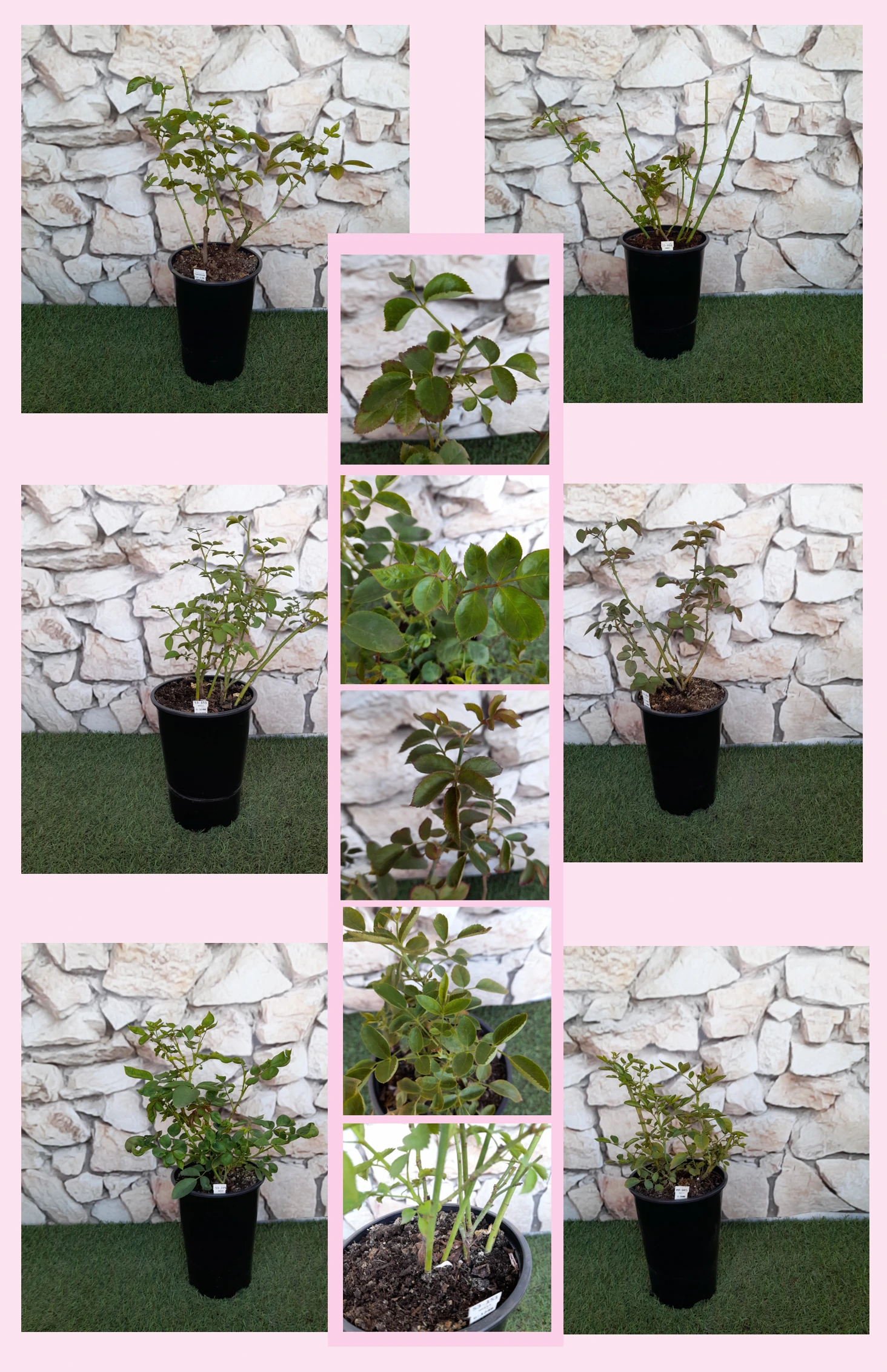
Choose this own-root form where you want a rose to mature gracefully over many years, maintaining stable colour and form without graft-union worries. After planting, it focuses first on roots, then on structural growth, and by year three settles into full ornamental performance, pleasing patient, planning-minded owners. |
| Low-maintenance family back garden |
Place it where you can see it from the kitchen window or patio, enjoying colour and scent without a demanding care schedule. Routine watering in the first season and a yearly mulch on heavier Irish clays are usually enough, appealing to time-pressed but quality-conscious garden users. |
| Large containers on patios and balconies |
Grow in a substantial 40–50 litre container with good drainage to enjoy its fragrance and elegant buds at seating height. A quality peat-free mix and regular watering support steady flowering, making it a fine choice for paved spaces and compact plots tended by urban apartment or townhouse residents. |
| Pollinator-friendly flower strip |
Integrate along a path with other nectar sources, where its double blooms with partially visible stamens add both structure and moderate pollinator interest. In a mixed scheme combining single-flowered shrubs and herbs, it contributes beauty without dominating, suiting wildlife-aware but style-minded garden shoppers. |
| Refined focal point in windy coastal gardens |
Use as a sheltered focal point behind a hedge or low wall, where its dense foliage and sturdy bush form cope well with the moist, breezy conditions often brought in from the nearby ocean, while disease resistance keeps leaves clean for longer, reassuring coastal and west-facing-site gardeners. |
Styling ideas
- Cottage-Romantic Border – Combine with foxgloves, hardy geraniums and soft grasses to echo its silvery-pink speckled petals and fragrant charm – ideal for lovers of relaxed, traditional cottage gardens.
- Chic Front Step Focus – Underplant with lavender and low thyme to frame the high-centred blooms, creating a neat yet welcoming entrance – perfect for small Dublin terraces wanting instant sophistication.
- Perfumed Seating Nook – Place near a bench with white campanulas and soft-blue nepeta so the strong, spicy fragrance surrounds your evening seating – suited to those who unwind outdoors after work.
- Cutting-Garden Row – Plant in a straight line with regular spacing and companion rows of cosmos and annual dill for stylish home bouquets – appealing to home florists and weekend flower arrangers.
- Container Showcase – In a 50 litre pot, add trailing ivy and silver helichrysum to echo the bloom’s pale edging while keeping care simple – good for patios, balconies and compact urban spaces.
Technical cultivar profile
| Characteristic |
Data |
| Name and registration |
PIERRE CARDIN® is a hybrid tea rose, registered as MEIlolipo, exhibition-class high-centred type; trade name Pierre Cardin® Hybrid tea rose MEIlolipo, ARS exhibition name Pierre Cardin. |
| Origin and breeding |
Bred by Alain Meilland at Meilland International, France, from unknown parentage; breeding completed 2008, registered 2010 and introduced after 2010 by Meilland International for garden and cut use. |
| Growth and structural characteristics |
Bushy shrub 90–130 cm tall and 60–85 cm wide, with dense, slightly glossy mid-green foliage and moderate prickles; lacks self-cleaning data, but forms a well-filled, upright bush suitable for borders and specimens. |
| Flower morphology |
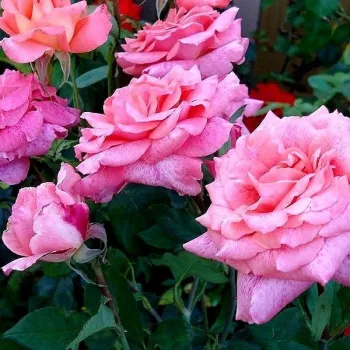
Hybrid tea, XL flowers over 10 cm, double with 26–39 petals, solitary, high-centred, pointed-budded form typical of cut-rose types; remontant with generous second flush and good stem length for cutting. |
| Colour data and phenology |
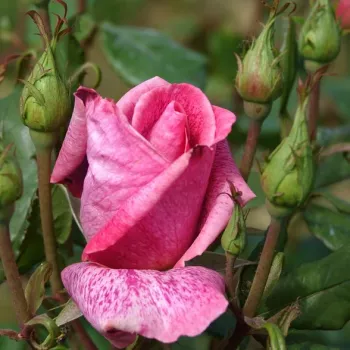
Pink blooms, ARS PB; RHS 62C outer and 62A inner petals, fading from vivid mid-pink with crimson speckles to softer silvery-pink, with visible spotting softening as flowers age through successive garden stages. |
| Fragrance and aroma |
Very strong, garden-filling scent with a character reminiscent of old roses, carrying spicy notes; fragrance intensity makes it suitable for seating areas, entrances and cutting for perfumed indoor arrangements. |
| Hip characteristics |
Produces moderate quantities of ovoid rose hips, 10–15 mm diameter, red RHS 40A, with ornamental value in late season; hips extend seasonal interest after flowering where deadheading is omitted on selected stems. |
| Resistance and winter hardiness |
Demonstrates good resistance to major fungal diseases including black spot, powdery mildew and rust; winter-hardy to approximately −21 to −18 °C, corresponding to RHS H7 and USDA Zone 6b, Swedish Zone 3. |
| Horticultural recommendations |
Prefers sunny positions with well-drained soil; spacing 40–75 cm depending on hedging or specimen use, 4.2–4.8 plants/m² for massing; suitable for borders, containers, specimen planting and fragrant cut-flower production. |
PIERRE CARDIN® offers intoxicating fragrance, glamorous exhibition-style blooms and reliable disease resistance on a durable own-root framework; consider it if you want long-lasting elegance with modest effort in your garden.