PAULII – white wild rose – Paul
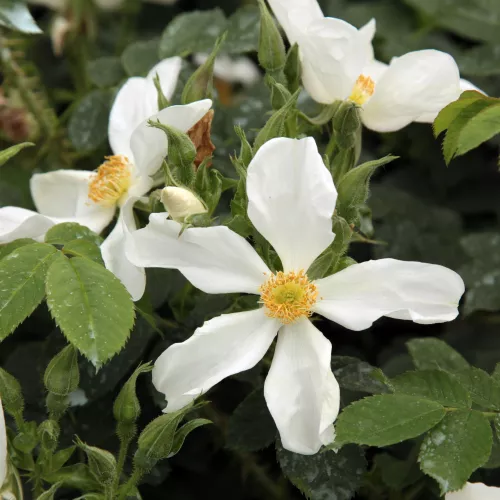
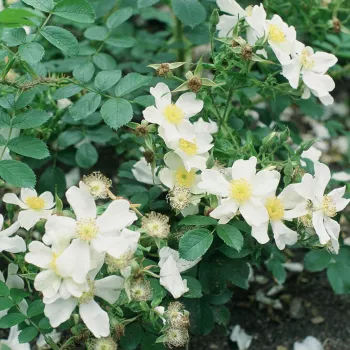
Step outside for a few quiet minutes and let the softly arching branches of PAULII frame your own patch of green, the small ivory buds opening into snow-white, single blooms that suit a relaxed cottage style while coping calmly with wet, windy Irish weather and heavy clay once drainage is in place; this historic wild rose hybrid needs very little from you beyond space and light, yet rewards you with a low, spreading, gently bushy thicket of mid-green foliage, naturally self-cleaning flowers and a pleasantly spicy hint of fragrance on warm days, before bright rosehips form in late season, adding colour and interest; as an own-root shrub it settles in steadily, the roots strengthening first, then the top growth filling out, so that by the third year its groundcover habit feels established and dependable, a lasting hedge or bank of white that is both robust and quietly timeless in a small family garden.
Usage options
| Target area |
Reasoning |
| Low-maintenance white groundcover for a front garden |
PAULII spreads wide on its own roots, forming a dense, flowering carpet that needs little pruning or fuss and copes well with ordinary, mixed Irish soils over time – ideal if you prefer simple routines as a beginner. |
| Informal flowering hedge along a drive or boundary |
Its bushy, spreading habit and dense prickles make a dissuasive yet pretty boundary, with a single flush of white flowers followed by hips and very little shaping work – suiting those who like discreet security as a homeowner. |
| Softening slopes, banks and awkward corners |
The wide spread and good root system help stabilise sloping or uneven spots, where it arches over and hides bare ground with foliage and seasonal bloom, reducing weeding effort for a busy urbanite. |
| Irish cottage-style mixed border with simple white roses |
Its once-a-year snow-white display and modest height sit naturally among hardy perennials and grasses, matching the relaxed charm of older cottage gardens and suiting those who favour nostalgic planting as a romantic. |
| Historic or traditional rose collection feature |
Introduced in 1903 and shown in dowager classes, PAULII carries genuine historical interest while remaining tough and garden-worthy, appealing to those who enjoy stories as much as flowers as a collector. |
| Rugged planting for exposed, wind-touched sites |
This hybrid of wild species is inherently robust, tolerating Atlantic breezes, cool summers and typical rain, provided drainage is considered, matching the needs of gardeners facing coastal weather as a seaside-dweller. |
| Heat- and drought-tolerant accent in drier corners |
Where fences, walls or paving create warmer, drier spots, its good heat and moderate drought tolerance keep it looking composed between showers, suiting those who do not wish to water frequently as a time-poor. |
| Wildlife-friendly, hip-forming shrub in family gardens |
After flowering, bright red spherical hips extend interest into autumn and support seasonal wildlife, while own-root vigour helps it recover from knocks or light damage, reassuring any nature-minded family gardener. |
Styling ideas
- Cottage-hedge – Run a loose row along a low front-wall, underplanting with Scabiosa and sweet alyssum for soft colour – perfect for cottage-style homeowners.
- White-wave – Let several plants spill over a sunny bank with cypress spurge weaving through for contrast – ideal for those taming awkward slopes.
- Historic-focus – Place a single specimen near a path with an old bench and simple perennials to highlight its 1903 heritage – suited to history-loving gardeners.
- Urban-edge – Use as a tough divider in a Dublin front garden, combining with ornamental grasses for movement – great for busy city dwellers.
- Hip-harvest – Plant a broad drift at the back of the plot, letting the red hips glow above meadow-style underplanting – appealing to wildlife-focused families.
Technical cultivar profile
| Property |
Data |
| Name and registration |
Trade name PAULII, commercial type wild rose within the Botanical rose collection; exhibition class bush rose, dowager (historical); ARS approved exhibition name Paulii; unregistered cultivar. |
| Origin and breeding |
Bred by George Paul Jr., Paul & Son, Cheshunt, United Kingdom; introduced 1903; complex hybrid involving Rosa arvensis and Rugosa/Wichuraiana lines, combining wild vigour with garden-friendly habit. |
| Awards and recognition |
Honoured in American rose shows as Dowager Rose Queen (1998–2001) and recipient of multiple “Genesis” awards in district exhibitions between 1999 and 2014, reflecting consistent historical-class merit. |
| Growth and structural characteristics |
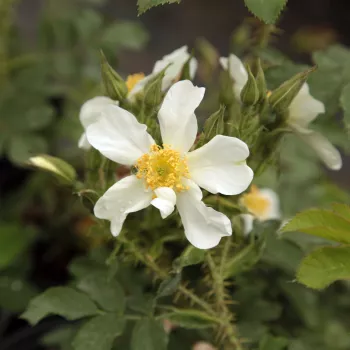
Bushy, spreading habit, 70–130 cm high with a 210–390 cm spread; densely thorned canes, moderately dense, matte mid-green foliage; own-root plants gradually form a wide, cohesive groundcover mass. |
| Flower morphology |
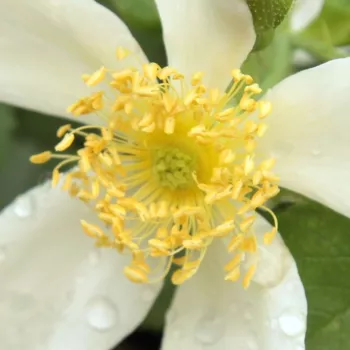
Small, flat, single to semi-single flowers, typically 5–12 petals in clusters; bloom once per season rather than repeating; petals fall cleanly, helping the shrub maintain a tidy appearance without deadheading. |
| Colour data and phenology |
Greenish-ivory buds open ivory-white, quickly becoming pure snow-white (RHS NN155C–NN155D), then fading to translucent white with a light beige edge; colour retention modest but charming in informal settings. |
| Fragrance and aroma |
Fragrance is mild yet pleasantly spicy, noticeable at close range in warm, still weather; suitable for gardeners who enjoy a subtle scent rather than an overpowering perfume near paths or seating areas. |
| Hip characteristics |
After flowering, it produces small to medium, spherical bright red hips around 18–26 mm diameter (RHS 43A); hips add late-season colour and can provide incidental interest for birds and wildlife visitors. |
| Resistance and winter hardiness |
Rated resistant to major rose diseases including black spot, powdery mildew and rust; tolerates heat and moderate drought, with winter hardiness around –29 to –26 °C (RHS H7, USDA 5a, Swedish zone 4). |
| Horticultural recommendations |
Space generously: about 2.1 m for masses, 1.8 m for hedges, 3.3 m as specimen; thrives in full sun or partial shade in well-drained soil; for containers, choose very large pots of at least 40–50 litres. |
PAULII offers once-a-year snow-white charm, rugged low-maintenance groundcover and lasting own-root resilience, making it a thoughtful choice if you value quiet, dependable structure in your garden.