PAUL'S HIMALAYAN MUSK RAMBLER – pale pink rambler climbing rose - Paul
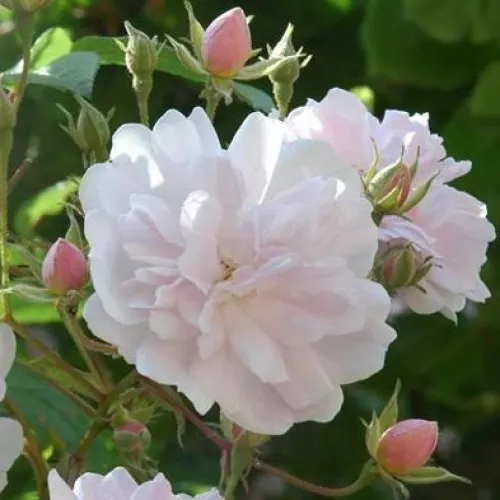
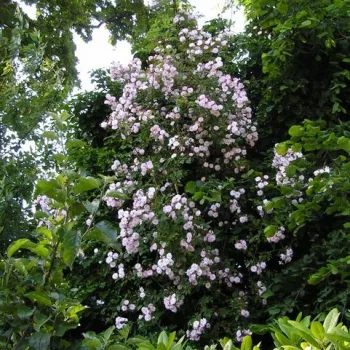
Step out to soft raindrops, where clouds of pale-pink blossom and a drifting fragrance transform a simple path into a gentle escape. Paul’s Himalayan Musk Rambler throws out long, graceful canes that cloak pergolas, old trees or Dublin terrace walls in a single, breathtaking early-summer display, perfectly at home in a relaxed Irish cottage mood of green, soft light. Once established it needs little more than occasional guiding and light pruning, rewarding you with a long-lived, own-root structure that shrugs off typical Irish winters and copes steadily with cool summers and frequent rain keeping foliage fresh despite damp weather. Think of its development as: first year for roots, second for shoots, third for full ornamental presence – a patient, quietly joyful investment for your garden’s future.
Usage options
| Target area |
Reasoning |
| Pergola over a seating area |
This rambler clothes a pergola quickly with long, arching canes and masses of small, double blooms, creating a romantic, shaded tunnel. The very strong musk scent drifts down as you sit, ideal for evening relaxation for the fragrance-loving gardener. |
| Training into a mature tree |
Its vigorous, climbing habit and long spread let it weave safely through an established tree, turning plain branches into a once-a-year waterfall of pale pink. Own-root growth returns even after hard pruning, appealing to the future‑minded homeowner. |
| Cottage-style boundary or gable wall |
Against a wall or gable it creates a soft, nostalgic backdrop with sea-green foliage and clouds of blossom. The plant’s long lifespan and sturdy framework offer lasting structure with modest care, reassuring for the busy family gardener. |
| Dublin terraced-house front garden |
Trained over a small porch or railings, it delivers big visual impact from a compact footprint, while coping well with cool, damp conditions and regular Irish rainfall that would challenge fussier roses, suiting the urban terrace owner. |
| Feature rose for park-style lawns |
Used as a solitary specimen with space to climb an obelisk or custom frame, it becomes a seasonal event everyone notices. Its good self-cleaning habit means spent petals fall away, reducing tidying for the low‑maintenance enthusiast. |
| Part-shade side garden or north-facing corner |
Tolerating partial shade, it still flowers generously where many roses sulk, bringing light, pastel colour and powerful scent to less favoured spots. This reliable performance in trickier aspects benefits the space‑conscious gardener. |
| Large container by a doorway (40–50 L minimum) |
In a substantial container with a sturdy trellis, it offers scent and bloom right at your door while remaining movable if you change the garden layout. Own-root resilience supports long-term container use, attractive to the flexible planner. |
| Wildlife-friendly romantic corner |
The highly fragrant, once-a-season flush draws attention, while moderate bee and butterfly visits and small red hips add gentle wildlife interest. Its endurance through damp Atlantic seasons provides long-term structure for the nature‑oriented beginner. |
Styling ideas
- Cottage-arch romance – Train over a metal or timber arch, underplant with Liatris spicata 'Alba' and soft foxgloves for a dreamy, early-summer tunnel – perfect for nostalgic cottage‑garden lovers.
- Tree‑top waterfall – Let it scramble up an old apple or ornamental tree, then soften the base with Carex flacca 'Blue Zinger' for a natural, woodland-edge look – ideal for relaxed country‑style gardeners.
- Pastel-front welcome – On a Dublin terrace, fan it over railings and pair with terracotta pots of lavender for scent at the gate – suited to design‑aware city homeowners.
- Shady-side retreat – Use along a part-shaded side path with Bupleurum rotundifolium 'Garibaldi' and ferns below, creating a cool, scented corridor – great for contemplative garden walkers.
- Parkland focal frame – Build a tall wooden frame on lawn and let the rambler smother it, edging the base with ornamental grasses for year-round structure – appealing to statement‑loving garden makers.
Technical cultivar profile
| Parameter |
Data |
| Name and registration |
Paul's Himalayan Musk Rambler, rambler climbing rose, garden and landscape rambler for pergolas and trees; trade name Paul; unregistered cultivar, ARS exhibition name Paul’s Himalayan Musk. |
| Origin and breeding |
Bred by George Paul Jr., W. Paul & Son Nursery, England; Rosa brunonii × Rosa brunonii hybrid; introduced and first distributed in 1916 as a vigorous musk-scented rambler. |
| Awards and recognition |
Holder of the Royal Horticultural Society Award of Garden Merit, confirming strong garden performance, ornamental value and reliability under typical landscape and domestic planting conditions. |
| Growth and structural characteristics |
Strong climbing rambler, 800–1100 cm high with 450–800 cm spread; dense, slightly glossy sea-green foliage, moderately thorny canes and good self-cleaning for reduced deadheading needs. |
| Flower morphology |
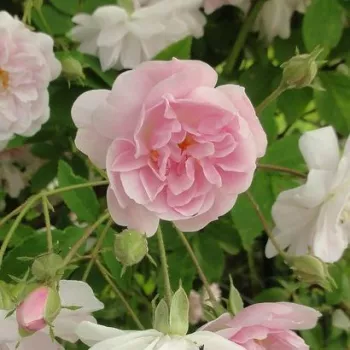
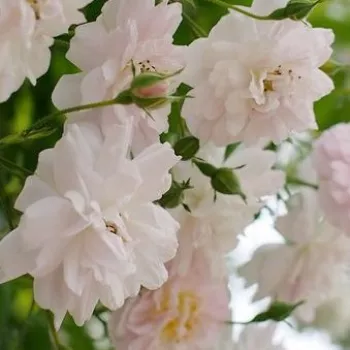
Small, double, flat flowers, 1–4 cm across, carried in large, many-flowered clusters; 26–39 petals per bloom; once-flowering early in the season with an abundant, dramatic main flush only. |
| Colour data and phenology |
Pale pink blooms, RHS 65C outer and 65D inner; pastel veil when newly open, fading rapidly in sun to near white at petal edges, leaving a soft, light pink centre at full bloom. |
| Fragrance and aroma |
Very strongly musk-scented flowers, fragrance notable at a distance in still air; ideal for seating areas and evening walks; historically linked to Himalayan musk rose species influence. |
| Hip characteristics |
Produces small numbers of ovoid red hips, 5–7 mm in diameter; decorative but not dominant; may follow flowering if not pruned directly after bloom, offering subtle late-season interest. |
| Resistance and winter hardiness |
Hardy to about -32 to -29 °C (RHS H7; USDA 4b; Swedish zone 5); moderate heat and drought tolerance needing watering in long dry spells; moderate disease resistance with good black-spot resistance. |
| Horticultural recommendations |
Best for pergolas, arches, walls, arbours, trees, parks and solitary features; plant 440–430 cm apart, 750 cm as specimen; tolerates partial shade; medium maintenance with occasional plant protection. |
PAUL'S HIMALAYAN MUSK RAMBLER offers breathtaking scented summer coverage, reliable hardiness and long-lived own-root growth; a thoughtful choice if you wish to give your garden a quietly spectacular centrepiece.