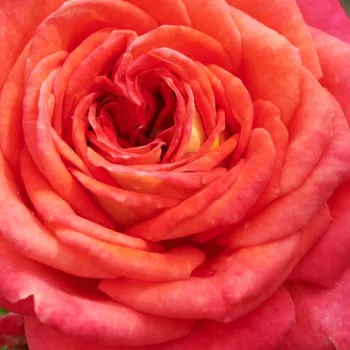
NAJAC™ – red bedding floribunda rose
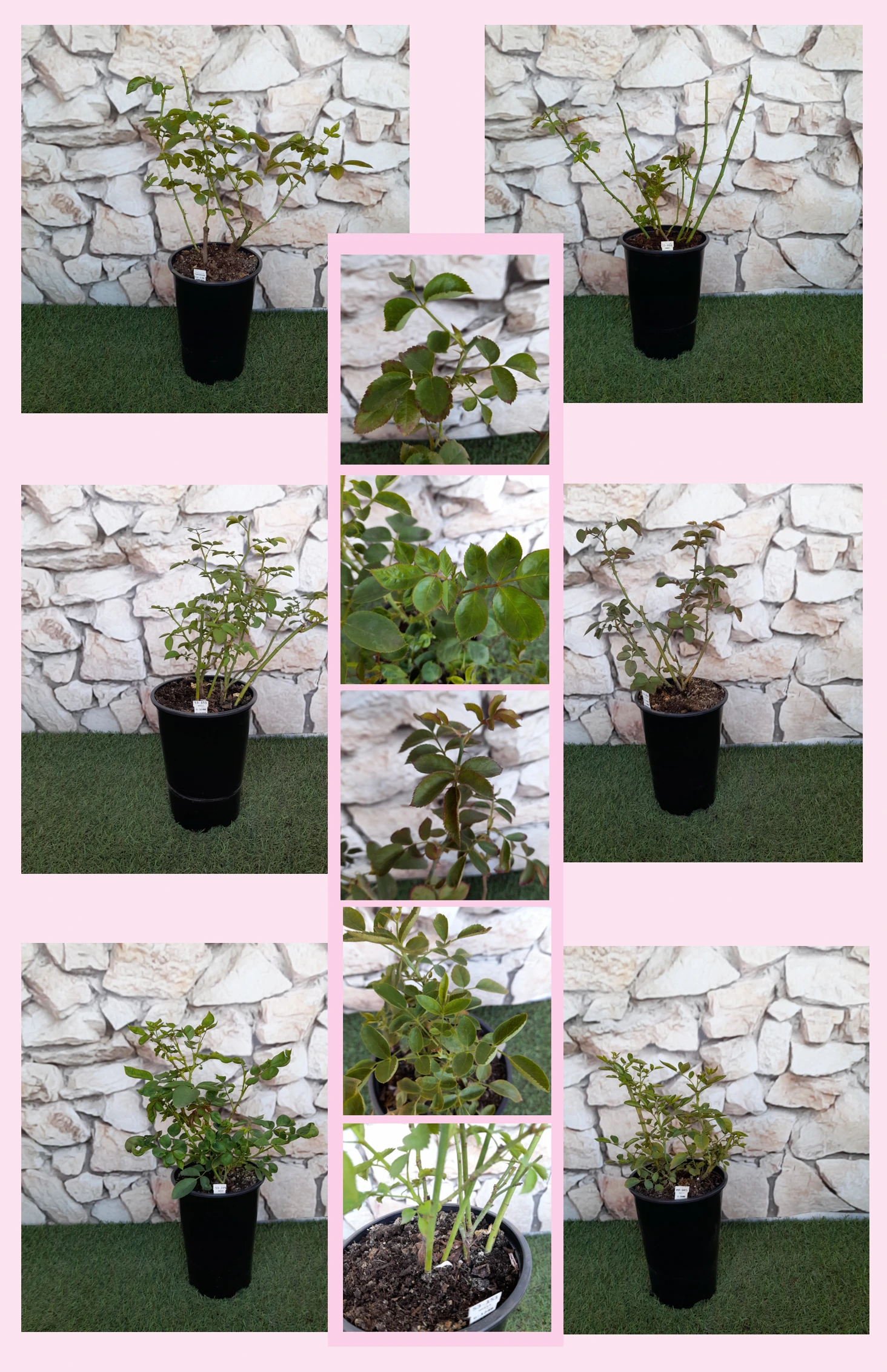
Step out the back door and meet Najac glowing in soft evening light, its ruby-red clusters bringing quiet cheer to even the smallest gardens. Bred for strong disease resistance, it copes well with Ireland’s damp summers and frequent showers, helping foliage stay attractively clean. The bushy, compact habit makes it wonderfully manageable for busy homeowners, whether you plant a low hedge, edge a path, or brighten a front garden bed. As an own-root rose it offers reassuring longevity and natural regrowth, maturing steadily over its first years until it becomes a reliable, long-lived feature.
Usage options
| Target area | Reasoning |
|---|
| Cottage-style front garden bed |
The compact, bushy habit and medium height are ideal for a cottage-style strip along a path or low wall, giving structured mounds of ruby-red bloom without blocking windows, perfect for beginners seeking easy charm in small gardens for busy urban gardeners |
| Low flowering hedge along a drive |
Planted 40 cm apart, Najac forms a low, colourful hedge with dense, glossy foliage that reads as a neat line even between flushes, offering a tidy, low-maintenance boundary that suits those wanting order with minimal clipping for practical homeowners |
| Mixed perennial border accent |
Its warm ruby and orange glow blends beautifully with airy perennials, while strong disease resistance in humid weather keeps leaves looking healthy, supporting reliable structure in borders where you cannot constantly intervene for relaxed cottage gardeners |
| Feature rose in a large container |
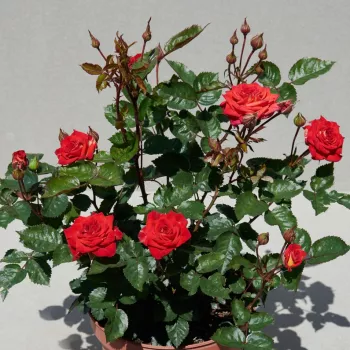
Najac’s bushy, upright habit works well in a 40–50 litre pot, where its clusters of flowers give a generous effect on patios and small terraces, offering colour close to the house without demanding complicated care routines for balcony and patio owners |
| Family play garden planting |
The moderate height and rounded outline make it easy to place near lawns and seating areas; own-root plants recover more steadily from accidental knocks or winter dieback, building up into a durable shrub over several seasons for families with children |
| Simple cutting patch |
Clustered stems of medium, double blooms are well suited to small jugs and kitchen vases, and remontant flowering with a good second flush means you can cut some stems without sacrificing the overall garden display for home flower arrangers |
| Easy-care mass planting |
At 50 cm spacing, Najac creates a carpet of closely packed plants, maximising colour on banks or larger beds; low maintenance needs and strong disease resistance mean less spraying and fuss for those seeking dependable structure over several years for low-maintenance planners |
| Developing long-term garden structure |
Own-root plants build a deep, resilient root system that supports steady top growth; expect roots to establish in year one, fuller shoots in year two, and near-complete ornamental impact by year three for patient long-term gardeners |
Styling ideas
- Cottage Ribbon – edge a front path with Najac and soft perennials like Gypsophila repens ‘Knuddel’ for a low, lace-framed red ribbon – ideal for homeowners wanting a welcoming, storybook entrance.
- Terrace Jewel – plant a single Najac in a 50 litre terracotta pot, underplant with trailing thyme to soften the rim – perfect for city gardeners seeking easy glamour on a small patio.
- Warm Hedge – line a short driveway with Najac at hedge spacing, interplanting spring bulbs for off-season interest – suited to families wanting a low, colourful boundary without complex clipping.
- Ruby Patch – group three plants in a triangle with Penstemon ‘Husker Red’ for layered reds and burgundy foliage – appealing to gardeners who enjoy rich, coordinated colour with little effort.
- Soft Contrast – mix Najac with Lychnis viscaria ‘Alba’ and pale ornamental grasses to offset the warm reds with airy white and green – great for those who prefer a romantic, light-textured border.
Technical cultivar profile
| Parameter | Data |
|---|
| Name and registration |
Najac™ Castle® POUlcas075, floribunda shrub rose; commercial red bedding floribunda within the Castle® collection, registered under the code POUlcas075 for garden and landscape use. |
| Origin and breeding |
Bred by L. Pernille Olesen and Mogens Nyegaard Olesen at Poulsen Roser A/S, Denmark; parentage unknown; bred 2021 in Denmark and introduced commercially around 2024. |
| Growth and structural characteristics |
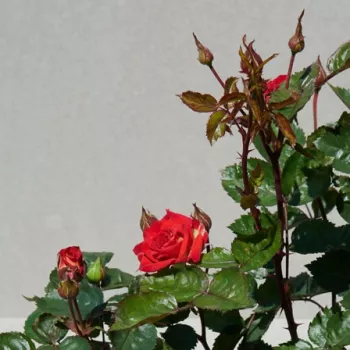
Bushy, floribunda shrub rose reaching about 70–95 cm high and 60–85 cm wide, with dense, glossy dark green foliage and moderate prickliness, forming compact, rounded plants in beds or containers. |
| Flower morphology |
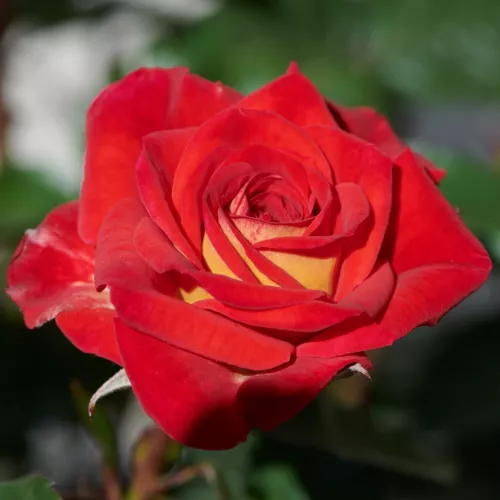
Medium-sized, 4–7 cm, cup-shaped double blooms with roughly 26–39 petals, carried mostly in clusters; remontant flowering pattern delivering a strong second flush after the main early summer display. |
| Colour data and phenology |
Ruby red petals with warm orange-yellow tones towards the centre; colour deepens as blooms open, developing subtle bronzy shading while the yellow tints gradually fade; overall colour retention in garden conditions is very good. |
| Fragrance and aroma |
Very weakly scented rose with a barely perceptible sweet, spicy character; fragrance is not the main feature, making this variety best chosen for colour, structure and reliability rather than perfume. |
| Hip characteristics |
Occasionally forms very small hips about 0–5 mm in diameter; hips are not a prominent ornamental feature and generally go unnoticed in typical garden settings. |
| Resistance and winter hardiness |
Shows good resistance to common rose diseases including black spot, powdery mildew and rust; hardy to approximately -26 to -23 °C (RHS H7, USDA Zone 5b), suitable for exposed Irish gardens. |
| Horticultural recommendations |
Best in full sun, spaced 40–75 cm depending on use; plant in well-drained soil, improving heavy clay where needed; suits beds, low hedges, large containers and informal cutting with generally low maintenance needs. |
NAJAC™ combines compact, bushy growth, vibrant long-lasting colour and strong disease resistance with the steady reliability of an own-root rose, making it a thoughtful choice for relaxed, long-term planting.