MYRIAM, COURIR POUR ELLES – pink park rose – Rateau
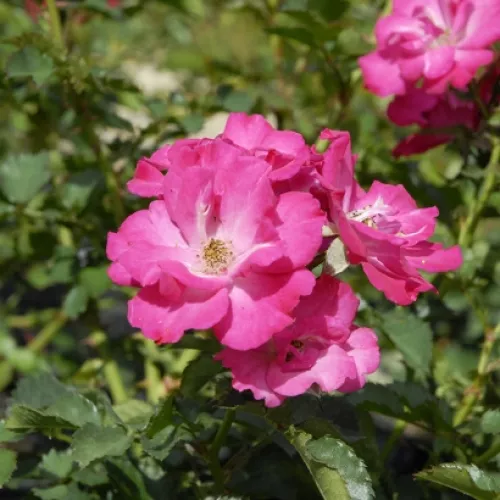
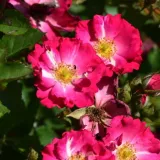
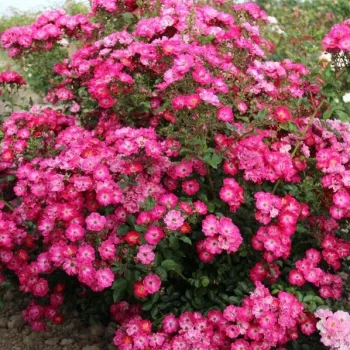
For a soft, feminine accent in a small Irish garden, this rose brings gently spreading, balanced growth and a cloud of vivid fuchsia‑pink blooms through the season, even when summer is cool and changeable. Its clusters of semi‑double flowers open repeatedly, creating a lively, cheerful display without deadheading, as most spent blooms fall away on their own. Grown on its own roots, it is designed for a long, reliable life in family beds and cottage‑style borders, quietly rebuilding itself if stems are damaged and settling steadily from roots to shoots to full garden presence over the first three years. In containers of at least 40–50 litres or in the ground, it keeps a manageable size, forming dense, medium‑green foliage that frames the flowers and gives the planting a polished, cared‑for look with very little shaping needed.
Usage options
| Target area |
Reasoning |
| Cottage-style front garden border |
The rounded, spreading habit and dense foliage create a soft, romantic line along a path or low wall, perfect for a “girly” cottage feel, while the long flowering season keeps the entrance welcoming for beginners. |
| Informal flowering hedge |
Planted at 90 cm intervals, it forms a loose, flower‑rich boundary that screens a driveway or separates play space from planting, staying neat thanks to natural self‑cleaning that limits time spent on deadheading for busy homeowners. |
| Feature shrub in a small family garden bed |
Used as a solitary shrub at about 180 cm spacing, its bright pink clusters draw the eye without overwhelming the space, giving reliable colour year after year as the own‑root plant slowly builds a sturdy framework for long‑term planners. |
| Large patio container or terrace pot |
In a 40–50 litre or larger container with good drainage, its compact height and spreading habit suit city terraces, where it offers a lush look with modest pruning and easy access for regular spraying when needed for urban gardeners. |
| Mixed bedding with perennials |
The uniform growth and medium height make it simple to weave between cottage perennials such as baby’s breath or airy grasses, giving structure and season‑long colour while partners provide extra biodiversity support for nature‑lovers. |
| Park or shared green space planting |
In public or shared settings, its even shape and self‑cleaning habit reduce day‑to‑day grooming; when grouped at around 1 plant per m² it creates a cohesive, colourful mass that still looks tidy to passing residents. |
| Clay soil family gardens with improved drainage |
Once drainage is improved with grit and organic matter, its strong root system on its own base establishes steadily, coping better with wet winters and then flowering freely through cool, mixed summers appreciated by Irish homeowners. |
| Low-maintenance “pink theme” bed for visual impact |
Although it needs regular fungicide in humid areas, its naturally spreading, balanced form means shaping is simple: an annual tidy is usually enough for a billowing pink effect that feels generous yet controlled for style-conscious buyers. |
Styling ideas
- Cottage-Romantic – Combine with Gypsophila ‘Festival Pink Lady’ and soft grasses for a frothy, pastel‑pink border – ideal for lovers of traditional Irish cottage gardens.
- Urban-Front – Line a short Dublin terrace front with a single row, underplanting with low lavender or thyme to soften the edge – suited to city dwellers wanting charm in a tight space.
- Pink-Focus – Create a monochrome scheme with other pink perennials, using Myriam as the structural anchor – perfect for gardeners who enjoy a coordinated, feminine colour story.
- Family-Friendly – Position behind a small lawn or play area so children see flowers without braving the thorns – helpful for families seeking beauty with straightforward upkeep.
- Container-Showcase – Plant one shrub in a 50‑litre pot with trailing white alyssum to spill over the rim – attractive for balcony and patio owners wanting a single, showy focal point.
Technical cultivar profile
| Parameter |
Data |
| Name and registration |
Registered as EVElubis, marketed as Myriam, Courir pour Elles; shrub or park rose type with uniform, spreading habit, suited to bedding, hedging and landscape planting roles. |
| Origin and breeding |
Bred by Jérôme Rateau in France in 2008; introduced by Pépinières et Roseraies André Eve from 2016, continuing the EVE breeding line of ornamental landscape shrub roses. |
| Growth and structural characteristics |
Spreading shrub 80–120 cm tall and 90–130 cm wide, with dense, slightly glossy medium‑green foliage and moderate prickles, forming a broad, bushy plant suitable for groups or single specimens. |
| Flower morphology |
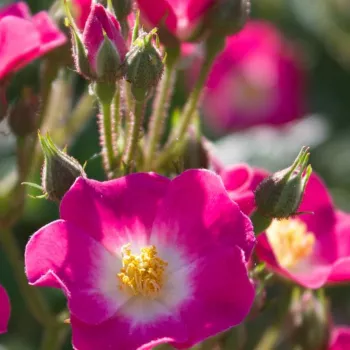
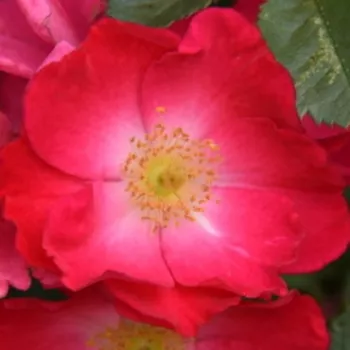
Semi‑double, flat, cluster‑flowered blooms, 1–4 cm across, bearing 13–25 petals; reliably remontant with abundant second and later flushes, and good self‑cleaning of spent flowers. |
| Colour data and phenology |
Rich fuchsia‑pink flowers; buds deep glossy fuchsia, opening magenta pink then fading to lighter cyclamen‑pink with paler rims; colour retention moderate under sun exposure. |
| Fragrance and aroma |
Fragrance is very weak and barely noticeable; chosen primarily for flower colour and habit rather than scent, making it best where visual impact is more important than perfume. |
| Hip characteristics |
Hip set is usually sparse because semi‑double, self‑cleaning flowers shed quickly; when present, small bright red ellipsoid hips 6–12 mm add discreet late‑season interest for wildlife value. |
| Resistance and winter hardiness |
Extremely hardy shrub rose, tolerating approximately −32 to −29 °C (USDA 4b, H7, Swedish zone 5); highly susceptible to powdery mildew, black spot and rust, so regular protection is essential. |
| Horticultural recommendations |
Best in fertile, well‑drained soil; space 90–180 cm depending on use. Maintain fungicide programme, especially in humid areas. Suitable for beds, hedges, containers and urban green or park plantings. |
MYRIAM, COURIR POUR ELLES offers vivid long-season pink colour, a naturally balanced shrub shape and dependable own-root longevity; consider it if you would like lasting structure and charm in a modest Irish garden.