MOUNT SHASTA – white grandiflora bedding rose – Swim & Weeks
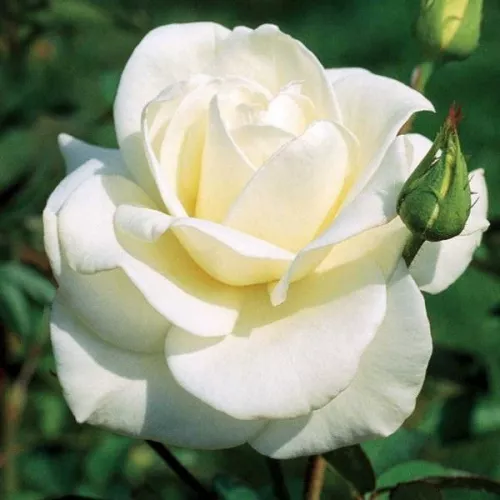
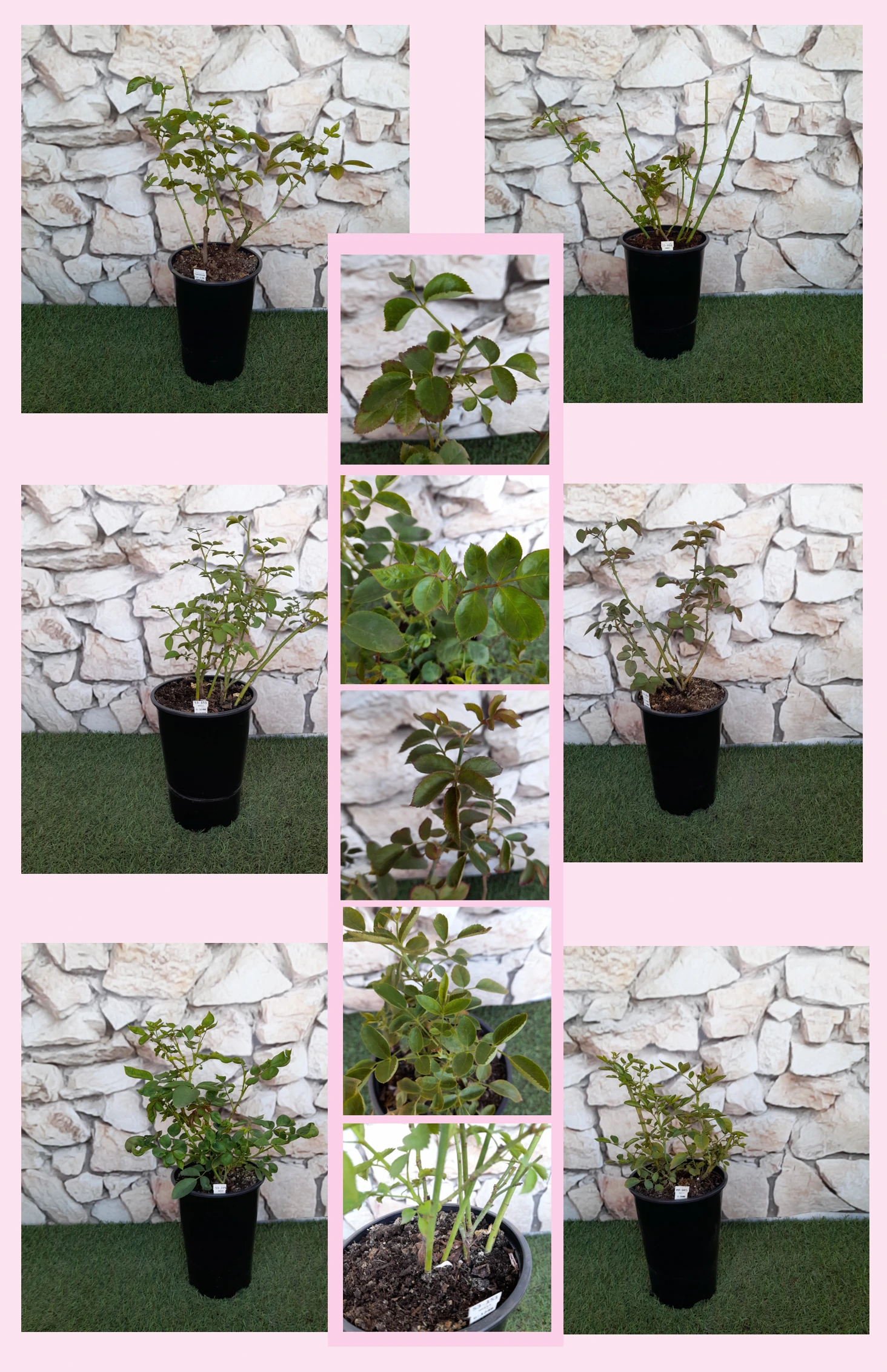
Step out to your front path after rain and meet the calm, bright presence of Mount Shasta: a reliable flowerbed rose that stays elegant even in damp Irish summers, with tough foliage bred to shrug off disease. Big, cupped, ivory-white blooms open from soft pink buds, bringing a light, cheerful fragrance that suits a cottage gate or a neat Dublin terrace equally well. As an own-root plant it settles in steadily, with roots the first year, stronger shoots the second, then full garden impact by year three, giving you lasting, low-fuss beauty. Simple care, long flowering, and dependable performance in breezy, rainy conditions create a sense of contentment whenever you step outside, while the creamy-white clusters sit happily among perennials and grasses, keeping your garden picture soft and inviting for years of relaxed strolling.
Usage options
| Target area | Reasoning |
|---|
| Sunny cottage-style flowerbed by the front door |
Remontant flowering with a plentiful second flush keeps the entrance bright over a long season, so you have colour through our shorter summers with only light deadheading and basic care – ideal for the relaxed cottage-garden beginner. |
| Low, informal flowering hedge along a path or driveway |
The upright habit and 90–130 cm height make an airy, elegant hedge, while recommended 60 cm spacing creates a soft white ribbon that stays neat with minimal clipping, perfect for those wanting structure without fussy upkeep – suitable for time-pressed homeowners. |
| Specimen rose in a small to medium family lawn |
Large, XL-sized blooms on sturdy stems stand out as a focal point from roughly 1 m away, giving a clear “feature plant” effect without needing expert pruning, so the rose earns its place in a modest space – ideal for impact-seeking gardeners. |
| Cutting patch or mixed cutting-and-display bed |
Grandiflora-type stems with show-quality form work well in vases, so you can cut clusters for the house while the shrub continues to bud up, offering regular indoor arrangements from one planting – attractive for fragrance-loving urbanites. |
| Mixed border with perennials on heavier Irish soils |
Once established, the own-root system supports long life and stable flowering, and with sensible drainage and mulch it copes well with our damp conditions and frequent rainfall, giving steady structure in a mixed border – reassuring for climate-aware buyers. |
| 40–50 litre patio container or large terrace pot |
In a generous 40–50 litre container the upright shape and moderate spread are easy to manage, letting you enjoy rose-garden character on a paved city terrace with simple watering and feeding routines – convenient for balcony and patio owners. |
| Family play garden with robust, low-input planting |
Good resistance to powdery mildew, black spot and rust reduces spraying, while the moderately thorny stems are manageable with a little positioning, making it a sensible choice where children play nearby – reassuring for young-family households. |
| Front garden scheme with subtle scent and soft light |
Medium, softly harmonious fragrance and bright white petals gently reflect evening light, turning a small front garden into a calm, scented walkway that fits both traditional cottages and compact terraces – appealing to atmosphere-focused neighbours. |
Styling ideas
- Cottage-Ribbon – Plant a loose row along a front path, underplant with blue fescue and low daylilies for a soft white-and-pastel ribbon – for owners wanting gentle structure with minimal maintenance.
- Terrace-Showpiece – Grow one plant in a 50 litre clay pot, surround the base with dwarf iris and gravel mulch to highlight its large white blooms – for urban gardeners seeking a single, reliable focal point.
- All-Season-Duo – Combine Mount Shasta with repeat-flowering perennials in a small bed so something is always in bloom, keeping interest high without complex planning – for beginners wanting easy success.
- Soft-Hedge – Use a staggered double row at 60 cm spacing to edge a driveway, letting the upright shrubs form a relaxed, flowering boundary – for families who like privacy without a solid fence.
- White-Moon-Border – Group three plants in a triangle, weaving in silver foliage and pale grasses for a luminous evening border that still looks tidy if you skip a week in the garden – for busy professionals.
Technical cultivar profile
| Parameter | Data |
|---|
| Name and registration |
Mount Shasta grandiflora / hybrid tea flowerbed rose, trade name Mount Shasta Flowerbed rose Swim & Weeks; ARS exhibition name Mount Shasta; collection: flowerbed rose; no separate registered code listed. |
| Origin and breeding |
Bred by Herbert C. Swim and Orville L. Weeks, Weeks Roses, USA; cross of ‘Queen Elizabeth’ × ‘Blanche Mallerin’; introduced and registered in 1963, originally distributed by Conard-Pyle in the United States. |
| Growth and structural characteristics |
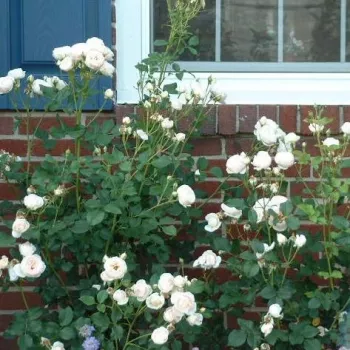
Upright shrub 90–130 cm high, 80–120 cm spread, moderately dense grey-green foliage with slight gloss; moderately thorny canes, relatively formal outline suitable for beds, hedging and specimen use in family gardens. |
| Flower morphology |
Semi-double cupped blooms with 13–25 petals, XL flower size over 10 cm; cluster-flowered grandiflora style with exhibition potential; remontant with a generous second flush; most spent blooms need manual removal. |
| Colour data and phenology |
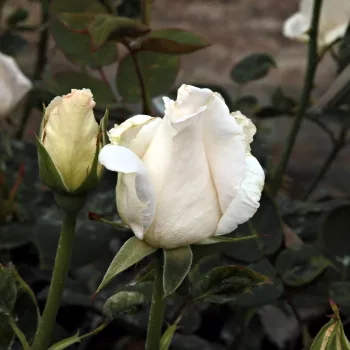
Buds pale pearly pink with greenish-white edges; freshly opened flowers ivory with a faint powder-pink centre; open blooms bright pure white, fading to matt white with slight cream veil; colour holds well, slight scorch in strong sun. |
| Fragrance and aroma |
Medium-strength, softly harmonious scent typical of classic white garden roses; noticeable on still, mild days without being overpowering, pleasant near paths, seating areas and entrances where close appreciation is expected. |
| Hip characteristics |
Produces hips in moderate quantities; ovoid, egg-shaped fruits 10–14 mm across, turning orange-red as they mature; mainly ornamental in autumn, not especially prominent but adding seasonal interest when left unpruned. |
| Resistance and winter hardiness |
Rated resistant to powdery mildew, black spot and rust; tolerates moderate heat and short dry spells with watering in extremes; hardy approximately to −21 to −18 °C (H7, USDA 6b, Swedish zone 3), suitable for most Irish gardens. |
| Horticultural recommendations |
Best in full sun with well-drained, fertile soil; prefers regular mulching and feeding; spacing 60–65 cm in rows, 2.4–2.7 plants/m² for beds; water during establishment and prolonged drought; clean spent flowers to encourage repeat bloom. |
Mount Shasta offers long-season white flowering, reliable disease resistance and a softly fragrant presence, while its own-root form promises a durable, steadily maturing shrub; a thoughtful choice if you like beauty with little complication.