MILROSE – pink bedding floribunda rose – Chabert
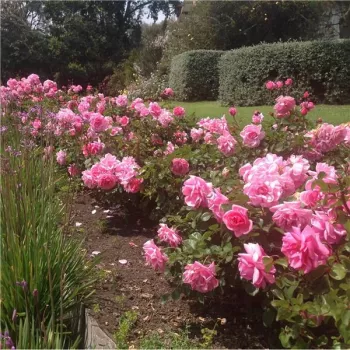
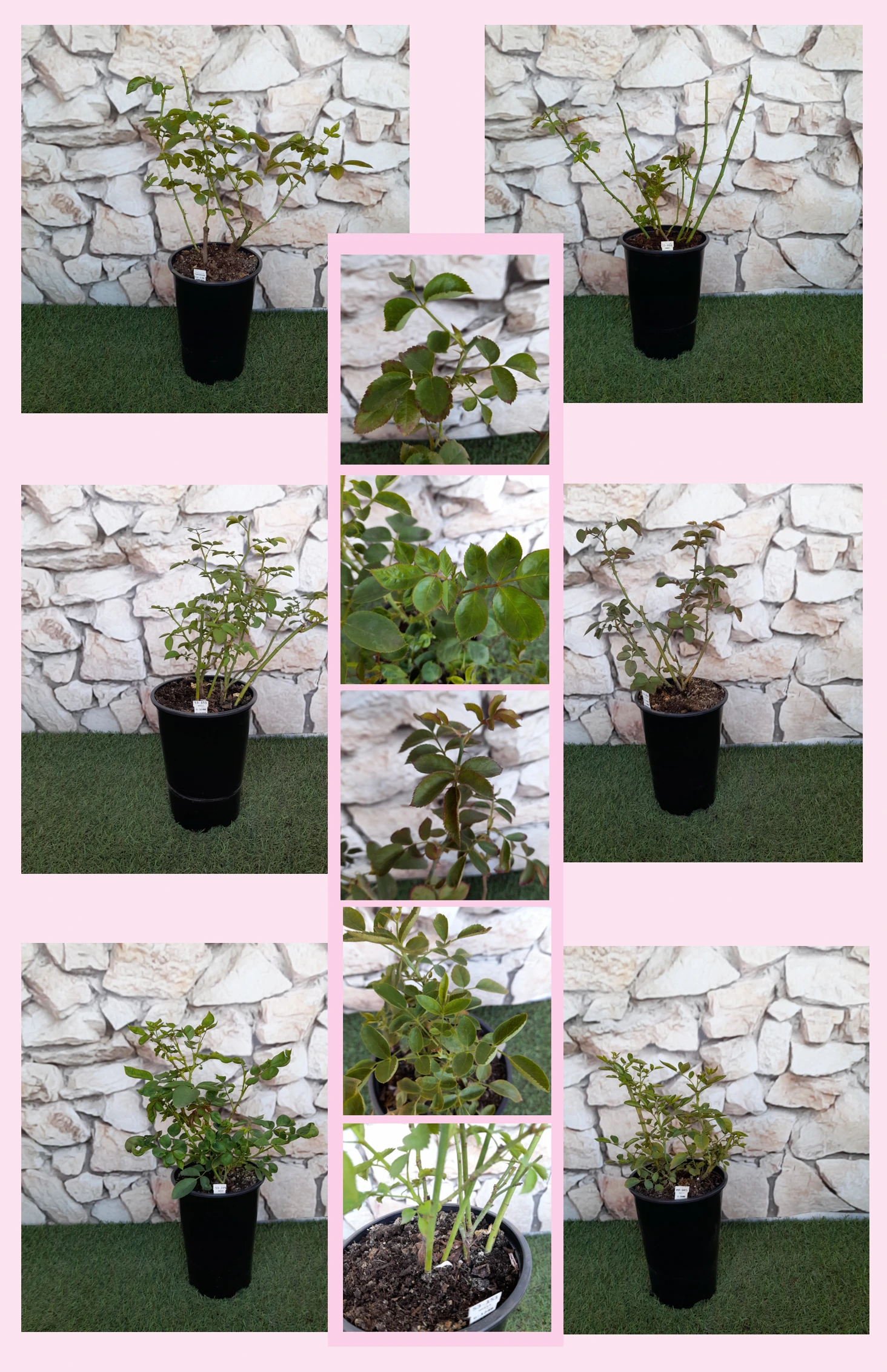
Imagine a soft shower of pink blooms outside your door: MILROSE fills modest Irish gardens with clusters of mid-pink roses that gently fade to a pearly glow, creating a calm, cottage-style border even when days are grey and summers feel short with reliably repeated flowering despite cool weather. Its light, classic rose fragrance is never overpowering, just enough to bring a sense of cheerful contentment when you nip out between showers or after work. As an own-root plant, it settles in steadily, with roots building in the first year, bushy shoots in the second, and full garden presence by the third, giving you confident long-term ease with very little effort.
Usage options
| Target area |
Reasoning |
| Front cottage-style border by the path |
MILROSE’s compact, bushy shape and mid-pink clusters suit narrow front borders, softening paths and steps without overwhelming space; its low maintenance suits time-poor beginners. |
| Low flowering hedge along a driveway or wall |
Planted at about 35 cm, MILROSE forms a tidy, repeated rhythm of pink, creating structure and privacy while keeping clipping and care simple for homeowners. |
| Mixed bed with perennials in heavy Irish soil |
This floribunda copes well once drainage is improved, offering reliable colour while you enrich clay beds, making it a practical, attractive choice for family-gardeners. |
| “Girly” pink feature near a sunny doorstep |
The sweet, fading pink tones and light rose scent give a soft, feminine feel that pairs well with pots and pastel accessories, delighting fragrance-loving city-dwellers. |
| Own-root long-term planting in a family garden |
On its own roots, MILROSE rebuilds if cut back, keeping shape and colour steady over many years, which reassures those wanting lasting value for budget-conscious. |
| Repeat-flowering accent for short Irish summers |
Its remontant flowering ensures several flushes of bloom, so even when summers are brief you still enjoy weeks of colour under soft, light-filled skies for busy-gardeners. |
| Border planting in damp, disease-prone locations |
Strong resistance to black spot, mildew and rust helps MILROSE stay healthy through wet, humid spells, supporting attractive planting with minimal spraying for eco-minded. |
| Large container on a sheltered terrace or balcony |
In a 40–50 litre pot with free-draining compost, MILROSE forms a bushy, floriferous shrub that brightens small outdoor seating areas with little routine care for apartment-owners. |
Styling ideas
- Cottage-Ribbon – weave a low drift of MILROSE along a front path with soft grasses and lavender for a romantic pink “ribbon” – ideal for cottage-front dreamers.
- Terrace-Jewel – plant MILROSE in a generous 50 L pot with trailing thyme at the rim to create a fragrant focal point – perfect for balcony and terrace owners.
- Pastel-Partner – mix MILROSE with pale campanulas and white daisies for a light, pearly border that glows in soft Irish light – suited to lovers of gentle colour.
- Neat-Edger – repeat MILROSE at 35–40 cm spacing along drives or lawns for a clean, low hedge that still feels romantic – great for order-loving gardeners.
- Family-Corner – group three MILROSE shrubs near a seating area with child-friendly perennials for a long-lived, low-fuss play and relaxation nook – made for busy families.
Technical cultivar profile
| Property |
Data |
| Name and registration |
Floribunda bedding rose, shrub exhibition class; registered as DELbir, marketed as Milrose (also Milrose Bedding rose DELbir); part of the Rósra bhláthchlóis commercial group. |
| Origin and breeding |
Bred by André Chabert for Pépinières & Roseraies Georges Delbard, France, from ‘Orléans Rose’ × ('Français' × 'Lafayette'); introduced and first distributed by Georges Delbard SA in 1965. |
| Awards and recognition |
Awarded four medals at international rose competitions, confirming its ornamental value and garden reliability compared with other floribundas of similar height and flowering habit. |
| Growth and structural characteristics |
Bushy shrub to about 70–100 cm high and 50–70 cm wide, with dense, glossy, light green foliage and noticeable prickliness; forms a compact, well-filled outline suited to bedding schemes. |
| Flower morphology |
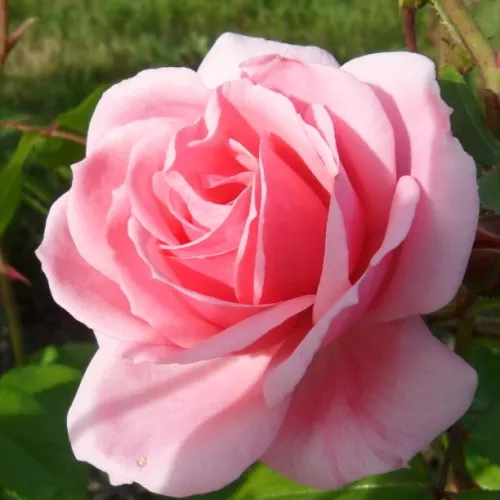
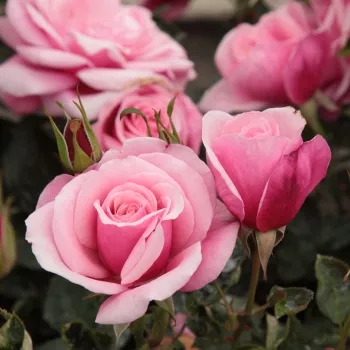
Semi-double, cup-shaped flowers of medium size, around 4–7 cm diameter, carrying approximately 13–25 petals; blooms are produced in corymbose clusters and repeat well through the season. |
| Colour data and phenology |
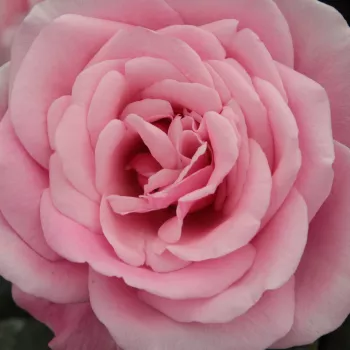
Mid-pink blooms (ARS MP; RHS 55C outer, 62D inner) with a deeper margin, opening rich and gradually fading to a pearly, pastel pink; colour lightens towards the centre at full bloom. |
| Fragrance and aroma |
Lightly scented with a soft, classic rose aroma that is pleasant at close range without dominating surrounding plantings or seating areas; suited to intimate garden spaces and entrances. |
| Hip characteristics |
Produces moderately abundant, small spherical red hips about 5–8 mm across, adding a discrete seasonal accent later in the year without significantly affecting overall flowering display. |
| Resistance and winter hardiness |
Rated resistant to powdery mildew, black spot and rust; winter hardy approximately to −21 to −18 °C (RHS H7, Swedish Zone 3, USDA 6b), suitable for most temperate, exposed Irish sites. |
| Horticultural recommendations |
Best performance in sunny positions with improved drainage; space at 40 cm for bedding, 35 cm for hedging or 65 cm as a specimen; works in large containers with at least 40–50 litres of compost. |
MILROSE offers abundant pink clusters, reliable repeat flowering and disease resilience on a long-lived own-root framework, making it a thoughtful choice for those seeking enduring, easy charm in their garden.