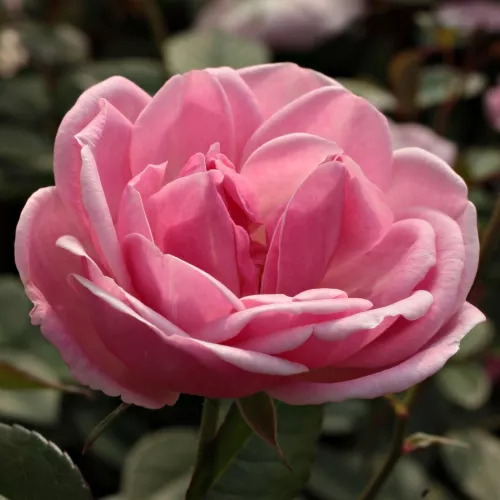
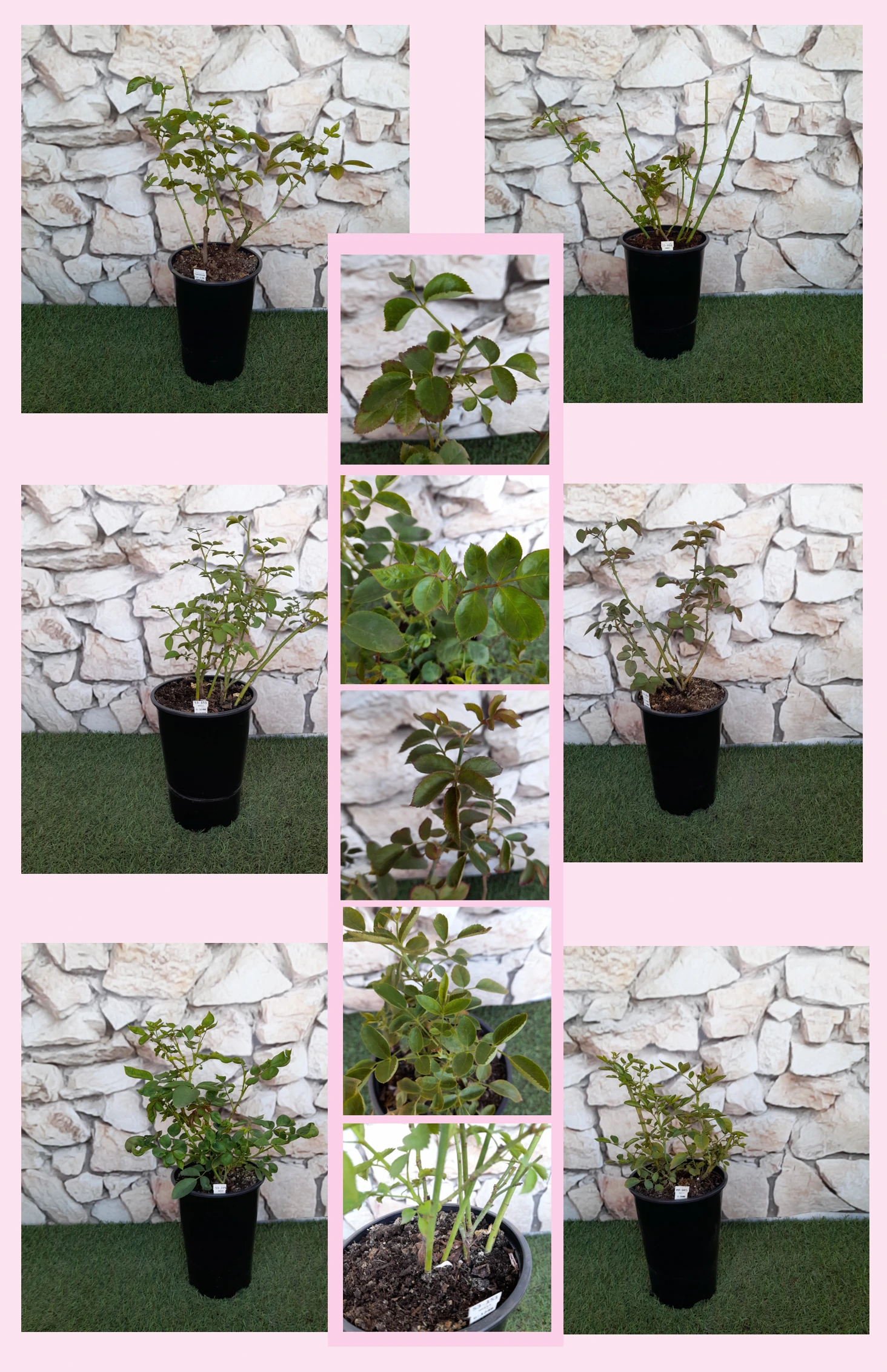
MEVROUW NATHALIE NYPELS – pink bedding floribunda rose
Step outside to a soft shower of raindrops and discover how cheerful the pastel pink clusters of ‘Mevrouw Nathalie Nypels’ feel against glossy green foliage, even when summers are cool and damp with steady rainfall. This classic floribunda is a truly easy-care garden companion: self-cleaning blooms mean very little deadheading, while a neat, bushy shape stays naturally compact in small Irish cottage borders and Dublin front gardens. Semi-double, gently cupped flowers open repeatedly through the season, giving long-lasting colour and a surprisingly strong, sweet, tea-like, fruity scent that greets you every time you step outside. Grown on its own roots, it builds a stable, deep root system for a long-lived, resilient presence – think roots in the first year, shoots in the second, and full ornamental value from the third – and its open, pollen-accessible blooms offer a modest but charming contribution to garden biodiversity.
Usage options
| Target area |
Reasoning |
| Front-of-border cottage strip |
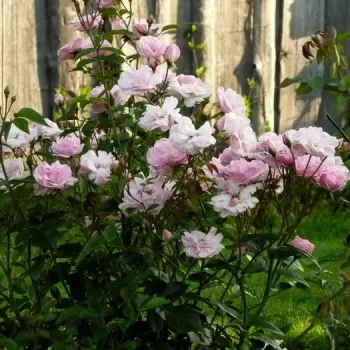
Semi-double clusters in soft pastel pink give that informal, “girly” cottage feel at the front of mixed borders, while the bushy 50–70 cm habit forms a low, flowing edge without constant pruning, ideal for relaxed cottage-garden romantics and beginners. |
| Dublin terraced-house front garden |
Its compact spread and tidy, self-cleaning flowers keep a small front patch or kerbside bed looking cared for with minimal time investment; one or two plants by a path provide fragrance and colour for daily comings and goings, perfect for busy urban homeowners. |
| Low flowering hedge or edging |
Plant at 35–40 cm for a soft, low hedge that repeats bloom; good self-cleaning means fallen petals disappear quickly, and own-root resilience helps the line recover if sections are damaged, suiting low-maintenance family-garden borders. |
| Mass bedding and park-style planting |
At 5.7–6.5 plants/m² it creates a long-season pink carpet, with remontant flowering and moderate care needs; the Award of Garden Merit underlines reliability for community schemes and shared spaces, valued by practical garden planners. |
| Large containers on patio or balcony |
In a 40–50 litre pot with good drainage, its bushy size and self-cleaning habit make it a tidy choice for patios or small balconies; own-root plants remain stable and can be rejuvenated easily, attractive to container-focused city gardeners. |
| Partially shaded side garden |
Suitable for partial shade, it still flowers well where sun is limited by neighbouring houses; the soft pink reads clearly even in low light, adding gentle brightness along side paths for space-conscious suburban and urban residents. |
| Lightly wildlife-friendly family bed |
Semi-double blooms allow moderate access for bees and the small orange-red hips add late-season interest; while not a wild meadow rose, it offers a modest nectar stop within a tidy setting, appealing to nature-aware family gardeners. |
| Traditional mixed border with clay soil |
Once established on its own roots, it copes well with typical Irish heavier soils provided basic drainage and mulch are in place, offering reliable flowering through cool, damp spells and gentle summers for realistic, weather-tested Irish gardens. |
Styling ideas
- Cottage-edge ribbon – Run a loose ribbon of plants along a path and mix with dwarf Heuchera and Gypsophila repens for a frothy pastel edge – for lovers of romantic cottage charm.
- Pink city frontage – In a narrow front garden, pair with Ajuga reptans as a low groundcover to frame the bushy pink mounds – for Dublin terrace owners wanting neat, easy flair.
- Patio perfume pot – Grow one plant in a 50 litre terracotta container beside the back door for concentrated scent and colour – for fragrance-focused patio users.
- Family-friendly strip – Line a play-lawn border with these low shrubs and underplant with tough dwarf grasses to soften the edge – for families seeking beauty with minimal upkeep.
- Heritage park bed – Combine with old-fashioned perennials in soft whites and blush tones to echo its vintage character – for gardeners recreating classic park and villa borders.
Technical cultivar profile
| Parameter |
Data |
| Name and registration |
Trade name Mevrouw Nathalie Nypels, floribunda bedding rose from the Rósra bhláthchlóis group; unregistered cultivar, ARS exhibition name identical, marketed as a shrub-type bedding floribunda. |
| Origin and breeding |
Bred by Mathias Leenders in the Netherlands, 1919, from ‘Orléans Rose’ × Rosa foetida bicolor; initially distributed by Hazlewood Bros. Pty. Ltd. in Australia from 1922 as a robust, free-flowering garden rose. |
| Awards and recognition |
Holds the Royal Horticultural Society Award of Garden Merit (1993), signalling proven garden performance, dependable flowering and overall reliability in a range of ordinary garden conditions. |
| Growth and structural characteristics |
Bushy, spreading shrub generally 50–70 cm in height and width, with dense, slightly glossy dark green foliage and moderate prickles, forming a compact, low mound suited to bedding and edging roles. |
| Flower morphology |
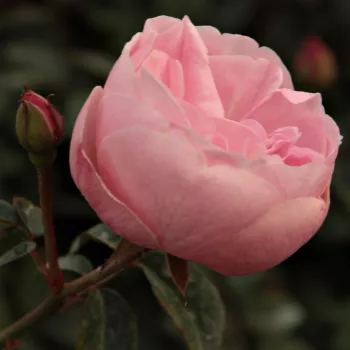
Semi-double, cupped blooms with 13–25 petals, medium-sized at about 4–7 cm across, freely produced in clusters; remontant habit gives a good first flush and a reliably plentiful second bloom cycle. |
| Colour data and phenology |
Soft pastel pink flowers, RHS 65C outer and 56C inner, often with pearlescent white edges; colour lightens in strong sun, staying more vibrant in cooler weather, with a pale veil of pink remaining at the centre. |
| Fragrance and aroma |
Strong, noticeable fragrance with a sweet, tea-like, fruity character; scent is evident in normal garden conditions, adding sensory appeal near paths, entrances, seating areas and frequently used garden routes. |
| Hip characteristics |
Produces small, globose rose hips in moderate quantity, typically 7–11 mm in diameter, orange-red (RHS 34A); hips add subtle late-season colour and light wildlife interest after the main flowering period. |
| Resistance and winter hardiness |
Hardy to about −21 to −18 °C (USDA 6b, Swedish zone 3); disease resistance medium for black spot, mildew and rust, benefiting from good air circulation and basic preventive care in humid climates. |
| Horticultural recommendations |
Best in well-drained, moderately fertile soil with mulch to protect roots; plant 35–65 cm apart depending on use, water in dry spells, and prune lightly to maintain shape and encourage continual flowering. |
MEVROUW NATHALIE NYPELS offers scented pastel blooms, easy self-cleaning colour and long-lived own-root reliability, making it a thoughtful choice for modest, low-maintenance Irish family gardens.