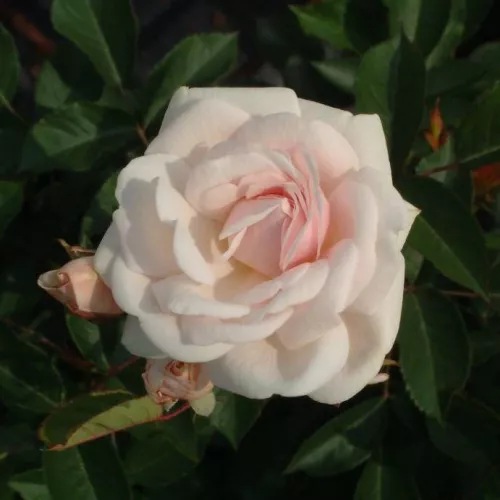
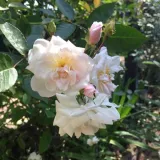
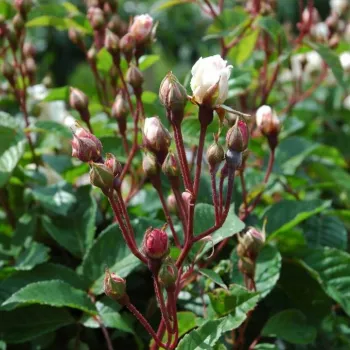
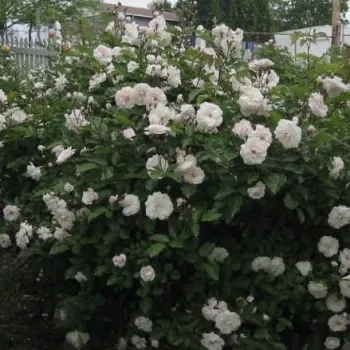
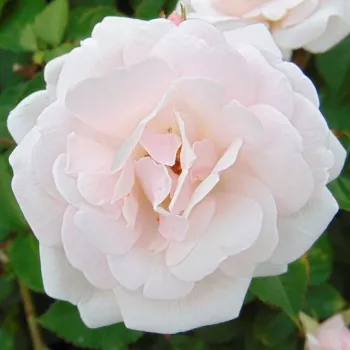
MARIE PAVIÉ – off-white flowerbed polyantha rose
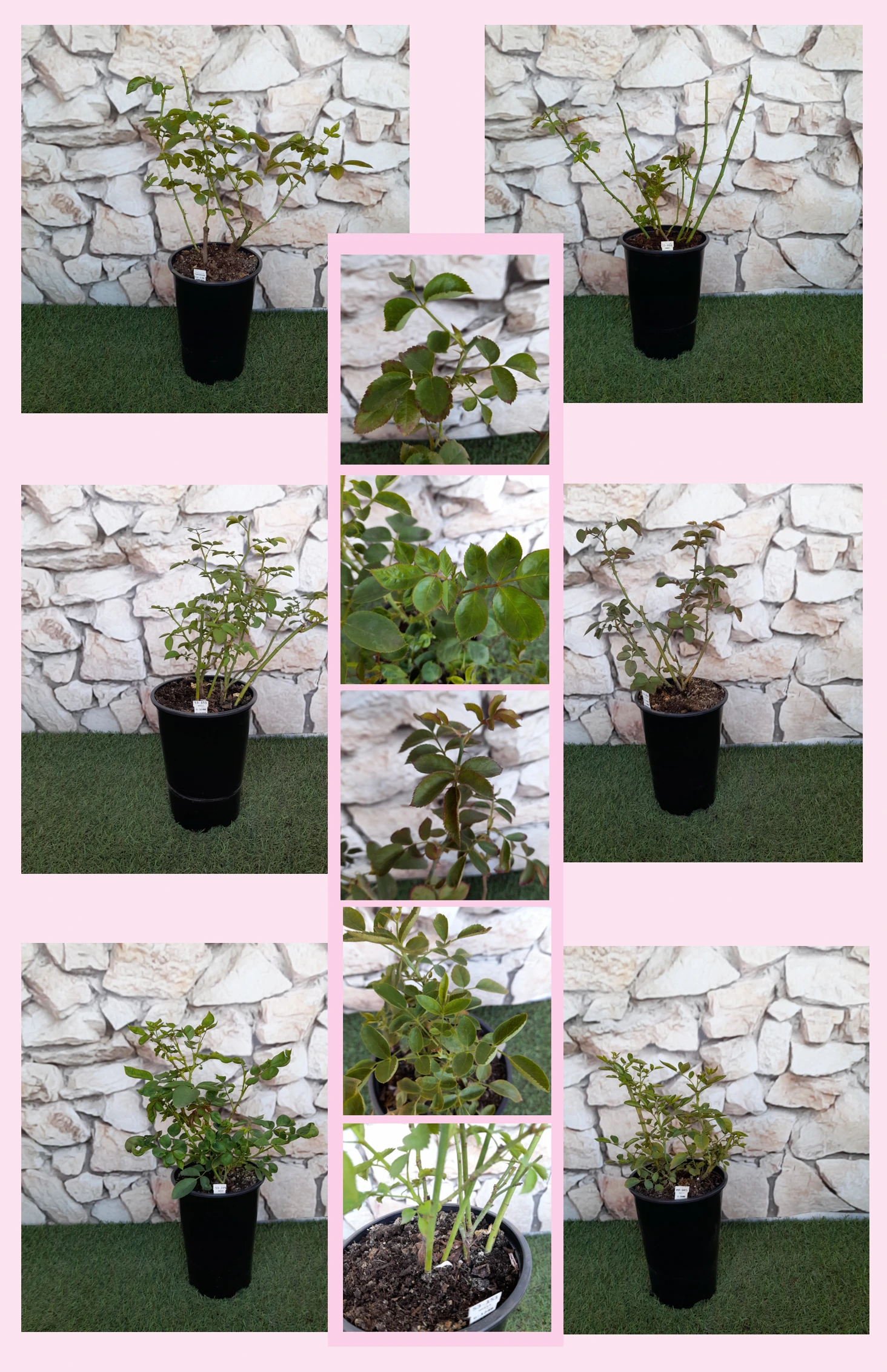
Step out to meet Marie Pavié and you meet a quietly cheerful companion for small Irish gardens: soft off‑white clusters, a sweet medium fragrance and a compact, bushy habit that slips easily into cottage borders or neat front beds. This historic 1888 polyantha brings a sense of continuity and charm, flowering in generous flushes even when summers are short and light is gentle. On its own roots it offers reassuring longevity, steady regrowth after setbacks and a more reliable shape over time, as it moves from a settling first year through stronger second‑year shoots to full third‑year character that feels perfectly at home in your garden’s rhythm, calmly coping with frequent rain and cool breezes from the Atlantic.
Usage options
| Target area |
Reasoning |
| Cottage-style front border |
Compact, bushy growth and off‑white, cupped clusters give an instant cottage feel along a small front path without overwhelming the space; the fragrance is noticeable at nose height for passers‑by, suiting relaxed but style-aware homeowners and beginners. |
| Low flowering hedge |
The dense foliage and branching habit knit into a soft, semi-formal hedge at 45 cm spacing, ideal for edging a drive or lawn; own-root plants thicken steadily with age, rewarding patient, low-fuss gardeners and families. |
| Mixed perennial bed |
Remontant flowering and small, self-cleaning blooms weave gently among cranesbills and phlox without clashing, while the dark green leaves provide background for summer perennials, appealing to those who like harmonious combinations and hobby-gardeners. |
| Single specimen by a seating area |
A solitary plant at about 90 cm spacing forms a neat, rounded shrub whose medium, sweet scent and pale bloom colour read well from a bench or patio, suiting fragrance-lovers and reflective, time-pressed urbanites. |
| Container on terrace or balcony |
In a 40–50 litre or larger container with good drainage, this bushy polyantha becomes an easy-to-manage feature that can be brought close to doors and windows, meeting the needs of small-space dwellers and apartment-owners. |
| Part-shade city garden |
Tolerant of partial shade, it keeps a reasonable flower display between buildings where sun is limited; the off-white colour brightens dim corners and works well for those coping with overshadowed plots and busy commuters. |
| Traditional park or heritage-style planting |
Its 19th-century French origin and familiar, low polyantha form make it a natural choice for period schemes, edging paths or small lawns while giving long-term continuity that resonates with historically minded collectors. |
| Exposed but sheltered-by-planting garden spots |
Hardy to typical Irish winters and coping steadily with frequent rain and cool Atlantic breezes when drainage is reasonable, it suits layered planting that filters wind, matching the expectations of practical, comfort-seeking homeowners. |
Styling ideas
- Cottage-border ribbon – Thread Marie Pavié in a loose line with cranesbills and campanulas along a path for a frothy, off-white edging – ideal for romantic cottage-garden admirers.
- Fragrant doorstep pot – Plant one rose in a 50 litre terracotta container with trailing thyme and lobelia, placing it beside the front step for everyday scent – perfect for busy city dwellers.
- Soft white hedge – Create a low, billowing boundary by spacing plants at 45 cm and underplanting with spring bulbs for year-round charm – suited to family front gardens.
- Pastel seating nook – Combine this rose with blush phlox and pale pink astrantia around a bench to enjoy gentle colour and fragrance – appealing to evening relaxers.
- Heritage courtyard – Use repeated groups in square beds edged with box or lavender for a restrained, period feel – attractive to lovers of classic French rose style.
Technical cultivar profile
| Property |
Data |
| Name and registration |
Marie Pavié is a polyantha bedding rose, also known as Alégatière; it is an unregistered historical variety used mainly in garden and bedding plantings rather than formal exhibition breeding lines. |
| Origin and breeding |
Bred by Alphonse Alégatière in France and introduced in 1888, with unknown parentage; originally distributed by C. H. Halstead in Australia, it has since become a classic heritage polyantha. |
| Growth and structural characteristics |
Bushy shrub with dense, slightly glossy dark green foliage, reaching about 85–115 cm in height and 50–70 cm spread; sparsely thorned shoots make maintenance and close planting more comfortable. |
| Flower morphology |
Semi-double, cupped blooms in tight clusters, 1–4 cm across, with 13–25 petals; flowers are remontant with an abundant second flush, and spent blooms generally fall cleanly without deadheading. |
| Colour data and phenology |
Off-white flowers with pearly pink tints: buds show pale pink, opening to creamy-white, then fading to icy white, sometimes slightly green-edged; colour holds reasonably well and may blush in cool weather. |
| Fragrance and aroma |
Clearly scented with a medium-strength, sweet and delicate character; noticeable at close range around paths or seating, giving a gentle traditional rose perfume without becoming overpowering in small gardens. |
| Hip characteristics |
Rose-hip production is generally sparse because of the semi-double form; when present, hips are small, spherical, about 6–9 mm in diameter, and mature to a bright red tone useful mainly for subtle autumn interest. |
| Resistance and winter hardiness |
Hardy to approximately -32 to -29 °C (H7, USDA 4b, Swedish zone 5); heat tolerant with watering in long dry spells, but shows moderate susceptibility to powdery mildew and black spot and high rust sensitivity. |
| Horticultural recommendations |
Best in moist but well-drained soil with added organic matter; responds to regular fungicide programmes where disease pressure is high; recommended spacing 45–90 cm depending on hedge, border or specimen use. |
MARIE PAVIÉ offers compact, heritage charm with repeat off-white flowering, a sweet fragrance and steady own-root longevity; a thoughtful choice if you enjoy gentle character and can give basic care.