LYKKEFUND – cream-white historic rambler climbing rose - Olsen
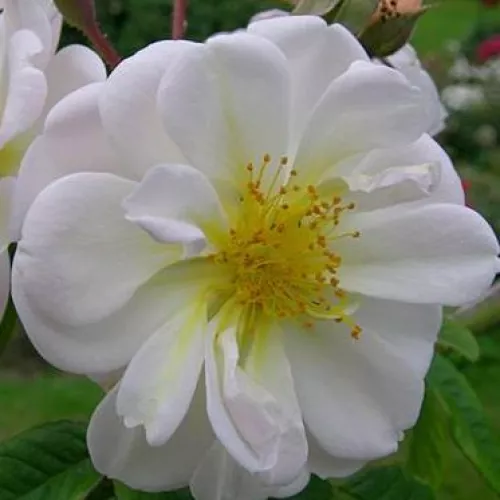
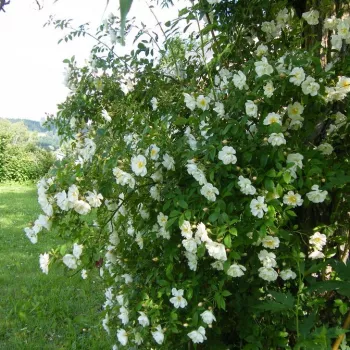
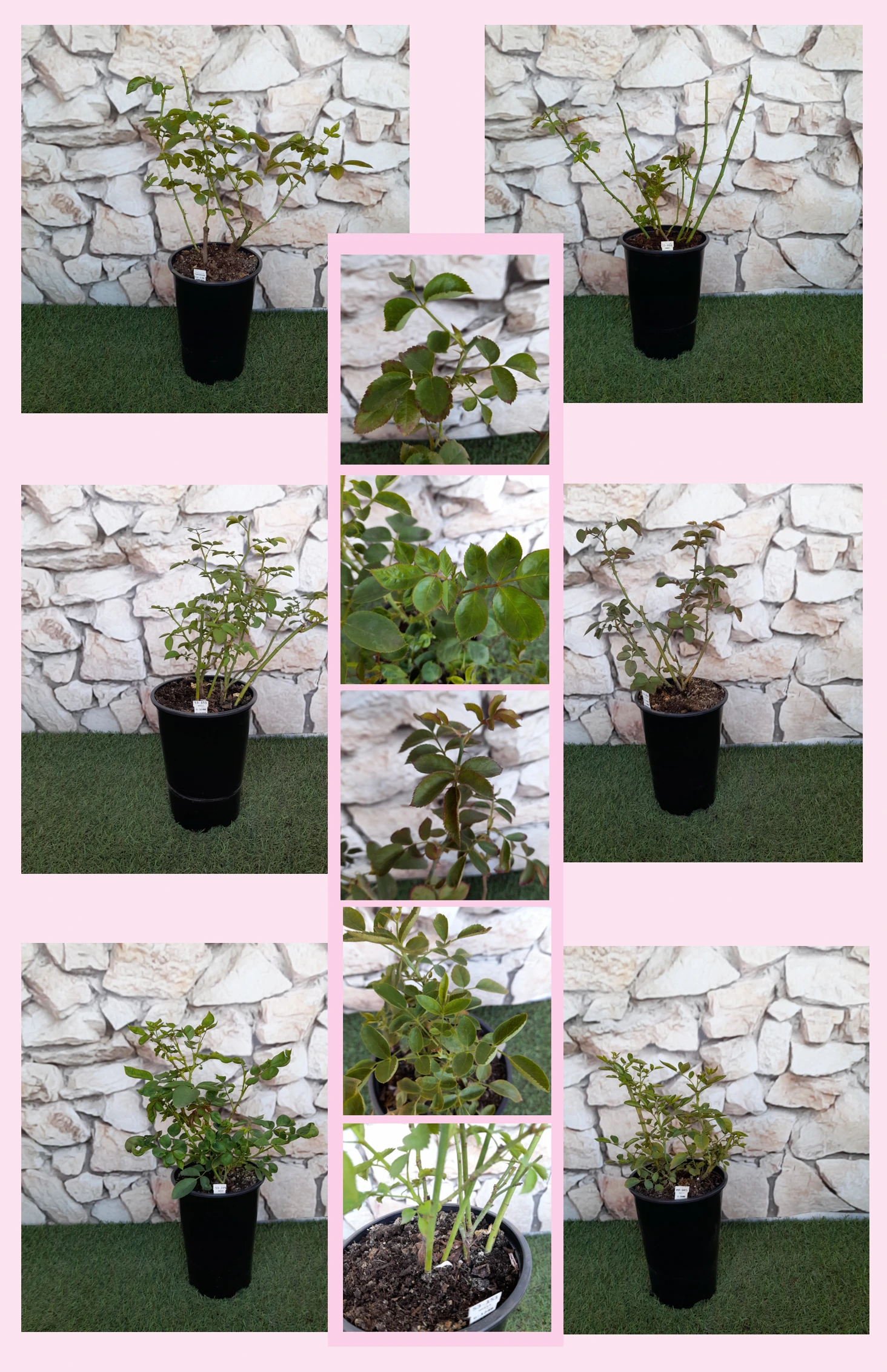
If You dream of a soft, romantic tunnel of blossom in Your Irish cottage or terraced front garden, ‘Lykkefund’ wraps pergolas, old trees and walls in cascades of cream-white, fragrant flowers that light up even on grey days and cope well with rainfall. This historic rambler brings a cloud of muscat-scented, bee-thronged bloom in early summer, followed by dainty orange hips for autumn colour, and its glossy mid-green foliage and sparing prickles make everyday access and tying-in surprisingly gentle work. Grown on its own roots in our easy-handling 2‑litre containers, it is ready to settle, with Year 1 focused on roots, Year 2 on stronger shoots and Year 3 unveiling its full character and climbing presence. Once established with good drainage and mulch on Irish clay, this once-flowering rambler rewards simple, regular training with long-lived garden structure, reliable seasonal spectacle and a sense of quietly unfolding history round Your home.
Usage options
| Target area | Reasoning |
|---|
| Over a pergola or arbour in a family back garden |
Its vigorous climbing habit and once-a-year mass flowering create a breath-taking early-summer tunnel, with clouds of cream-white bloom and strong, muscat-like perfume enveloping family gatherings beneath. Ideal for the romantic homeowner |
| Trained up into a mature tree in an Irish cottage garden |
The long, flexible, sparsely thorned canes thread easily through old apple or hawthorn branches, giving a natural, nostalgic look with minimal snagging. Once rooted in, it forms a long-lived partnership that softens tall structures. Perfect for the nature-loving gardener |
| Screening a fence or wall in a Dublin terraced front garden |
With 4,8–7,2 m height and dense, glossy foliage, this rambler quickly softens boundaries and provides privacy, while its once-a-season floral display and orange hips add charm from street and window alike. Best suited to the style-conscious urbanite |
| Pollinator corner near vegetable beds or orchard |
Simple, open flowers with exposed stamens draw in bees and other pollinators during their main flowering flush, supporting fruit set in nearby crops and adding fragrance to productive areas. A thoughtful choice for the eco-aware grower |
| Large feature planter by an entrance (minimum 40–50 litres) |
In a deep, well-drained container, own-root plants build a stable root system, offering long-term ornamental value as they climb a sturdy obelisk or wall trellis, given regular watering and feeding. Especially appealing to the busy city gardener |
| Sheltered, partially shaded side passage or narrow yard |
Its tolerance of partial shade allows flowering and foliage density where sun is limited, brightening gloomy side returns and making use of vertical surfaces that might otherwise stay bare. Ideal for the space-maximising owner |
| Exposed but well-drained coastal or windy sites |
Inherited toughness and good tolerance of heat and weather variation help it cope with blustery Irish conditions, provided the roots sit in free-draining soil that avoids waterlogging after persistent Atlantic rain. Recommended for the coastal gardener |
| Historic or period-style planting schemes in parks and large gardens |
As a 1930 Danish historic rambler with traditional form and hips, it reinforces period character while its self-cleaning flowers reduce deadheading, giving reliable early-summer impact with modest ongoing tasks. A fine option for the heritage-focused planner |
Styling ideas
- Cottage-arch cascade – Train over a timber arch with Dianthus plumarius at the base for scented, old-fashioned charm – perfect for romantically inclined cottage-garden owners
- Green front curtain – Let it drape over a front-garden rail or wall, underplanted with low Persicaria for foliage contrast – suited to privacy-seeking terraced-house residents
- Tree-top garland – Thread canes through an existing apple tree so flowers and hips hang among the fruit – attractive for wildlife-friendly family gardeners
- Pollinator promenade – Run it along a sunny fence with Verbena hastata ‘White Spires’ in front to extend nectar through the season – ideal for bee-conscious urban growers
- Entrance statement – Grow in a 50-litre pot with a sturdy obelisk beside the front door, pairing with soft grasses for movement – designed for style-focused but time-poor homeowners
Technical cultivar profile
| Property | Data |
|---|
| Name and registration |
Lykkefund historic rambler climbing rose, trade name Lykkefund; unregistered cultivar, American Rose Society exhibition name Lykkefund; part of the Historic rose collection. |
| Origin and breeding |
Bred by Aksel Olsen, Olsen Planteskole, Kolding, Denmark, from Rosa helenae × ‘Zéphirine Drouhin’; introduced around 1930 and initially distributed in Denmark. |
| Growth and structural characteristics |
Large, vigorous climber with 4,8–7,2 m height and 3,6–5,4 m spread; dense, glossy mid-green foliage, sparsely thorned shoots, best grown with strong support and regular tying-in. |
| Flower morphology |
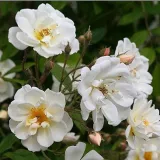
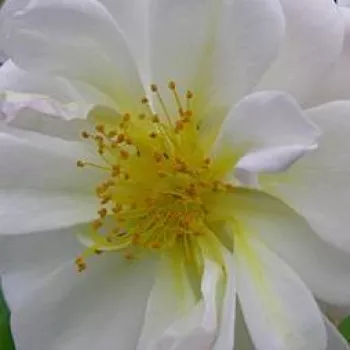
Small, 1–4 cm, flat, single to semi-double clustered flowers with 5–12 petals; once-flowering rambler, non-remontant, but producing a heavy main flush that largely self-cleans after blooming. |
| Colour data and phenology |
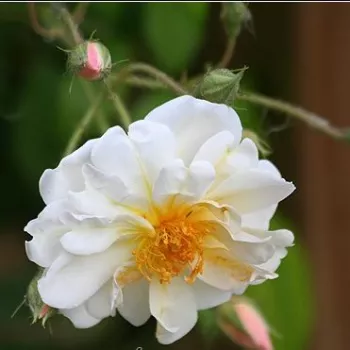
Cream-white flowers with pastel yellow tones; buds pale creamy yellow with pinkish tips, ageing to almost white; ARS W, RHS 11D outer, 155C inner; colour holds reasonably well in sun. |
| Fragrance and aroma |
Strong, sweet scent with distinct muscat-like character; fragrance is noticeable at a distance in still air and lingers through the main flowering period, especially in the evening. |
| Hip characteristics |
Produces moderate quantities of small, 6–10 mm spherical hips, orange RHS 25A; decorative in autumn and attractive to birds when left on the plant over winter. |
| Resistance and winter hardiness |
Very susceptible to powdery mildew, black spot and rust, so regular protective treatments advised; winter hardy to about −26 to −23 °C, RHS H7, suitable for USDA zone 5b, Swedish zone 4. |
| Horticultural recommendations |
Prefers fertile, well-drained soil with improved clay structure and mulch; spacing 2,5–4,5 m depending on use; thrives on strong support, partial shade tolerant, appreciates deep watering in drought. |
LYKKEFUND offers a historic muscat-scented summer cascade, wildlife-friendly flowers and hips, and durable own-root growth that settles in for decades, making it a thoughtful choice for romantic Irish gardens.