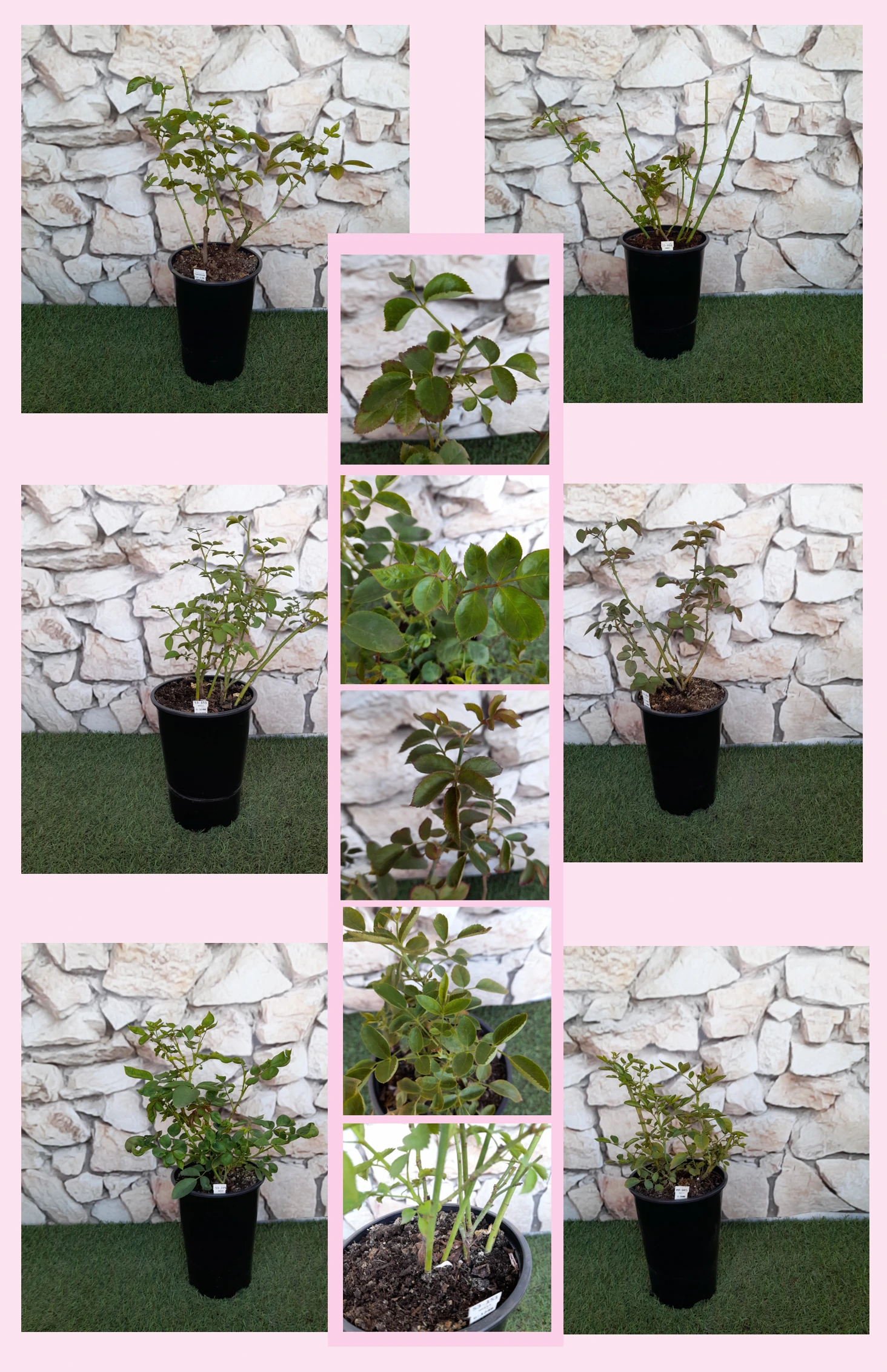
LOVE LETTER – cream-white bedding floribunda rose - Lens
In a small Irish front garden or cottage border, LOVE LETTER settles in with quietly glowing clusters of cream-white blooms, giving the sense of a gentle walk in soft rain under shifting light. Its semi-double flowers repeat generously from early summer well into autumn, staying reliable even when your garden faces regular showers and needs careful drainage in heavier soils. This compact, upright floribunda keeps a neat outline that fits narrow beds and path edges, while its dark, glossy foliage sets off the pale, pastel lemon-yellow centres with an easy cottage charm. On its own roots it is bred for endurance, building a sound underground framework in the first year, then filling out its flowering stems in year two and reaching full ornamental by around year three. Low-maintenance by nature and with excellent disease resistance, it brings light, green calm and cheerful contentment to busy gardeners who still want a touch of romance outside the front door.
Usage options
| Target area |
Reasoning |
| Front garden flower bed along a path |
The compact, upright habit (around 60–85 cm high and 40–55 cm wide) fits neatly into narrow beds beside paths or low walls. Regular clusters of cream-white flowers create a welcoming, romantic ribbon without overwhelming a small space, ideal when you prefer a tidy look with minimal clipping – perfect for the time-pressed beginner. |
| Cottage-style mixed border |
Reliable repeat flowering means LOVE LETTER weaves in and out of bloom through the season, pairing beautifully with soft perennials and herbs while requiring little more than an annual prune and mulch. Its own-root vigour supports a long-lived, stable clump that slowly matures rather than exhausting itself, suiting gardeners who want structure that lasts – reassuring for the cottage-garden homeowner. |
| Small flowering hedge in a family garden |
Planted at about 25 cm for a hedge, the upright growth and generous branching knit into a low, flowering divider that works well between drive and lawn or edging a play area. Its disease resistance reduces the need for spraying, keeping maintenance simple for busy households, while the dense foliage provides a calm green backdrop – a practical choice for the safety-conscious parent. |
| Dedicated rose bed or mass planting |
At 30 cm spacing in a block or drift, the consistent height and colour create a soft, cream-white carpet that reads as one harmonious feature from the street. This works particularly well in Dublin terraced-house fronts where you want instant order and romance without constant fussing, and the variety’s resilience in show conditions hints at its garden stamina – attractive to the style-aware urbanite. |
| Large containers on patio or doorstep |
In a well-drained container of at least 40–50 litres, LOVE LETTER offers a refined, repeat-flowering presence near the house, particularly in spots where soil is poor or paved. Its moderate size and healthy foliage make it easy to keep in proportion with just seasonal feeding and watering, while the pale flowers brighten overcast days – well suited to the balcony-and-patio gardener. |
| Family seating area or outdoor dining space |
The soft lemon-cream tones blend gently with outdoor furniture and surrounding planting, creating a relaxed, luminous backdrop rather than a harsh focal point. The fragrance is very light, so it will not dominate meals outdoors, while the long flowering season means dependable colour each time you sit out with friends or family – ideal for the sociable host. |
| Low-maintenance, long-term planting scheme |
Good resistance to black spot, mildew and rust allows you to rely mainly on basic care: proper planting depth, a yearly mulch, and occasional deadheading. On its own roots, the plant can recover better from winter damage and pruning mistakes, slowly building a durable framework that keeps ornamental value high with little input – appealing for the low-effort planner. |
| Irish coastal or rainy-climate garden |
LOVE LETTER performs well in typical Irish conditions when given a sunny, open spot and attention to soil structure, coping with breezy, moisture-laden air by combining dense foliage with strong disease resistance in wetter summers, even where improving heavy clay for better drainage is a priority – confidence-building for the climate-conscious buyer. |
Styling ideas
- COTTAGE BORDER RIBBON – Thread LOVE LETTER through a border with Carpathian bellflower and airy grasses to echo traditional cottage charm in soft creams and blues – for romantic, low-fuss gardeners.
- DUBLIN DOORSTEP WELCOME – Plant in a 50-litre pot with rosemary and a simple underplanting of ivy to frame a terraced-house entrance in calm, evergreen structure and gentle blooms – for city homeowners.
- PALE HEDGE BACKDROP – Use as a low hedge in front of cherry laurel ‘Miki’, letting the cream flowers float against dark foliage for an elegant yet easy screen – for family gardens needing subtle boundaries.
- MONOCHROME ROSE BED – Create a dedicated rose bed using only LOVE LETTER, relying on its repeat flowering and tidy form for a serene, season-long white display – for lovers of simple, unified schemes.
- RELAXED DINING NOOK – Group several plants near a seating area with lavender and soft pink perennials so the light-toned clusters glow at dusk without overpowering the space – for evening entertainers.
Technical cultivar profile
| Parameter |
Data |
| Name and registration |
Floribunda bedding rose, registered as LENpiro, marketed as LOVE LETTER Flower bed rose LENpiro, with ARS exhibition name Love Letter®, in the Rósra bhláthchlóis group. |
| Origin and breeding |
Bred by Louis Lens in Belgium from ‘Pink Parfait’ × ‘Rosenelfe’, breeding year 1977, registered 1979, introduced by Lens Roses in 1980 as a reliable garden and exhibition floribunda. |
| Awards and recognition |
Winner of Gold and Silver Medals at the Kortrijk/Courtrai rose trials in 1979, indicating strong ornamental quality and performance under independent show and garden assessment. |
| Growth and structural characteristics |
Compact, upright shrub reaching about 60–85 cm high and 40–55 cm wide, with dense, slightly glossy dark green foliage and moderate prickliness, forming a well-branched, bushy outline in beds. |
| Flower morphology |
Semi-double, cup-shaped blooms with 17–25 petals, sized 7–10 cm, borne in clusters on floribunda inflorescences, remontant with abundant repeat flowering in both the first and second flushes. |
| Colour data and phenology |
Cream-white petals with a pastel lemon-yellow flush in the centre, warmer in cool weather, fading paler in heat; ARS code W, RHS 155D outer and 4C inner, giving a soft, luminous, refined effect. |
| Fragrance and aroma |
Displays a rosy fragrance character but with very weak intensity, barely perceptible in normal garden use, making it a visually focused floribunda rather than a strongly scented variety. |
| Hip characteristics |
Produces sparse, small spherical hips around 6–9 mm across, orange-red in colour when formed, but fruiting is generally limited and of minor ornamental importance on this floribunda rose. |
| Resistance and winter hardiness |
Rated resistant to powdery mildew, black spot and rust, with hardiness approximately −21 to −18 °C (H7, USDA 6b, Swedish zone 3), providing robust performance in cool, damp temperate climates. |
| Horticultural recommendations |
Best in full sun with well-drained soil; plant 30 cm apart for beds, 25 cm for hedges, 50 cm as specimens, 10.1–11.6 plants/m², with low maintenance needs and only basic pruning and feeding. |
LOVE LETTER – cream-white bedding floribunda rose - Lens rewards you with long-season flowering, compact form and lasting own-root vigour, making it a thoughtful choice for a relaxed, enduring family garden planting.