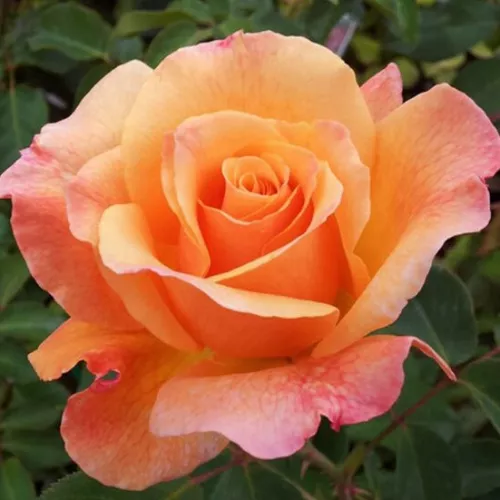
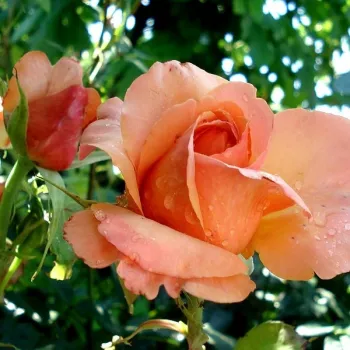
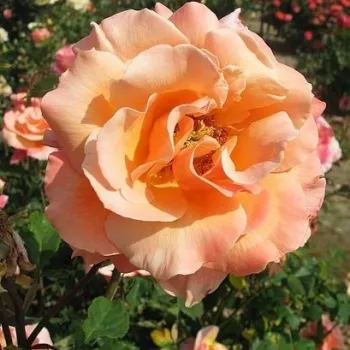
LOLITA – apricot hybrid tea rose – Kordes
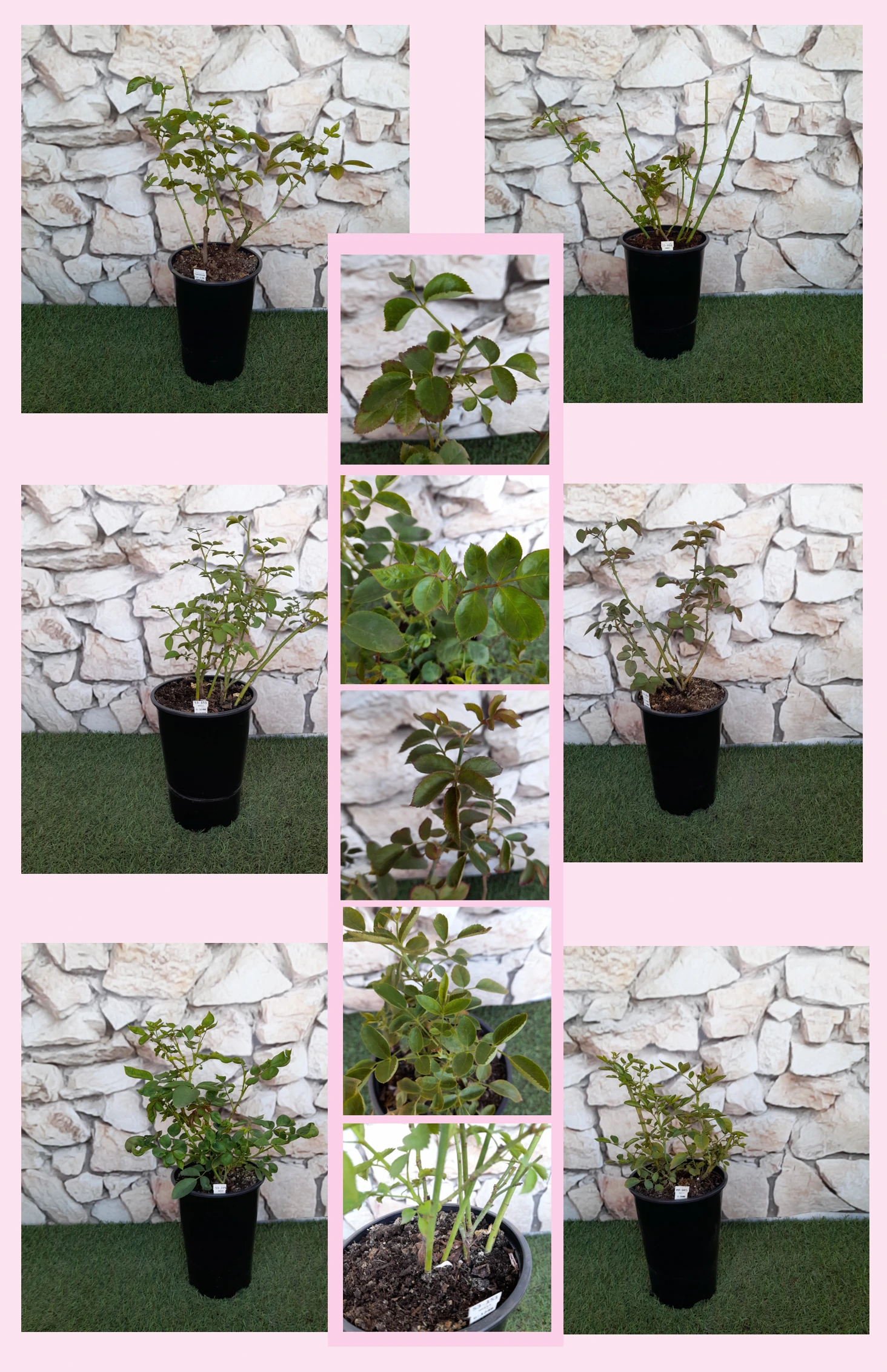
With LOLITA you bring a touch of soft-focus cinematic romance to your garden: tall, elegant stems carry large apricot blooms with a gentle peach-scented fragrance, perfect for cutting and for admiring from the kitchen window. Bred by Kordes and now supplied on its own roots, this classic hybrid tea offers reassuring longevity and the ability to regenerate well after hard pruning or weather damage, ideal where winters bite but summers are brief, cool and damp with strong breezes off the Atlantic coast. Over time it forms a sturdy, upright structure with dense dark green foliage, looking equally at home in a Dublin terraced front garden or an informal cottage border. Plant once, mulch well, and enjoy a simple rhythm of flowers from early summer onwards as Year 1 builds roots, Year 2 fills out with taller shoots, and by Year 3 LOLITA shows its full ornamental presence and romantic colour.
Usage options
| Target area |
Reasoning |
| Front-of-house feature rose by the door |
LOLITA’s tall, upright habit and high-centred blooms create a graceful welcome in even a small front garden, while own-root vigour means it will reliably re-sprout from the base if winter or pruning are a bit harsh, suiting time-pressed urban homeowners. |
| Cottage-style mixed border in Irish clay soils |
Once drainage is improved with grit and organic matter, LOLITA settles well into heavier soils, its long-lived own-root system anchoring the plant and preserving its form through our cool, short summers with soft rain and sea-breeze air, making life simpler for relaxed beginners. |
| Cutting patch or cut-flower row |
The classic hybrid tea form on long, straight stems makes LOLITA excellent for cutting, with medium-strong peach fragrance that carries indoors; the plant’s repeat flush allows regular picking without weakening it over the years, appealing to creative flower-arranging enthusiasts. |
| Specimen rose in a lawn or gravel square |
Given the recommended solitary spacing, LOLITA develops into a well-furnished, upright shrub that reads as a single ‘rose tree’ from the street, its dense dark foliage and steady flowering providing structure and romance with minimal fuss for style-conscious garden owners. |
| Large container on patio or terrace (40–60 L) |
In a generous container of at least 40–50 litres with free-draining compost, own-root LOLITA forms a durable, transplantable specimen; if you move house, the rose can move with you, an attractive option for balcony and terrace space-limited residents. |
| Low, informal flowering hedge |
Planted at around 110 cm apart, LOLITA creates a loose hedge of glossy foliage and peach-apricot flowers; moderate disease resistance helps keep leaves presentable with basic care, giving soft boundary definition for family-oriented gardeners. |
| Romantic “girly” corner with perennials |
Teamed with lady’s mantle, oriental poppy or lavender, LOLITA’s sleek high-centred blooms and changing pastel apricot shades give a gentle, feminine look while its own-root longevity means the framework remains reliable around short-lived perennials, suiting colour-loving collectors. |
| Pollinator-conscious family garden with mixed planting |
Although LOLITA is only partly helpful to insects, combining it with open-centred perennials and shrubs ensures nectar through the season, so you enjoy the refined cut-rose look while still supporting wildlife on a small plot, ideal for nature-aware family buyers. |
Styling ideas
- Doorstep elegance – Flank a Dublin terrace door with two large pots of LOLITA underplanted with trailing ivy for a soft, cinematic entrance – perfect for busy city homeowners wanting impact with little fuss.
- Cottage pastel drift – In an Irish cottage border, repeat LOLITA between clumps of lady’s mantle and soft grasses to echo its peach tones and romantic form – ideal for those dreaming of a traditional “girly” country look.
- Cutting corner – Dedicate a sunny strip to three LOLITA roses in a row, edging with lavender for fragrance and structure, to keep vases filled all summer – appealing to home florists who like easy, reliable stems.
- Apricot focal point – Place a single LOLITA in a circular bed in the lawn with pale gravel and low thyme at the base, creating a tidy, sculptural feature – suited to neat, low-maintenance family gardens.
- Soft hedge screen – Use a loose row of LOLITA along a path, interplanting with oriental poppies for early drama and later pastel roses for privacy and romance – great for families wanting a gentle boundary rather than a hard fence.
Technical cultivar profile
| Characteristic |
Data |
| Name and registration |
Hybrid tea rose, registered as KORlita (syn. LitaKOR), traded as LOLITA hybrid tea rose; ARS exhibition name LOLITA; own-root 2-litre container form for garden use. |
| Origin and breeding |
Bred by Reimer Kordes of W. Kordes’ Söhne in Germany from Colour Wonder × unknown seedling; introduced and registered in 1972, with early distribution via Roy H. Rumsey Pty. Ltd. in Australia. |
| Awards and recognition |
Recognised as an ADR-Sorte in the German general rose trials in 1973, and awarded a Certificate of Merit at the New Zealand Rose Trials in 1974, confirming garden and exhibition value. |
| Growth and structural characteristics |
Upright hybrid tea bush typically 130–170 cm tall with 100–140 cm spread; dense, dark green, slightly glossy foliage and moderate prickles; medium maintenance with occasional plant protection recommended. |
| Flower morphology |
Classic high-centred hybrid tea blooms on mostly solitary stems, large flowers 7–10 cm across, double with 26–39 petals; remontant with a generous second flush, ideal for cutting and exhibition. |
| Colour data and phenology |
Medium peach-orange with golden cast; buds deep apricot to vivid orange, ageing through bright peach to golden apricot and finally cream-yellow peach pastel; ARS AB, RHS 24B outer and 23A inner petals. |
| Fragrance and aroma |
Moderate to well-scented hybrid tea with a distinct peach-like fragrance, noticeable both in the garden and in a vase; suitable for those seeking a perfumed yet not overpowering cut-flower rose. |
| Hip characteristics |
Hip set generally poor due to double flowers; any hips produced are ellipsoid, 12–18 mm in diameter, coloured orange-red, adding small, subtle seasonal interest rather than heavy displays. |
| Resistance and winter hardiness |
Hardy to about −21 to −18 °C (USDA 6b, RHS H7, Swedish zone 3); reported resistant to powdery mildew and black spot, with moderate rust susceptibility; benefits from standard Irish rose care. |
| Horticultural recommendations |
Best in full sun with fertile, well-drained soil; recommended spacing 120 cm for groups, 110 cm for hedges, 200 cm for specimens; plant at about 0.7–0.8 plants/m² for structured plantings and borders. |
LOLITA hybrid tea rose brings romantic apricot blooms, peach fragrance and dependable own-root longevity to compact Irish gardens, a thoughtful choice if you value lasting beauty with straightforward care.