LAFAYETTE – dark pink bedding floribunda rose - Nonin
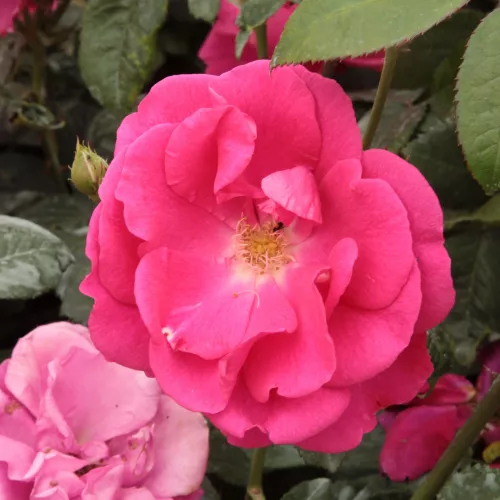
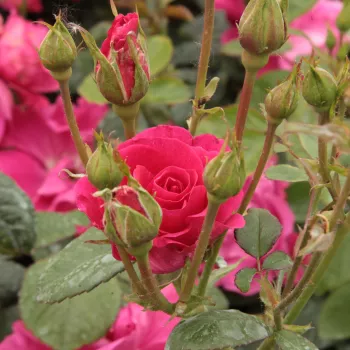
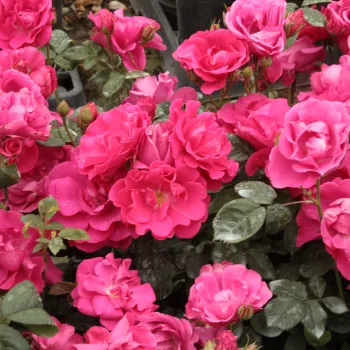
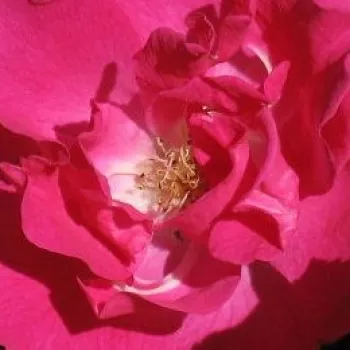
Step out to meet LAFAYETTE on a soft grey afternoon and you will find it quietly brightening the border with clusters of velvety, dark pink blooms that fade gently to silvery mid‑pink, mirroring the rainfall and soft light of Irish skies. This floribunda shrub forms a bushy, moderately tall plant that fills cottage beds and small front gardens with a relaxed, “girly” charm while its semi‑double flowers, with accessible stamens, are naturally inviting to bees and other pollinators. In a typical family garden, the own‑root form offers reassuring longevity and recovery after pruning, so you enjoy dependable colour with only modest maintenance; spent clusters mostly drop away by themselves, helping the plant stay tidy between your occasional deadheading sessions. Ideal for those who like a touch of historical romance outdoors, its sweet, light fragrance, moderate, well‑balanced growth and good winter hardiness suit exposed Irish plots, even where winds bring moisture‑laden air. Plant once, give it basic drainage and space, and let its classic character unfold as roots establish, shoots strengthen in the second year and full garden presence appears by the third.
Usage options
| Target area |
Reasoning |
| Cottage-style flower bed in a family back garden |
LAFAYETTE’s bushy, medium-tall habit and cluster-flowering make it ideal as a cottage-style bedding rose, filling gaps with waves of classic dark pink blooms that fade softly to mid-pink for a romantic look in relaxed borders, suiting beginners. |
| Front-garden focal shrub for terraced houses |
The plant’s 140–180 cm height and 105–135 cm spread create a single, eye-catching shrub that reads clearly from the pavement without dominating a small plot, offering tidy architecture with naturally falling spent blooms for low-key upkeep, suiting busy homeowners. |
| Bee-friendly mixed rose and perennial border |
Semi-double, cup-shaped flowers with exposed stamens give bees easy access, while repeat clusters provide a steady nectar resource across the season, making it a gentle anchor for wildlife-friendly borders alongside simple-flowered perennials, suiting nature-lovers. |
| Long-term feature in a settled family garden |
As an own-root shrub rose, LAFAYETTE ages steadily without graft worries, regenerating from its base after harder pruning and maintaining its original character over many years, a reassuring choice for those who want to plant once and enjoy, suiting long-term planners. |
| Low-effort rose display near paths and seating |
Moderate disease resistance, self-cleaning blooms and only medium maintenance needs make this variety suitable for spots where you pass daily but do not wish to fuss, delivering colour with just occasional feeding, mulching and light pruning, suiting time-poor gardeners. |
| Partially shaded side garden or north-facing bed |
Its tolerance of partial shade allows planting where sun is limited, keeping colour going between brighter areas; in such positions, reasonable spacing and drainage help it cope with Ireland’s frequent moisture-laden winds and extended damp spells, suiting urban plots. |
| Informal flowering hedge or boundary line |
Recommended spacings of around 100 cm for hedging let plants knit into a loose, flowering screen, while the remontant habit and moderate height create a soft boundary that marks edges without feeling solid or stark, suiting family boundaries. |
| Large container on patio or gravel seating area |
In a pot of at least 40–50 litres with good drainage, LAFAYETTE can be grown as a statement container shrub, its own-root system steadily filling the compost and supporting repeat flowering, provided watering and feeding are kept regular, suiting balcony owners. |
Styling ideas
- Cottage-Romantic – Mass LAFAYETTE in a loose drift with airy perennials such as meadow cranesbill and hardy geraniums to soften paths and lawns – ideal for nostalgia-seeking homeowners.
- Bee-Stripe – Alternate clumps of this semi-double rose with lavender and catmint in a sunny strip to create a relaxed pollinator corridor – perfect for wildlife-friendly families.
- Front-Door – Plant one or two shrubs flanking a gate or path, underplanted with spring bulbs and low heathers, for year-round interest and welcoming summer colour – suitable for city terrace fronts.
- Heritage-Mix – Combine LAFAYETTE with deep reds like Crocosmia ‘Lucifer’ and dusky pink valerian for a subtly historic, warm-toned scheme – appealing to lovers of vintage gardens.
- Patio-Corner – Grow it in a 50-litre terracotta pot on gravel, accompanied by thyme and small ornamental grasses, for scented, low-work structure near seating – great for compact outdoor rooms.
Technical cultivar profile
| Aspect |
Data |
| Name and registration |
Floribunda bedding shrub rose known as LAFAYETTE; trade name Lafayette Bedding rose Nonin; American Rose Society exhibition name Lafayette; unregistered cultivar in formal registration lists. |
| Origin and breeding |
Bred by Auguste Nonin & Fils in France around 1918 from ‘Rödhätte’ × ‘Richmond’; introduced 1918 in France and 1923 in Australia under the name ‘Joseph Guy’, later distributed internationally. |
| Awards and recognition |
Received a Certificat de Mérite at the prestigious Bagatelle rose trials in Paris in 1918, recognising garden performance and ornamental value shortly after its original introduction. |
| Growth and structural characteristics |
Bushy, medium-tall shrub rose reaching about 140–180 cm high with a 105–135 cm spread; moderately dense, mid-green matt foliage and moderate prickliness; suited to beds, hedging and specimen use. |
| Flower morphology |
Semi-double, cup-shaped flowers in medium clusters, approximately 4–7 cm across, with 13–25 petals; remontant flowering habit with a plentiful second flush following the main early summer display. |
| Colour data and phenology |
Velvety dark pink to rose-red blooms (RHS 53A–53B) that open deep and gradually fade to mid-pink with silvery tones; colour holds reasonably well, though strong sun can lighten the overall effect. |
| Fragrance and aroma |
Light, sweet fragrance of a restrained character; noticeable at close range around seating or paths without being overpowering, adding gentle scent rather than strong perfume in mixed planting schemes. |
| Hip characteristics |
Produces spherical, orange-red hips about 10–14 mm across in moderate quantities, adding seasonal autumn interest and subtly extending ornamental value after the main flowering period has finished. |
| Resistance and winter hardiness |
Moderate disease resistance to powdery mildew, black spot and rust; generally hardy to around −21 to −18 °C (RHS H7; Swedish Zone 3; USDA 6b), suitable for most temperate garden conditions. |
| Horticultural recommendations |
Best with 100–180 cm spacing depending on use; tolerates partial shade and average soils with good drainage; responds well to regular deadheading, feeding and mulching to support repeat flowering. |
LAFAYETTE offers romantic dark-pink clusters, pollinator-friendly semi-double blooms and steady own-root longevity, making it a thoughtful choice for Irish gardens where you prefer lasting charm with modest care.