LA PARISIENNE – yellow-orange bedding grandiflora rose - Delbard
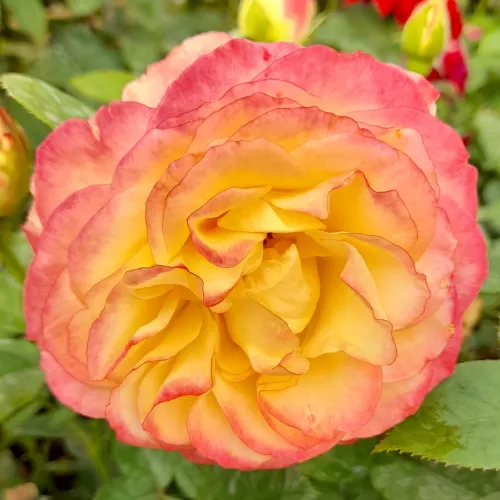
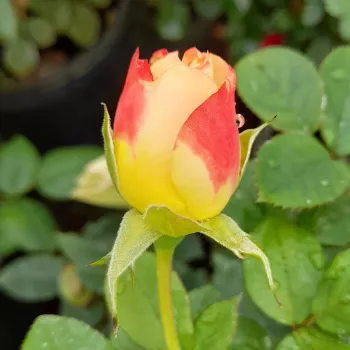
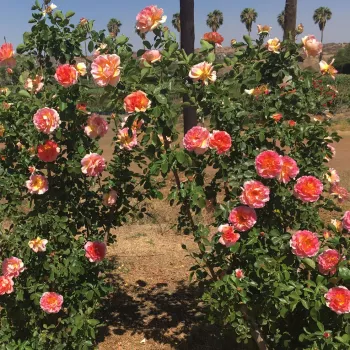
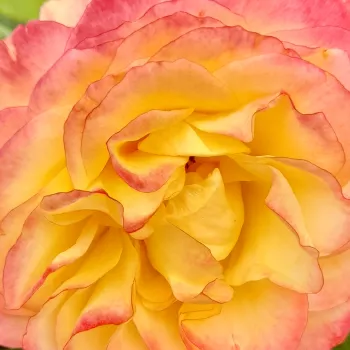
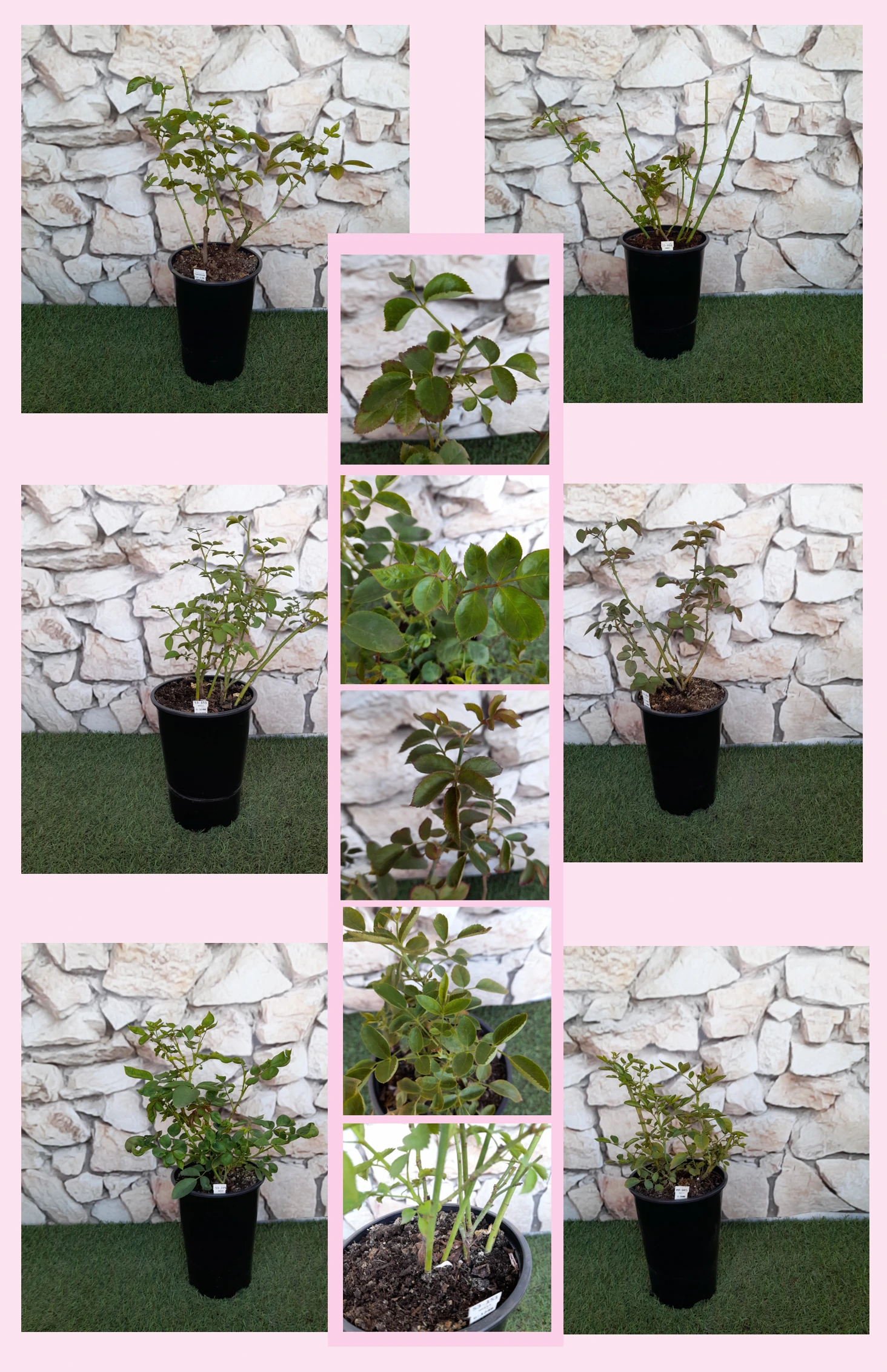
If You enjoy a soft sunrise glow in the garden, LA PARISIENNE brings a gentle golden-yellow and orange play of colour that brightens even a small Irish front plot with cheerful light. Its semi-double, cup-shaped blooms open in generous waves through the season, giving a sense of easy-going rhythm on days when the weather shifts quickly and showers pass across the garden in Atlantic-breeze, rain-washed conditions. Own-root planting means this shrub settles in steadily and then endures, quietly rebuilding from its base if ever knocked back. The upright, bushy shape, glossy foliage and sparse prickles all work together to keep everyday care simple, while the mild, fruity scent adds a soft perfume to a cottage path or city railings. Give it a sunny space, a mulch to help drainage on heavy clay, and enjoy how, over three seasons, roots establish, shoots fill out and the full ornamental character of this long-lived rose gradually comes into its own naturally.
Usage options
| Target area |
Reasoning |
| Cottage-style front garden bed |
The upright grandiflora habit and repeat waves of golden-yellow, orange-washed blooms give reliable colour along a low front fence or path with minimal shaping. Own-root growth ensures the shrub thickens steadily and recovers well after hard pruning, making it a forgiving choice for a relaxed cottage look – ideal for the beginner. |
| Mixed family border in heavy Irish soil |
This rose copes well where beds hold moisture, as long as You provide basic drainage with grit or compost, and a good mulch to keep the top layer open and friable. The robust root system on its own roots supports long-term health and reduces the need for frequent replacements, so a once-planted border can mature gracefully – reassuring for the homeowner. |
| Sunny terrace or small patio in a large container |
Planted in a 40–50 litre pot with free-draining compost, LA PARISIENNE offers a compact, upright shrub whose glossy dark foliage and striped flowers bring a sense of occasion to a modest outdoor seating area. Own-root resilience makes it more tolerant of container stress over years, providing dependable summer display with light deadheading – perfect for the urbanite. |
| Low-maintenance colour strip along a driveway |
Once established at the recommended spacing, this variety forms a gently undulating line of shrubs with medium self-cleaning flowers, so You can keep the area presentable with just occasional deadheading and a yearly prune. Its capacity for natural renewal from the base maintains a solid hedge-like effect without complex training – suited to the busy. |
| Feature planting near a seating area |
The mild, delicately fruity fragrance and large, cup-shaped blooms are best appreciated up close, where light catches the marbled petal edges through a long flowering window. Own-root sturdiness helps the plant withstand periodic hard trims when You refresh the seating area layout, yet it consistently returns with balanced growth – appreciated by the connoisseur. |
| Colour accent in an Irish cottage-style mixed border |
The shifting yellow-orange tones harmonise beautifully with blues, purples and soft grasses, creating a romantic, “girly” cottage palette that feels natural rather than formal. Even with Ireland’s shorter summers, the remontant habit keeps flowers coming back in flushes, maintaining the border’s focal energy across the season – encouraging for the dreamer. |
| Informal flowering hedge in exposed suburban spots |
With its upright, bushy framework, good winter hardiness and ability to rebuild from the rootstock, this rose forms an informal low hedge that weathers wind and periodic pruning. In such exposed gardens, the plant’s structural persistence and renewal from its own base ensure a stable presence, even after occasional dieback in wet, blustery periods – reassuring for the planner. |
| Small family play garden with simple upkeep |
The dense, glossy foliage and sparse prickles make this shrub more approachable around paths and lawns where children move about, while still offering generous, eye-catching blooms that feel joyful in changeable, rain-washed coastal air. Disease resistance is moderate, yet on its own roots the plant sustains ornamental value for years with just basic care – practical for the caregiver. |
Styling ideas
- CITY-COTTAGE BORDER – Combine LA PARISIENNE with daylilies and bee balm for a relaxed, romantic cottage feel in a Dublin front patch – ideal for beginners wanting charm without fuss.
- SOFT-SUNSET STRIP – Line a short path with this rose and airy grasses, letting the yellow-orange blooms glow in evening light – perfect for homeowners seeking a gentle, welcoming entrance.
- CONTAINER PARLOUR – Plant one shrub in a 50 litre pot with trailing thyme and small herbs to enjoy colour and scent on a compact patio – suited to urban gardeners with limited space.
- FAMILY-FRIENDLY HEDGE – Use a loose row of shrubs, interplanted with lavender, to create a low, semi-formal boundary that is easy to prune and pleasant to brush past – great for busy family gardens.
- GIRLY-ROMANTIC NOOK – Place LA PARISIENNE near a bench with soft pink and white companions for a dreamy, photo-ready corner – appealing to fragrance-lovers who enjoy quiet moments outdoors.
Technical cultivar profile
| Parameter |
Data |
| Name and registration |
Grandiflora, shrub rose; registered as DELpartricol, traded as La Parisienne, exhibition grandiflora type suitable for both garden use and cutting for informal arrangements. |
| Origin and breeding |
Bred by Georges Delbard in France, breeding year and registration 2009, introduced in France in 2009 and later in the United States from 2018 by Delbard and Certified Nurseries. |
| Growth and structural characteristics |
Vigorous, upright shrub 100–140 cm tall and wide, with dense, dark glossy foliage and relatively sparse prickles, forming a full, bushy plant suitable for beds, borders and low hedging. |
| Flower morphology |
Semi-double, cup-shaped blooms with 13–25 petals, produced mainly in clusters on strong stems; large flowers around 7–10 cm, remontant with a generous second flush in season. |
| Colour data and phenology |
Yellow-orange bicolour; golden-yellow base with vivid orange veining and edges, gradually fading to peach-yellow with pinkish tints, colour retention moderate, slightly lightening in strong sun. |
| Fragrance and aroma |
Delicately fruity, mild fragrance best appreciated at close range in sheltered sites; scent character remains light and refined, complementing the vivid coloration without becoming overpowering. |
| Hip characteristics |
Limited hip set due to semi-double form; occasional small spherical orange-red hips 10–14 mm may appear, adding modest late-season interest but not a major ornamental feature. |
| Resistance and winter hardiness |
Hardy to around −21 to −18 °C (RHS H6, USDA 6b); tolerates heat and moderate drought once established, with moderate resistance to black spot, mildew and rust under average garden care. |
| Horticultural recommendations |
Prefers sunny positions and well-drained but moisture-retentive soil; plant at 100–110 cm in groups, 180 cm as specimen; occasional plant protection and deadheading maintain best display. |
LA PARISIENNE offers long-season sunset colours, an upright, easy-care habit and resilient own-root growth that matures gracefully over years; consider it if You’d like a cheerful, low-effort feature rose.