KNOCK OUT® – cherry-red landscape shrub rose - Radler
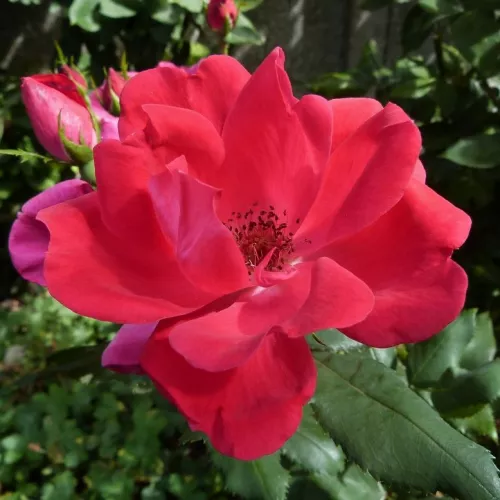
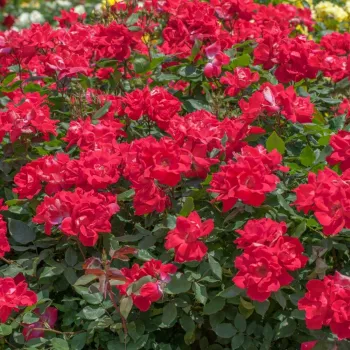
Imagine stepping outside after rain into a soft light of green, where clusters of cherry-red blooms glow against healthy foliage and shrug off Ireland’s coastal breezes and rain-soaked gardens with ease, even where clay soil needs good drainage. This modern shrub rose was bred for reliable, low-effort flowering, repeating in generous waves from early summer well into autumn, so you can enjoy colour without constant deadheading thanks to its strong self-cleaning habit. On its own roots, it settles in for a long life, rebuilding from the base if ever cut back hard, so the plant’s shape and display stay dependable over many years. Think of the first year as mostly about roots, the second about stronger shoots, and by the third year you have the full, effortless ornamental value you hoped for in a family front garden or relaxed cottage border.
Usage options
| Target area |
Reasoning |
| Front garden focal shrub |
Its bushy, compact 90–120 cm habit and dense mid-green foliage create an immediate focal point in a small front garden without dominating the space, suiting simple, low-maintenance layouts for the time-pressed homeowner. |
| Long-season cottage border |
Remontant flowering with a generous second flush keeps cherry-red colour running through an Irish summer that can be short and unsettled, giving a relaxed, cottage feel with months of interest for the enthusiastic beginner. |
| Easy-care flowering hedge |
Recommended hedge spacing around 55 cm forms a dense, informal flowering line that needs only light annual pruning and minimal feeding, ideal where you want privacy and colour with little work for the busy gardener. |
| Urban and coastal planting |
Outstanding urban tolerance, with good heat and short dry-spell resistance, copes well with exposed sites and sea air while still flowering reliably through Ireland’s breezy, rainwashed seasons for the practical city-dweller. |
| Clay-soil family beds |
Performs well in typical Irish heavy soils once basic drainage and mulch are provided, rewarding modest preparation with strong root growth and steady top growth over the first three years for the realistic planner. |
| Pollinator-friendly mixed border |
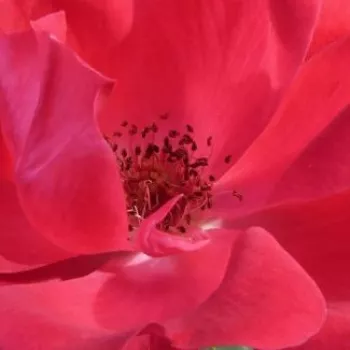
Semi-double, open-centred blooms offer easily accessible stamens, making nectar and pollen straightforward for bees to find, so you combine bright colour with wildlife value in a compact space for the nature-loving gardener. |
| Low-maintenance flower bed groups |
Good self-cleaning means most spent blooms drop off on their own, keeping group plantings tidy with minimal deadheading and allowing you to enjoy the display rather than constantly pruning, perfect for the relaxed owner. |
| Large container on patio or terrace |
In a 40–50 litre or larger container, its bushy shape and dense foliage give strong impact with little shaping; own-root resilience helps it recover from occasional neglect, suiting the space-limited urban gardener. |
Styling ideas
- Cottage-curve border – Plant a loose curve of KNOCK OUT® with sweet alyssum at the front to soften edges, creating a playful, “girly” cottage feel – ideal for family homes wanting gentle romance.
- Terraced-front frame – Flank a Dublin terraced-house doorway with large pots of KNOCK OUT® and low silver Artemisia for year-round structure – perfect for city dwellers seeking impact from the pavement.
- Cherry-red ribbon – Use as a low flowering hedge along a front boundary, underplanted with spring bulbs, for a cheerful, low-care colour line – suited to busy households who prefer simple routines.
- Bee-friendly patch – Combine with herbs such as lavender and chives to give bees staggered nectar sources, while its open flowers add bright red highlights – great for nature-oriented, eco-minded gardeners.
- Urban-resilient bed – Mix with tough evergreens like cherry laurel ‘Klári’ and gravel mulch for a smart, easy-care streetside bed – ideal for exposed or parking-adjacent spots in town gardens.
Technical cultivar profile
| Characteristic |
Data |
| Name and registration |
Modern shrub landscape rose; registered as RADrazz, marketed as Knock Out®; American Rose Society approved exhibition name Knock Out®; part of the Knock Out® collection. |
| Origin and breeding |
Bred by William J. Radler in the USA (1988) from ‘Carefree Beauty’ × ‘Razzle Dazzle’; registered 1999 and introduced 2000 via Conard-Pyle and Star Roses. |
| Awards and recognition |
AARS winner 2000, ADR Award Germany 2002, Portland Gold Medal 2003; World Federation of Rose Societies Hall of Fame inductee 2018 for proven garden performance. |
| Growth and structural characteristics |
Bushy shrub reaching around 90–120 cm in height and spread with dense, slightly glossy mid-green foliage; moderate prickles; suitable for hedges, groups, or solitary planting. |
| Flower morphology |
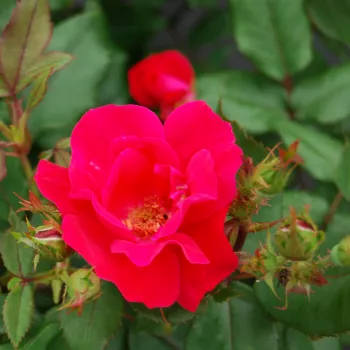
Semi-double, cup-shaped, cluster-flowering blooms, typically 7–10 cm across with about 13–25 petals; remontant with a generous second flush for extended seasonal colour. |
| Colour data and phenology |
Cherry-red flowers (ARS MR; RHS 53B outer, 53C inner); colour lightens in strong heat, stays richer in cooler weather; displays a subtle pinkish tone and gradual, attractive fading. |
| Fragrance and aroma |
Fragrance is very weak and barely noticeable, making it suitable where strong scents might be overwhelming; visual impact and flower power are the primary ornamental features. |
| Hip characteristics |
Strong self-cleaning means hips are scarce; occasional small spherical orange-red hips 7–11 mm may form, usually hidden within the dense foliage and not a key display feature. |
| Resistance and winter hardiness |
High resistance to black spot, powdery mildew and rust; tolerates heat and brief drought with watering in extended dry spells; hardy to about −32 to −29 °C (USDA 4b, RHS H7, Sweden Zone 5). |
| Horticultural recommendations |
Best at 65 cm spacing in beds, 55 cm in hedges, 100 cm as specimen; prefers well-drained soil with mulch; suitable for partial shade; low feeding and pruning needs overall. |
KNOCK OUT® offers vivid cherry-red colour, long-season repeat flowering and low-maintenance self-cleaning on a durable own-root shrub, making it a thoughtful choice for years of easy enjoyment.