KIFTSGATE – white rambler climbing rose - Murrell
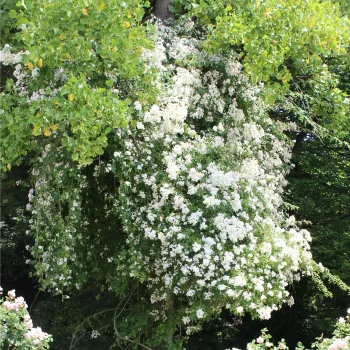
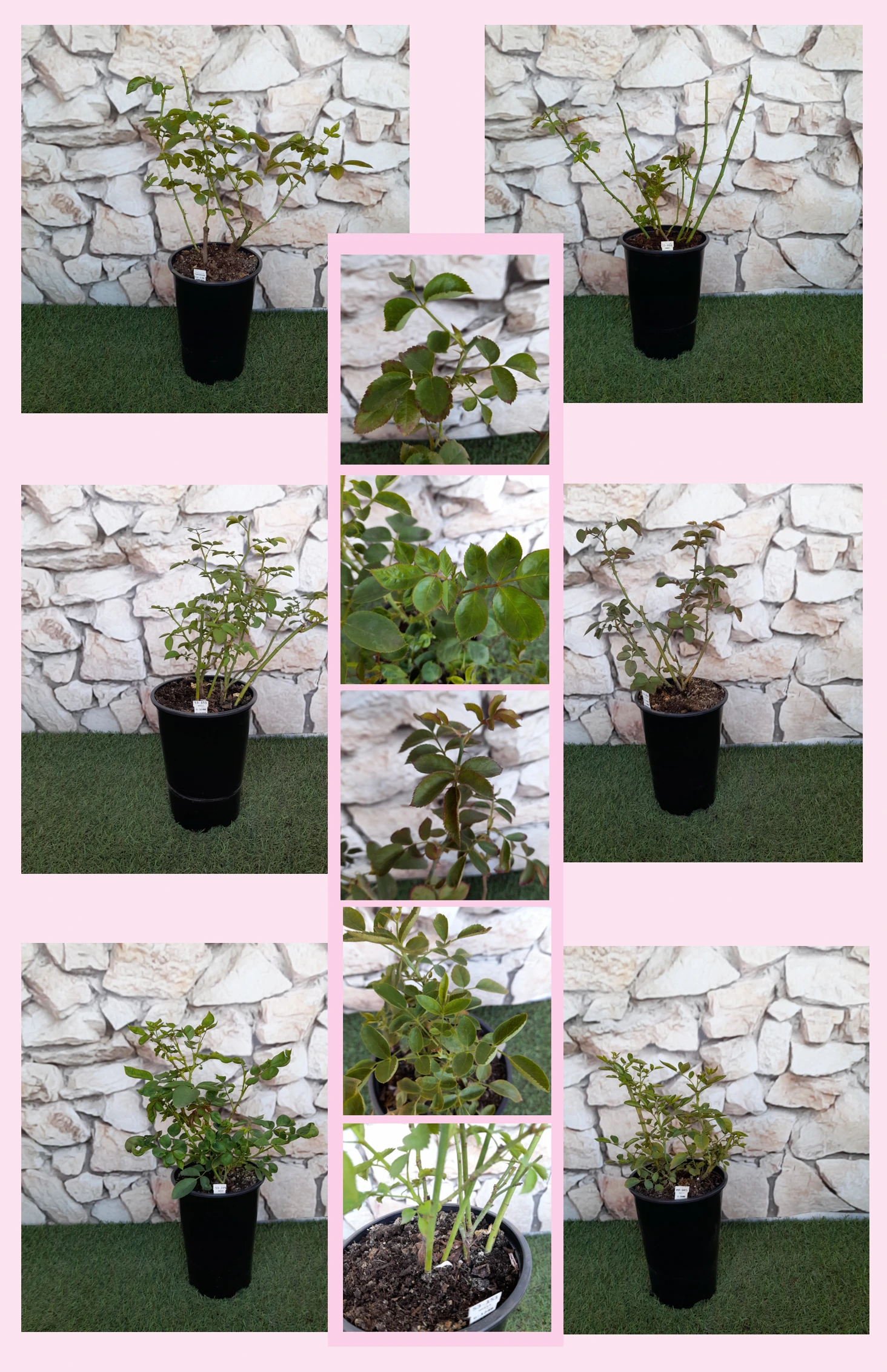
If You dream of a softly lit, romantic Irish cottage garden, Kiftsgate offers clouds of snow-white blossom and a sweet, honeyed fragrance, creating a cheerful, rain-fresh mood even on overcast days gently brightening the garden when Atlantic showers roll through and recede; this powerful rambler quickly forms a lush green screen over walls, old trees or outbuildings, then rewards patience with a single, spectacular summer display followed by masses of glowing orange-red hips that bring lasting interest into autumn, while its own-root vigour promises a long-lived, reliably regenerating companion that settles in steadily – Year 1 for roots, Year 2 for leafy shoots, and by Year 3 a full, storybook curtain of bloom.
Usage options
| Target area | Reasoning |
|---|
| Cottage-style front garden showpiece |
Works beautifully as a once-a-year summer spectacle curtain over a low outbuilding or sturdy arch, its pure white clusters creating a classic cottage look with minimal shaping; ideal for romantic, low-fuss gardeners and beginners. |
| Screening an unsightly wall or shed |
The exceptionally tall, vigorous growth habit quickly cloaks bare or ugly surfaces in mid-green foliage and white flowers, forming a living screen that needs only occasional guiding and tying-in; suited to time-poor home owners. |
| Training into a mature tree |
Perfect for letting scramble through a strong, established tree, where the long canes weave naturally, dropping cascades of blossom and requiring only periodic pruning to keep things safe and balanced; rewarding for romantic wildlife gardeners. |
| Wildlife-friendly family garden corner |
Single, pollen-rich flowers followed by abundant orange-red hips provide nectar and autumn food for birds, supporting bees and other visitors while still looking ornamental; an easy win for nature-loving family gardeners. |
| Low-input park or large rural garden |
Once established, its robust own-root growth and good self-cleaning flowers reduce deadheading and replacement needs, giving reliable structure and seasonal drama with only moderate maintenance; attractive to cost-conscious estate managers. |
| Partial-shade boundary or gable end |
Manages well with some shade on north- or east-facing structures, still producing a flush of bloom and dense cover where other roses might struggle, especially in damp Irish summers; practical for small-plot urban gardeners. |
| Wind-exposed coastal or open-site garden |
Tolerates typical Irish conditions, its flexible canes and resilient foliage coping with blustery, wet weather that moves quickly through the garden after Atlantic rain fronts; reassuring for coastal and rural property owners. |
| Feature for ornamental hips and winter structure |
After flowering, self-cleaning blooms leave clusters of orange-red, egg-shaped hips that hang into winter, adding colour, texture and natural decoration with no extra work; ideal for design-minded, low-maintenance garden planners. |
Styling ideas
- Cottage porch curtain – Train Kiftsgate over a sturdy timber porch with dwarf French marigolds at the base for warm contrast – perfect for homeowners wanting storybook charm from a single big-bang flowering.
- Romantic tree cascade – Allow the rose to climb an old apple or sycamore, underplant with Fens Ruby euphorbia to echo the hips – for nature-focused gardeners who enjoy a semi-wild, low-intervention look.
- Hidden shed makeover – Cover a functional shed or oil tank screen, combining with chives along the front edge for soft, bee-friendly edging – ideal for busy families wanting beauty to disguise practical structures.
- Parkland focal sweep – Use several plants along a long fence or boundary, spaced widely, to create one dramatic flowering sweep with minimal upkeep – suited to larger plots and shared green spaces.
- Coastal cottage frame – On wind-prone sites, fan the canes along tensioned wires on a gable wall, paired with tough perennials at ground level – good for coastal and village gardeners needing resilient, structural planting.
Technical cultivar profile
| Parameter | Data |
|---|
| Name and registration |
Kiftsgate, a vigorous rambler in the Rós dreapadó group, marketed as Kiftsgate Climbing rose Kiftsgate; unregistered cultivar used widely in gardens and landscape settings. |
| Origin and breeding |
Naturally selected variant of Rosa filipes discovered at Kiftsgate Court Gardens; introduced in 1954 by Edwin Murrell Ltd, bred by E. Murrell in Shrewsbury, United Kingdom. |
| Awards and recognition |
Holds the Royal Horticultural Society Award of Garden Merit (1993), confirming reliable performance, good garden value and robust ornamental impact under a range of conditions. |
| Growth and structural characteristics |
Exceptionally tall climbing rambler, about 900–1500 cm high with 250–450 cm spread; moderately dense, mid-green, slightly glossy foliage on very thorny, flexible canes suited to large supports. |
| Flower morphology |
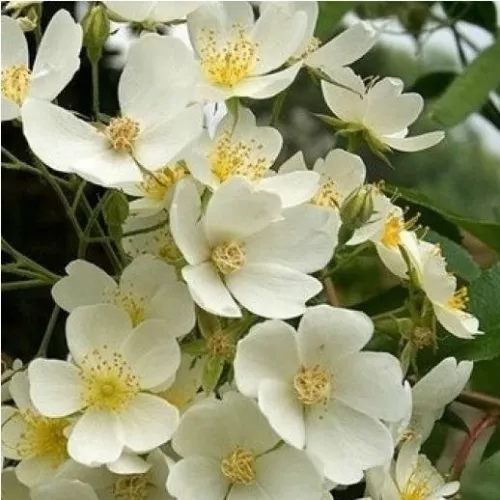
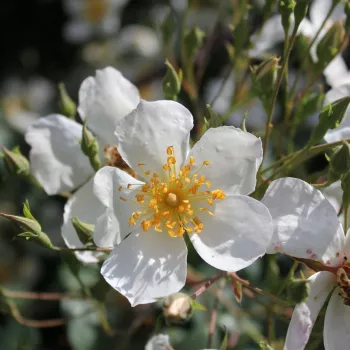
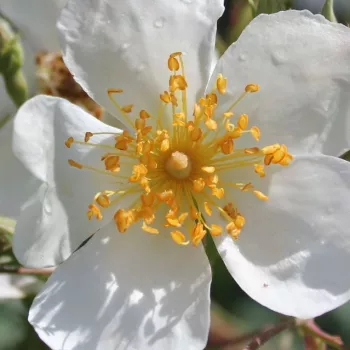
Single to semi‑double flowers with 5–12 petals, small (1–4 cm) but carried in large, many‑flowered clusters; flat blooms, non‑remontant, giving one main but very striking summer display. |
| Colour data and phenology |
Snow‑white flowers with slight creamy tinge; buds cream‑white, petals dazzling white then softening to creamy yellowish‑white before fading; colour retention very good through the flowering period. |
| Fragrance and aroma |
Medium-strength, sweet, honeyed scent that is clearly noticeable in still air; open, simple flowers with accessible stamens are highly attractive to bees and other pollinators in summer. |
| Hip characteristics |
Produces numerous ornamental, egg-shaped hips, about 15–22 mm diameter, coloured orange-red (RHS 33A); hips persist into autumn and early winter, adding seasonal structure and wildlife interest. |
| Resistance and winter hardiness |
Hardy to about −26 to −23 °C (RHS H7, USDA 5b); disease resistance moderate to black spot, mildew and rust, requiring occasional protection in humid conditions and watering in extended drought. |
| Horticultural recommendations |
Best on strong supports, walls, pergolas or into trees at 225–360 cm spacing; prefers well‑drained soil, benefits from mulching on clay; own‑root plants establish steadily for long-term garden presence. |
Kiftsgate offers a huge once-a-year flowering curtain, fragrant pollinator-friendly blooms and long-lived own-root vigour, making it a thoughtful choice for transforming larger Irish gardens and boundaries.