HIMMELSAUGE – carmine-red historic old garden rose – Geschwind
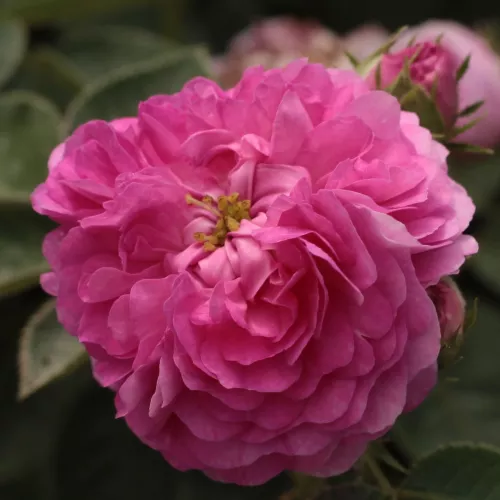
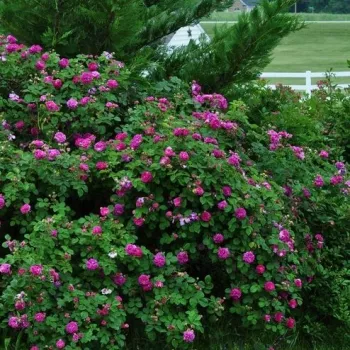
Step out to your front path and meet Himmelsauge, a romantically arching historic climber that turns pergolas, cottage porches and Dublin terrace railings into cascades of carmine-red cups. This old Setigera hybrid carries a strong, spicy-sweet fragrance that lingers in the damp evening air after summer showers, while its grey‑green, matt foliage lends a calm, soft backdrop to the glowing blooms. Almost completely free of harsh prickles, it is pleasantly touchable around narrow paths and family seating areas. Well suited to typical Irish conditions, it copes gracefully with frequent rain and cool summers, bringing a feeling of refuge even on breezy days by the coast with moist, mild air rolling in from the Atlantic. Once planted in decent soil with good drainage, this own‑root climber matures steadily into a long‑lived feature, building a deep root system that supports reliable flowering for decades with only modest care. Over time, and especially where space allows, its sweeping, once‑a‑year display creates an unforgettable spectacle of colour that feels both old‑fashioned and timeless, perfectly at home in a relaxed, “girly” garden setting.
Usage options
| Target area |
Reasoning |
| Pergola or arch in a family garden |
Long, flexible canes and medium vigour make this climber ideal for pergolas, where its once‑a‑year, abundant flowering turns a simple structure into a seasonal highlight. Light pruning and tying-in are usually enough to keep it in shape, making it reassuringly low-fuss for the time-pressed homeowner. |
| Dublin terraced-house front garden |
Its elegant, historic character and carmine-red, cup-shaped flowers create a romantic welcome in narrow front spaces, trained flat against railings or modest walls. The almost thornless growth is practical beside pavements and gateways, adding charm without snagging passers-by, suiting style-conscious city-dwellers. |
| Irish cottage gable wall |
Trained along a sunny or lightly shaded gable, it brings classic cottage-garden atmosphere, with matt grey‑green foliage softening stone or render. Once the framework is in place, yearly tying and a light tidy are usually all that is required, appealing to traditional-style gardeners. |
| Climbing rose for partial shade |
This variety tolerates partial shade, so it can be sited where many roses would struggle, such as east-facing walls or spots that lose afternoon sun. You still enjoy a generous flowering curtain once a year, useful in closely built Irish neighbourhoods for shade-challenged beginners. |
| Low-prickle rose near paths and seating |
The barely thorny growth habit makes it much easier to live with around family paths, side entrances and benches, reducing snags on clothes and small scrapes for children. It offers that enveloping rose effect without the usual penalties, a welcome choice for cautious families. |
| Long-term garden “backbone” plant |
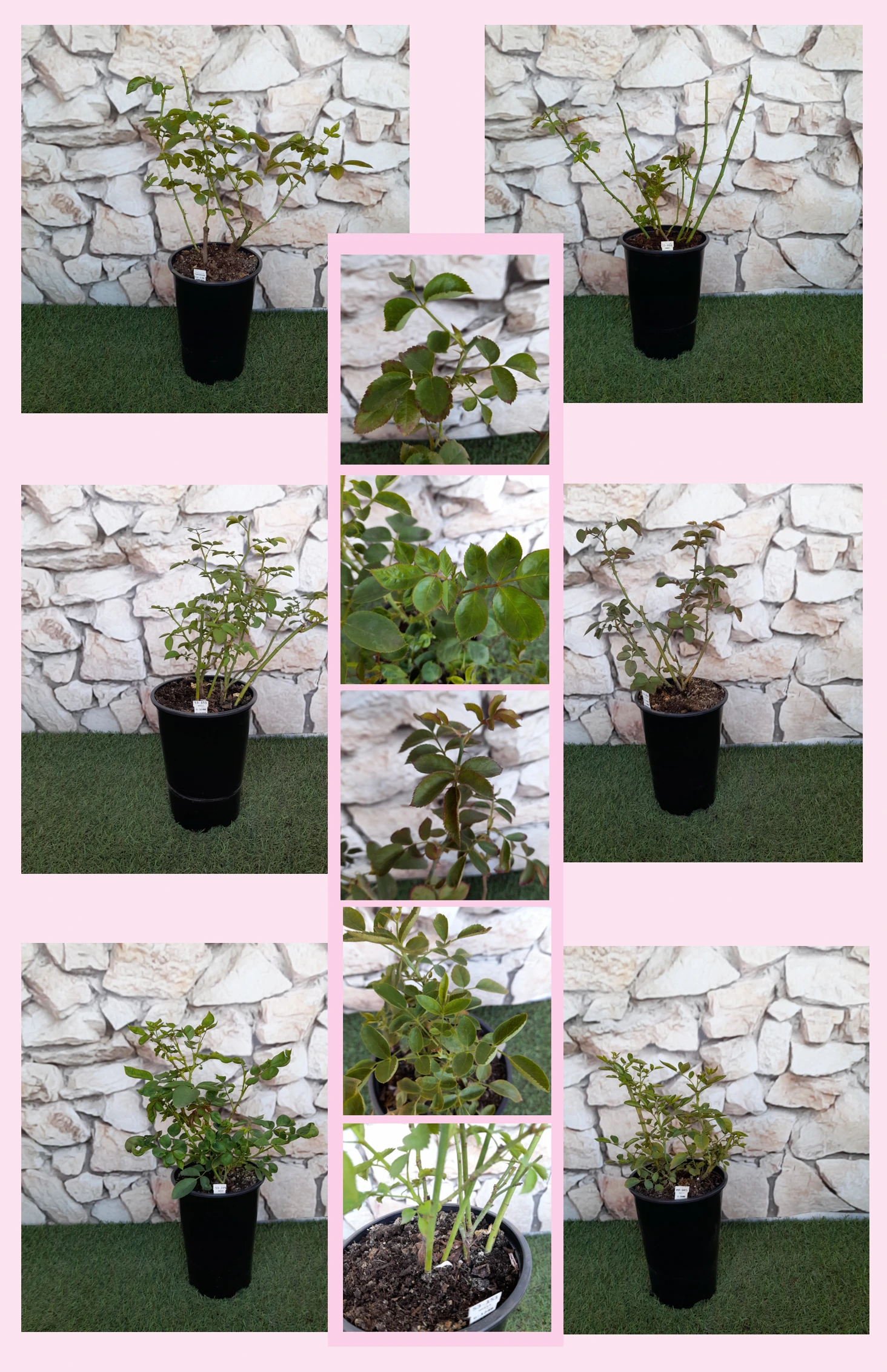
As an own-root, historic climber, it forms a durable framework that can be renewed from the base if damaged, supporting a long lifespan with stable ornamental impact. This gives you a planted structure that improves year after year, which is reassuring for forward-planning owners. |
| Low-input rose for typical Irish conditions |
Medium disease tolerance and suitability for moderate drought mean this rose stays generally presentable with basic care: decent drainage on heavier clay, occasional feeding and watering only in longer dry spells. It copes well with mild, wet summers and breezy, humid weather, easing worries for busy gardeners. |
| Statement rose over a gate or entrance |
Its once-flowering nature concentrates the show into a spectacular early-summer curtain of carmine-red, bluish-tinged blooms that draw the eye from the street. The heady, spicy-sweet scent drifting around the entrance makes each homecoming feel special, delighting romance-loving visitors. |
Styling ideas
- Cottage-arch romance – Train Himmelsauge over a wooden arch with Geranium pratense spilling at the base for a soft, “girly” walkway – ideal for nostalgic front-garden dreamers.
- Dublin railings veil – Guide its low-prickle canes along black railings, underplant with Nepeta x faassenii for a calm blue haze – perfect for style-aware urban households.
- Gable tapestry – Spread the climber along a cottage gable and weave Salvia nemorosa in a narrow border below – suited to those wanting lasting structure with simple upkeep.
- Shady-side charm – Use it on an east-facing wall that gets only morning sun, softening brick with foliage and scent – good for small plots with awkward light.
- Entrance drama – Let it flow over a pergola gateway, combining with meadow cranesbill for a June festival of colour – for families who love a memorable summer show.
Technical cultivar profile
| Characteristic |
Data |
| Name and registration |
Himmelsauge historic old garden climbing rose, Old rose Hybrid Setigera group; trade name Himmelsauge Historic rose Geschwind; unregistered cultivar with ARS exhibition name Himmelsauge. |
| Origin and breeding |
Bred by Rudolf Geschwind in Austria, 1893; parentage Rosa setigera Michaux × Rosa rugosa var. plena Regel; introduced by Johann Christoph Schmidt and Blumenschmidt in Germany. |
| Growth and structural characteristics |
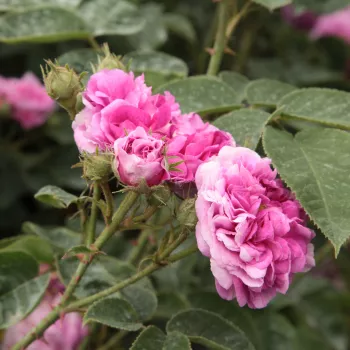
Strong, climbing growth reaching about 4–6 m high with 2,5–4,5 m spread; moderately dense, matt grey‑green foliage; canes are notably low in prickles, suitable for training on structures. |
| Flower morphology |
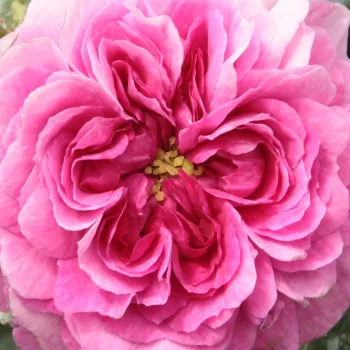
Medium-sized, very full, cup-shaped flowers 4–7 cm across in clusters; 40+ petals create strongly double blooms; once-flowering display in early summer, with moderate self-cleaning of spent clusters. |
| Colour data and phenology |
Carmine-red blooms with purplish tones; buds dark carmine-red; fully open flowers deep carmine-red with darker centre; fade to bluish-purple in strong sun; RHS 60B outer, 60A inner petals. |
| Fragrance and aroma |
Strong, distinctive scent with spicy, sweet character; perfume is noticeable in still, moist air and around seating areas; particularly evocative in classic cottage and traditional period-style gardens. |
| Hip characteristics |
Rose hips form only occasionally due to the fully double flowers; when present, they are small, spherical orange-red hips about 6–10 mm, adding light seasonal interest without significant wildlife value. |
| Resistance and winter hardiness |
Hardy to about −32 to −29 °C (USDA 4b, RHS H7); medium resistance to powdery mildew, black spot and rust; tolerates moderate drought but benefits from watering in extended dry periods. |
| Horticultural recommendations |
Best on well-drained soil, including improved clay; spacing 2,1–3,85 m depending on use; suitable for pergolas, fences, walls and tree training; plant in 40–50 litre or larger containers only for short-term use. |
Himmelsauge offers a once-a-year cascade of scented carmine-red blooms, low-prickle canes and durable own-root growth that settles in for decades, making it a thoughtful choice for those planning a long-lasting garden framework.