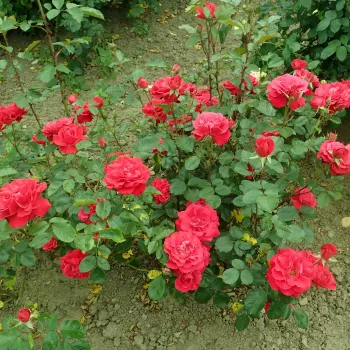
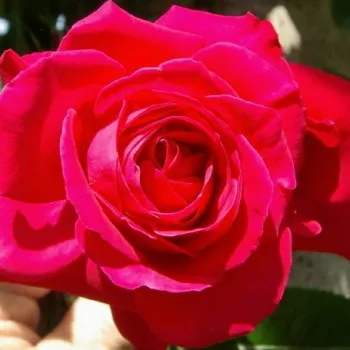
GRUSS AN HEIDELBERG® – carmine red climbing rose - Kordes
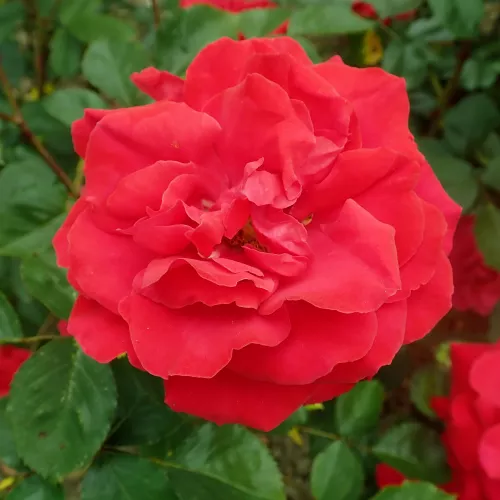
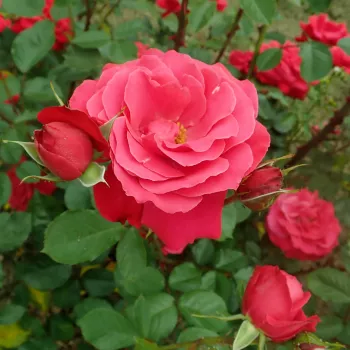
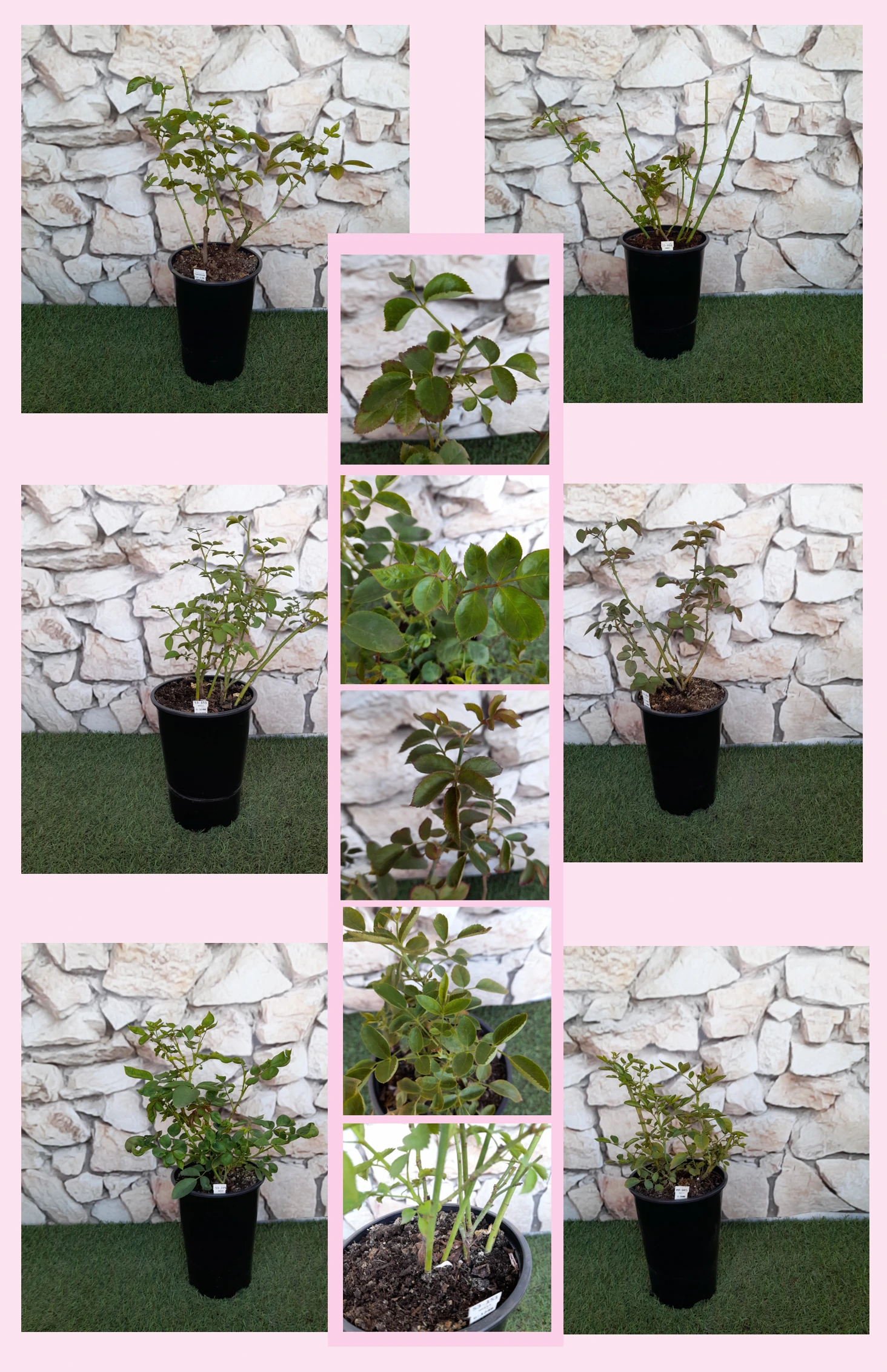
Imagine a soft Irish drizzle catching on clusters of vivid carmine-red blooms: GRUSS AN HEIDELBERG® turns a simple front path or cottage wall into a scene of quiet delight. This classic Kordes climber is bred for longevity, with sturdy growth that copes well even where summer is cool and damp and winters are sharp. On its own roots it settles in securely, maturing from steady roots in the first year to confident shoots in the second, and in the third year it reaches its full ornamental impact. Medium maintenance means straightforward seasonal pruning and the occasional tidy-up of spent blooms, while its remontant clusters reward you with generous repeat flowering through the Irish summer and into autumn. Dark, glossy foliage frames the rich red petals, setting off that romantic cottage-garden look whether you grow it on a Dublin terrace fence or over a country pergola, quietly shrugging off frequent rain and persistent humidity around the garden.
Usage options
| Target area | Reasoning |
|---|
| Front-garden arch in a Dublin terrace street |
Its upright, medium-vigorous climbing habit makes it ideal for a rose arch that does not overwhelm a narrow city front garden, yet still gives height and presence. Remontant clusters mean colour from early summer to autumn along the path. Best for the romantic-minded city homeowner. |
| Cottage-style pergola beside a seating area |
The dense, dark green foliage and richly coloured double flowers create a traditional cottage-garden look, with a gentle rosy scent close to where you sit. Medium maintenance suits those happy to prune once a year and deadhead occasionally. A good fit for relaxed cottage-garden lovers. |
| Climbing feature on a sunny house wall |
Height up to around 3.2 m and a spread of 1.2–2 m let it cover a wall steadily without becoming unmanageable, giving long-lasting structure. The own-root form builds a durable framework that can be renewed from the base if stems age or suffer damage. Ideal for long-term planners. |
| Fence or boundary divider in a family garden |
Dense foliage and branching create a soft, living screen that marks boundaries without feeling stark. With appropriate spacing it forms a loose flowering hedge that children and adults can enjoy in passing. Suits families who value privacy with a natural, traditional feel. |
| Partial-shade side passage or north-east aspect |
Tolerant of partial shade, it will still flower well where morning or late-afternoon light predominates, useful for the typical side passage between houses. Moderate vigour means it fills the space over a few seasons without swamping gutters or windows. Best for practical homeowners. |
| Medium-sized feature in a small suburban lawn |
Planted as a specimen with its own support, its carmine-red clusters draw the eye without demanding constant care. The simple development from early establishment to mature display over three seasons suits gardeners who prefer predictable progress. Suits beginners seeking visible results. |
| Large container by a front door or patio |
In a 40–50 litre or larger container with good drainage, it brings vertical colour where soil is poor or paved. Own-root resilience helps it cope with repotting and occasional setbacks better than budded roses. A thoughtful choice for balcony and courtyard decorators. |
| Formal entrance framed by paired climbers |
Planted symmetrically, its classic flower form and award-backed reliability give a refined impression that stays attractive over many years with moderate care. It handles cool, damp Irish conditions with dependable repeat flowering and tidy growth. Well suited to discerning enthusiasts. |
Styling ideas
- Cottage-arch – Train it over a simple wooden arch and underplant with hardy geraniums and lavender for a soft cottage look – perfect for romantic traditionalists.
- Front-fence – Weave canes along a low timber or metal fence and mix with threadleaf coreopsis for contrast – ideal for small urban front gardens.
- Pergola-nook – Let it climb a pergola post beside a bench, with dwarf silver artemisia at the base to echo the glossy foliage – suited to evening relaxers.
- Formal-pair – Plant two either side of an entrance, keeping underplanting simple with low box or heuchera to highlight the carmine blooms – appealing to symmetry lovers.
- Container-column – Grow in a 50-litre pot with an obelisk support, adding trailing thyme at the rim for scent and softness – great for balcony and patio gardeners.
Technical cultivar profile
| Parameter | Data |
|---|
| Name and registration |
Gruss an Heidelberg® Climbing rose KORbe; registered cultivar name KORbe, ARS exhibition name Heidelberg; large-flowered climbing rose in the Rós dreapadó commercial group. |
| Origin and breeding |
Bred by Reimer Kordes, W. Kordes’ Söhne, Germany, from ‘World’s Fair’ × ‘Floradora’; introduced 1959 in Germany as an unregistered but widely established climbing cultivar. |
| Awards and recognition |
ADR award (ADR-Sorte) Germany 1960, and multiple American Rose Society Classic Shrub Rose exhibition awards from regional rose societies, confirming long-term garden and show value. |
| Growth and structural characteristics |
Upright, medium-vigorous large-flowered climber, around 200–320 cm high and 120–200 cm wide, with dense, dark glossy foliage and plentiful prickles, forming a well-furnished framework over supports. |
| Flower morphology |
Double, cup-shaped flowers with 26–39 petals, large 7–10 cm blooms in clusters; remontant with abundant first and second flushes, giving strong repeat flowering through the season on suitable supports. |
| Colour data and phenology |
Carmine-red buds and freshly opened blooms, gently lightening at the petal edges to rosy red before fall; colour retention moderate, with centres remaining deeper carmine as the flowers age on the plant. |
| Fragrance and aroma |
Mild but noticeable rosy fragrance, best appreciated at close range on still days near seating or entrances; primarily grown for its colour impact and traditional look rather than for strong perfume. |
| Hip characteristics |
Hip set generally sparse due to double flowers; where present, small spherical red hips around 6–10 mm may appear late season, offering discreet seasonal interest without heavy self-seeding. |
| Resistance and winter hardiness |
Hardy to approximately −29 to −26 °C (H7, USDA 5a); resistant to powdery mildew and rust, with medium black spot susceptibility, performing reliably in cool, damp Irish gardens with basic care. |
| Horticultural recommendations |
Best on well-drained soil with added organic matter; avoid waterlogging on heavy clay, mulch annually, and prune after main flush to shape and renew flowering wood on arches, fences, walls and pergolas. |
GRUSS AN HEIDELBERG® offers reliable repeat flowering, handsome foliage and long-lived own-root strength, making it a thoughtful choice where you prefer one enduring, climber to reward steady, simple care.