GOLDFINCH – yellow historic old garden rose - Paul
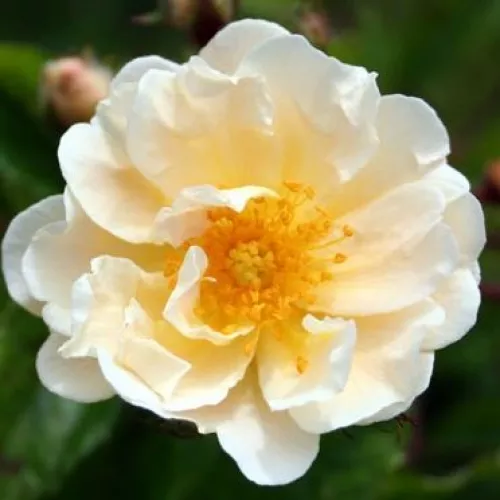
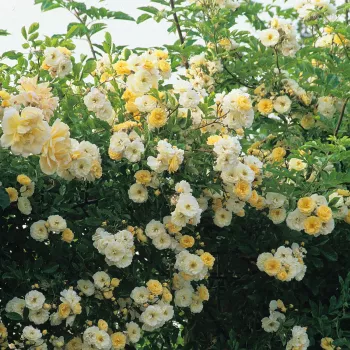
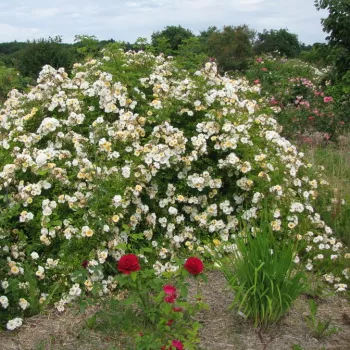
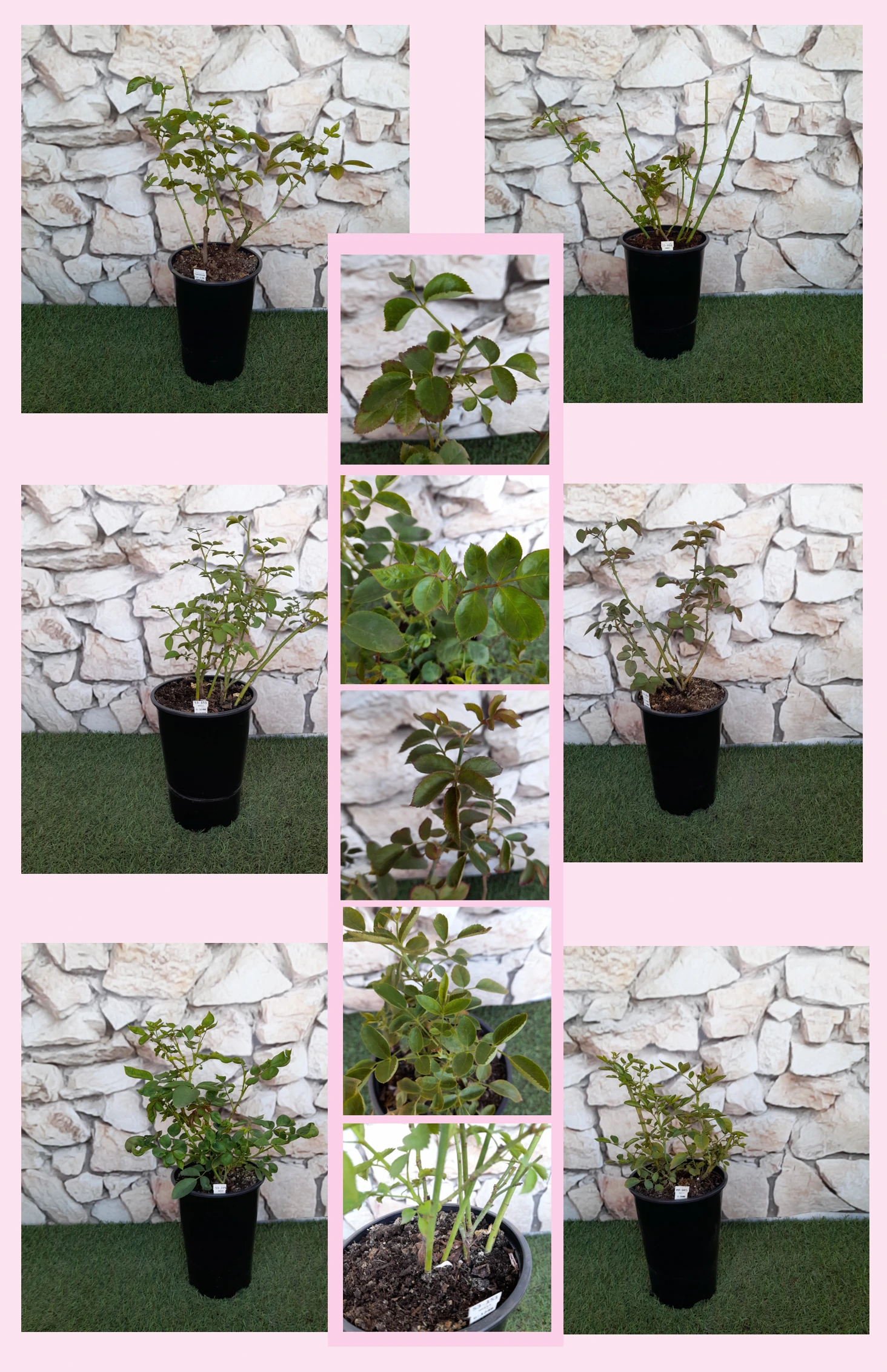
Bring a touch of storybook cottage charm to your garden with ‘Goldfinch’, a graceful historic rambler that clothes arches, fences and walls in clouds of small, lemon-yellow blooms. Once a year it puts on a truly memorable display, followed by neat red hips that brighten the winter frame and support wildlife. Its semi-double, open flowers are alive with a fruity fragrance and gentle pollinator activity, while glossy dark foliage and a barely-thorny habit make it easy to manage in narrow Dublin front gardens. Own-root planting means a dependable, long-lived structure that can regrow from the base if ever cut back hard, ideal where you face regular rain, heavy clay and strong Atlantic breezes softened by garden shelter. Think of its development as a quiet progression: in the first year it focuses on roots, in the second on longer shoots, and by the third it becomes a full, romantic curtain of flowers.
Usage options
| Target area |
Reasoning |
| Pergola in an Irish cottage-style back garden |
‘Goldfinch’ is ideal for clothing a pergola with a once-a-year, storybook flush of lemon-yellow flowers, creating a seasonal highlight that needs very little ongoing care thanks to good disease resistance and easy self-cleaning. Perfect for the fragrance-loving beginner. |
| Front-garden arch at a terraced Dublin house |
The moderate vigour and barely thorny canes make it suitable for training over an entrance arch, adding romantic colour and scent without overwhelming a small front garden, and remaining safe to brush past on busy urban paths. A thoughtful choice for the space-conscious homeowner. |
| Fence line or low wall in a family garden |
Trained along a fence, it creates a soft, flowering screen that children and adults can enjoy without facing aggressive prickles, while own-root planting ensures long-term stability and the ability to regenerate if pruned back hard. Reassuring for families seeking a low-fuss garden. |
| Romantic “girly” corner with perennials |
The small, soft clusters combine beautifully with airy companions like tall verbena or purple coneflower, enhancing its pollinator-friendly, semi-double flowers while keeping maintenance simple and naturalistic. Inspiring for nature-oriented gardeners who prefer relaxed plantings. |
| Partially shaded cottage path or side return |
Its tolerance of partial shade lets you brighten narrow, less-sunny side gardens with blossom and perfume, making good use of vertical space where beds are small and access must stay clear for everyday use. Practical for busy urban owners with shaded walkways. |
| Solitary specimen on a sturdy obelisk |
Planted as a feature on an obelisk, ‘Goldfinch’ forms a graceful pillar of foliage and flower that matures steadily over the first three years into a permanent, structural highlight in the cottage border. Ideal for hobby gardeners planning a long-term display. |
| Large container on patio or courtyard (40–50 L+) |
In a generous 40–50 litre container with good drainage, this own-root rambler can be grown where soil is heavy clay or planting space is limited, giving you height, scent and historical charm even on a paved terrace. Suited to urban renters seeking flexible planting. |
| Wildlife-friendly family garden backdrop |
The open, pollen-rich flowers support visiting insects, and the small red hips that follow offer visual interest and extra seasonal food, all on a plant that copes well with regular Irish rainfall and damp conditions. A wise option for eco-aware family gardeners. |
Styling ideas
- Cottage Arch – Train ‘Goldfinch’ over a simple timber arch, underplant with lavender and hardy geraniums for a soft, “girly” entrance – for homeowners wanting romance without complex pruning.
- Pastel Pergola – Let it scramble along a pergola with cream and pink climbers, then carpet the base with foxgloves and alchemilla for layered cottage charm – for those who enjoy dreamy summer evenings outside.
- Wildlife Ribbon – Run it along a back fence with tall verbena and purple coneflower in front to boost pollinator interest and extend colour – for nature-focused families building a gentle wildlife corridor.
- Front-Garden Frame – Soften a city front wall by combining ‘Goldfinch’ with neatly clipped box and pale perennials, keeping the look refined yet welcoming – for urban gardeners aiming for elegant kerb appeal.
- Potager Romance – Grow it on an obelisk in a large raised bed or 50 L container among herbs and vegetables, mixing fragrance, structure and utility – for beginners who like beauty woven into productive spaces.
Technical cultivar profile
| Aspect |
Data |
| Name and registration |
Goldfinch, an old Hybrid Multiflora Polyantha rambler, sold as a historic garden rose; unregistered but long established in collections, also known under the trade designation Goldfinch Historic rose. |
| Origin and breeding |
Bred by George Paul Jr. in the United Kingdom, introduced in 1907; parentage recorded as ‘Hélène’ crossed with an unknown seedling, originally distributed by Hazlewood Bros in Australia. |
| Growth and structural characteristics |
Climbing rambler with arching canes, around 320–500 cm high and 180–280 cm spread; moderately dense, dark green glossy foliage and very few prickles, forming a soft but substantial framework. |
| Flower morphology |
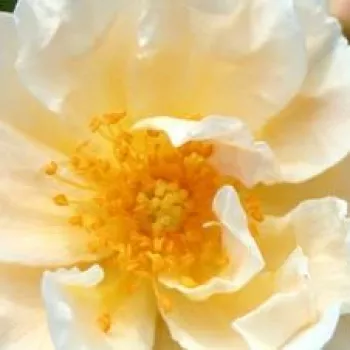
Semi-double cupped clusters with 13–25 petals per bloom, typically 1–4 cm across; flowers once per season in generous trusses, with good self-cleaning as spent petals fall away naturally. |
| Colour data and phenology |
Initially deep golden to lemon yellow, ARS LY, RHS 11C outer and 4D inner, quickly fading through buttery cream to almost white, especially in strong sun, giving a gentle, evolving colour effect. |
| Fragrance and aroma |
Strong, fresh, fruity scent that carries well in still air, adding notable fragrance to paths and seating areas during its flowering window; well-suited to gardens where perfume is a key priority. |
| Hip characteristics |
Produces moderately formed small spherical hips, about 6–9 mm in diameter, turning red as they mature; hips extend seasonal interest and may provide light wildlife value in autumn and early winter. |
| Resistance and winter hardiness |
Rated resistant to powdery mildew, black spot and rust; hardy approximately to -15 to -12 °C (RHS H6, Swedish Zone 2, USDA 7b), tolerates moderate heat but needs water in extended dry spells. |
| Horticultural recommendations |
Best on arches, pergolas, fences or as a specimen; space 120–220 cm depending on use, allow good drainage on heavier soils, and train early for shape; own-root plants give reliable long-term performance. |
Goldfinch offers a once-a-year cascade of scented yellow blossom, dependable disease resistance and gentle prickles on a long-lived own-root framework, making it a considerate choice if you would like lasting cottage charm with little effort.