GENERAL MACARTHUR™ – deep pink hybrid tea rose - Hill
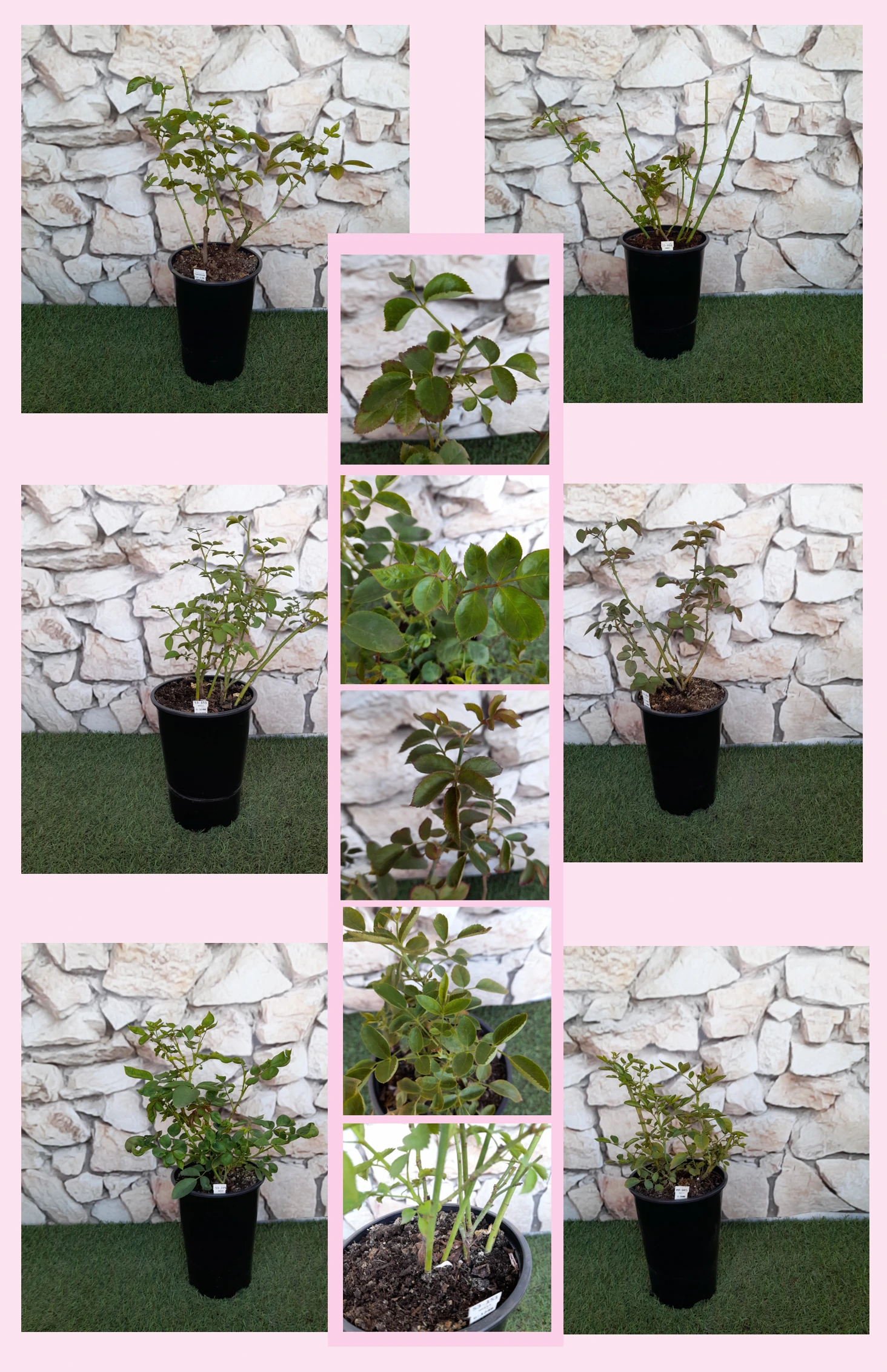
Bring a touch of old-world romance to your Irish garden with GENERAL MACARTHUR™, a deep pink hybrid tea bred for generous flowering and reassuring reliability. This classic bush rose offers strong, long-lasting fragrance, remontant blooms and a bushy habit that suits both cottage borders and Dublin front gardens, even where summers are cool and humid. Own-root plants settle steadily, building a long-lived, regenerating framework that keeps its shape and ornamental value for years. Think in terms of natural pacing – first the roots in year one, then confident shoots in year two, followed by full garden presence in year three – for a low-fuss, high-reward rose that soon earns its place as a favourite.
Usage options
| Target area |
Reasoning |
| Main flower bed in a family garden |
Its bushy, 120–160 cm growth and continuous deep pink blooms provide a clear focal point without complex pruning, while own-root vigour promises a stable, long-lived presence for busy homeowners, especially suited to the average family gardener beginner. |
| Irish cottage-style mixed border |
The warm carmine-pink flowers blend beautifully with perennials and grasses, evoking a relaxed, informal cottage feel, and the remontant flowering ensures colour from early summer to autumn in short Irish summers for those who enjoy traditional charm romantics. |
| Dublin terraced-house front garden |
Its upright, moderately dense habit fits narrow beds, while reliable disease resistance reduces the need for spraying where time and space are limited, making it ideal for city fronts that still want an elegant, scented welcome home urbanites. |
| Cut-flower row or cutting patch |
Solitary, medium-sized hybrid tea blooms on sturdy stems are perfect for vases, with strong, long-lasting scent that fills a room, giving regular bunches of classic roses from a small garden bed for those who like bringing flowers indoors homeowners. |
| Low-maintenance, eco-conscious planting |
Good resistance to powdery mildew, black spot and rust means less chemical intervention, while moderate pollinator appeal and decorative hips add ecological interest, suiting gardeners who prefer resilient plants and softer management eco-minded. |
| Small group planting in a front border |
Planted 65 cm apart, three to five bushes create a striking block of colour that reads well from the street, and their robust framework develops steadily with minimal shaping for those wanting impact without intricate design skills practical. |
| Specimen rose in a lawn or gravel circle |
Used as a solitary specimen at around 1 m spacing, its height, bushiness and repeating flowers give year-on-year structure and colour, making it a reliable anchor for modest garden designs that still feel thoughtfully composed planners. |
| Large planter on patio or driveway |
In a 40–50 litre container with good drainage, it copes well with exposed spots and rainy Irish weather while needing only regular watering in prolonged drought, offering a fragrant vertical accent where borders are scarce for space-conscious gardeners balcony-owners. |
Styling ideas
- Cottage-Romantic Bed – Combine with Liatris spicata 'Alba' and dwarf Heuchera for a softly structured, pollinator-friendly border – ideal for lovers of relaxed Irish cottage gardens.
- Front-Door Welcome – Plant three bushes in a curve by a path, underplanted with low lavender, for scented returns home with minimal upkeep – perfect for busy Dublin terraced-house owners.
- Classic Cutting Patch – Set out a short row at 65 cm spacing beside vegetables or herbs to harvest scented stems all season – suited to hobby gardeners who enjoy arranging their own flowers.
- Heritage Lawn Specimen – Place a single plant in a circular gravel or lawn cut-out with simple evergreen edging to echo traditional park roses – great for those wanting one statement shrub.
- Patio Feature Pot – Grow in a 40–50 litre terracotta or half-barrel planter with trailing thyme for a fragrant, movable accent near seating – appealing to small-garden and balcony-focused households.
Technical cultivar profile
| Parameter |
Data |
| Name and registration |
GENERAL MACARTHUR™ hybrid tea rose, trade name for an historical hybrid tea; ARS exhibition name General MacArthur; unregistered cultivar, part of the Hybrid Tea (Rós taehibride) group. |
| Origin and breeding |
Bred by Edward Gurney Hill, E G Hill Co, Richmond, Indiana, USA; bred 1904, introduced 1905, initially distributed by E. G. Hill Co; parentage unknown, classic early twentieth century American hybrid tea. |
| Growth and structural characteristics |
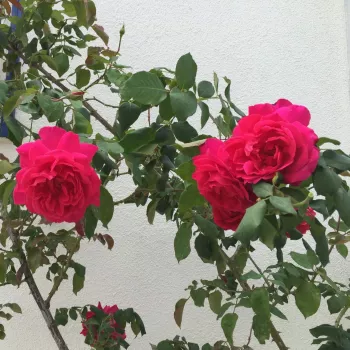
Bushy shrub reaching about 120–160 cm high and 70–90 cm wide, with moderately dense, medium-green, slightly glossy foliage and moderate prickliness; framework suits beds, hedging and specimen uses in family gardens. |
| Flower morphology |
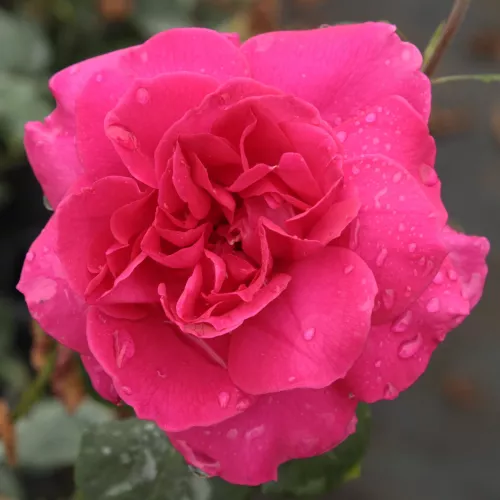
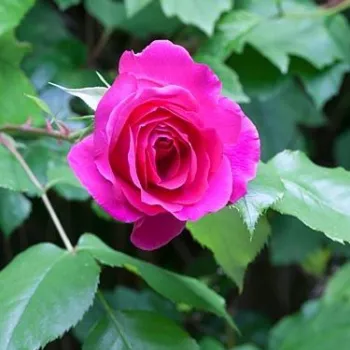
Semi-double to medium-full, 13–25 petalled, spherical pompon hybrid tea blooms, mostly solitary on stems; medium-sized flowers 4–7 cm across, remontant with an especially abundant second flush in suitable conditions. |
| Colour data and phenology |
Uniform rich carmine-pink flowers, RHS 53B outer petals, 53A inner; buds dark carmine-pink with paler rims, fading through deep pink to gentle mauve-pink with lighter edges as blooms age, maintaining generally good colour retention. |
| Fragrance and aroma |
Strongly and persistently scented hybrid tea; fragrance character not fully documented but reported as intense and long-lasting, making it particularly suitable for cut flowers and seating areas where scent can be appreciated. |
| Hip characteristics |
Produces moderate quantities of spherical orange-red hips, around 12–16 mm diameter; hips add seasonal interest and potential wildlife value in late season if spent flowers are not removed after the main flowering period. |
| Resistance and winter hardiness |
Rated resistant to powdery mildew, black spot and rust; hardy approximately to −15 to −12 °C, RHS H6, Swedish zone 2, USDA 7b; tolerates heat reasonably well but benefits from regular watering during extended dry periods. |
| Horticultural recommendations |
Best in sunny positions on well-drained soil; spacing 65 cm for massed planting, 55 cm for hedging, about 100 cm as a specimen; 2.4–2.7 plants/m² recommended; remove spent blooms and lightly prune to maintain shape and flowering. |
GENERAL MACARTHUR™ offers strong fragrance, reliable repeat flowering and disease resistance in a long-lived own-root form that settles in gradually; a thoughtful choice if you would like a classic, easy-care rose for your garden.