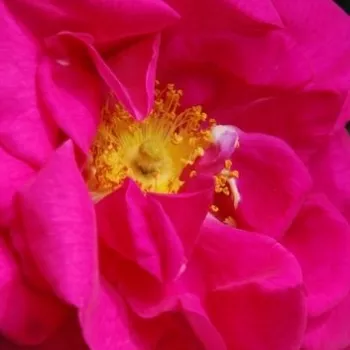
GALLICA 'OFFICINALIS' – carmine-red historic Gallica rose
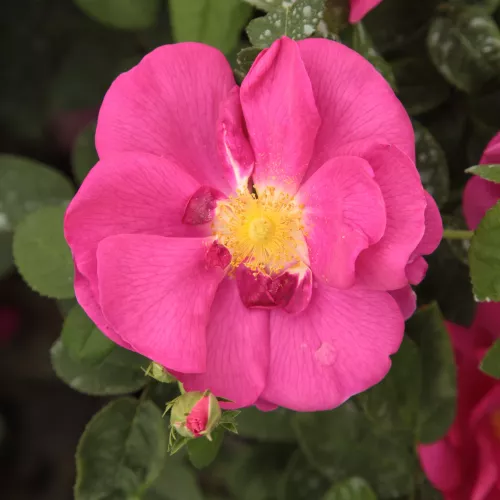
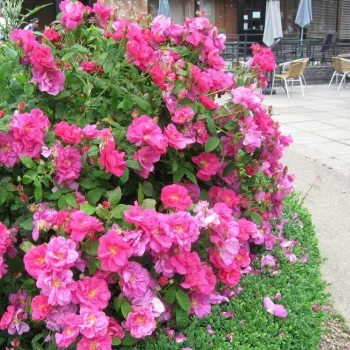
Step out to GALLICA 'OFFICINALIS' and you are greeted by a cloud of fragrance, richly spicy-sweet and easily strong enough to scent a small garden. This traditional Gallica shrub rose brings a flush of early-summer flowers in deep carmine-red, lighting up cottage-style borders and Dublin front doors with an old-world charm that suits both stone walls and neat railings. Once established in your soil, its own-root structure gives reassuring longevity and the ability to bounce back from weather knocks with little fuss. It copes reliably with Irish rainfall and cool summers, favouring any sunny or lightly shaded spot with sensible drainage over heavy clay. After flowering, its orange-red hips lend gentle autumn colour, loved by birds and admired by neighbours on a short evening walk.
Usage options
| Target area | Reasoning |
|---|
| Cottage-style mixed flowerbed in a family garden |
The strong, spicy sweet scent and rich carmine-red blooms deliver a classic cottage look with very little fuss, and once roots are settled it becomes a long-lived, reliable presence for hobby gardeners and beginners. |
| Dublin terraced-house front garden focal shrub |
Its upright, bushy habit and single early-summer flush create a memorable, season-defining show that looks refined even in a small space, suiting homeowners who want impact from one well-chosen centrepiece. |
| Informal flowering hedge along paths or boundaries |
Planting at hedge spacing builds a softly bushy, moderately thorny barrier; once flowering finishes, the ornamental orange-red hips extend interest, ideal for nature-oriented families seeking a beautiful, bird-friendly border. |
| Feature rose among traditional perennials |
Semi-double, cupped clusters sit beautifully with dwarf iris, creeping bugle and Irish moss, creating a layered, heritage feel for those who enjoy coordinating colours and textures in a relaxed, historic-style scheme. |
| Lightly shaded corner or north-east facing bed |
Its tolerance of partial shade lets you use difficult corners for scented display, so long as the soil drains reasonably well, which suits urban gardeners making the most of awkward, overlooked spaces. |
| Low-maintenance family garden with limited time |
Moderate maintenance needs, good cold tolerance and dependable early flowering make it easy to look after; roots settle in the first year, shoots strengthen in the second, and full ornamental value arrives by the third for time-pressed owners. |
| Bee-friendly traditional planting |
Semi-double, open blooms expose pollen easily, drawing in bees during its main flowering weeks and pairing well with other pollinator plants, a good fit for fragrance-loving, wildlife-aware garden keepers. |
| Clay-based sites with sensible drainage improvements |
Once drainage is modestly improved with organic matter and mulch, it copes well with Ireland’s damp, cool conditions and occasional moderate drought, suiting gardeners working with heavier soils near the Atlantic coast. |
Styling ideas
- Cottage-Corner – Underplant with Ajuga reptans and Sagina subulata to soften edges and create a low, green carpet beneath the crimson blooms – ideal for cottage-style front gardens.
- Heritage-Hedge – Plant in a loose line with mixed shrub roses to form an informal, scented boundary – suited to families wanting gentle privacy and seasonal hips.
- Pot-Parade – Grow a single plant in a 40–50 litre container by the front step, teamed with trailing ivy for year-round structure – perfect for small urban terraces.
- Perennial-Partner – Combine with Iris pumila and traditional perennials for a layered, heritage bed that peaks in early summer – great for enthusiasts of classic planting schemes.
- Wildlife-Ribbon – Thread several plants along a path with pollinator perennials between them, then enjoy bees in summer and hips in autumn – designed for nature-focused family gardens.
Technical cultivar profile
| Property | Data |
|---|
| Name and registration |
Gallica 'Officinalis' heritage shrub rose, historical Gallica type within the Rós stairiúil group, ARS exhibition name ‘Officinalis’; medicinal Latin epithet refers to traditional pharmaceutical use. |
| Origin and breeding |
Selection of wild Rosa gallica, breeder and institution unknown; breeding associated with medieval cultivation around 1160, long established in European monastic and medicinal gardens. |
| Growth and structural characteristics |
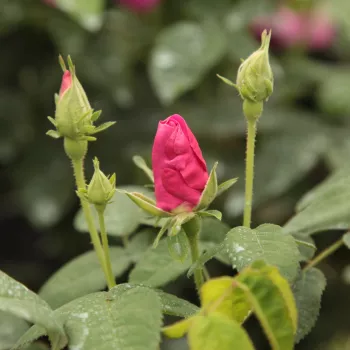
Bushy shrub rose reaching around 100–150 cm high with 80–130 cm spread; moderately thorny, dense grey-green matte foliage forming a full, structural presence in beds, hedges and specimen plantings. |
| Flower morphology |
Semi-double, cupped flowers in medium clusters, 4–7 cm across with roughly 13–25 petals; non-remontant once-flowering habit provides one concentrated early-summer display of old-fashioned blooms. |
| Colour data and phenology |
Deep carmine-red with slight purplish tinge; ARS code dp, RHS 53A outer and 53C inner; colour lightens a little in strong sun and may turn slightly purplish with age during a defined early-season flowering window. |
| Fragrance and aroma |
Very strong, garden-filling perfume with richly spicy sweet character typical of historic Gallicas; ideal where scent is a priority near doors, paths, seating areas or frequently used garden routes. |
| Hip characteristics |
Produces moderate quantities of 10–16 mm ovoid, orange-red hips in autumn; hips have ornamental value for seasonal interest and may offer food for birds in traditional or wildlife-friendly plantings. |
| Resistance and winter hardiness |
Hardy to approximately –34 to –32 °C (USDA 4a, RHS H7, Swedish zone 5); medium resistance to powdery mildew, black spot and rust; tolerates moderate drought but appreciates watering in extended dry spells. |
| Horticultural recommendations |
Suitable for flowerbeds, specimen use, hedging and urban green spaces; prefers sun or light shade with improved drainage on clay; spacing 90–170 cm depending on use, moderate maintenance and occasional plant protection. |
GALLICA 'Officinalis' offers powerful fragrance, rich early-summer colour and ornamental hips on a durable own-root shrub, making it a thoughtful choice for long-lived, characterful Irish gardens.