GÄRTNERFREUDE ® – raspberry-red groundcover rose - Kordes
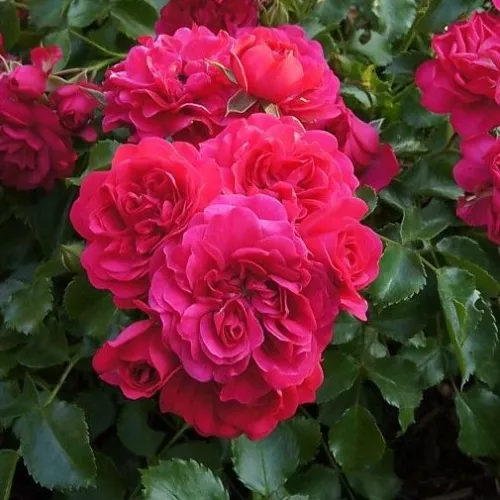
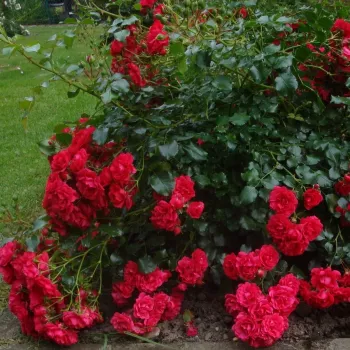
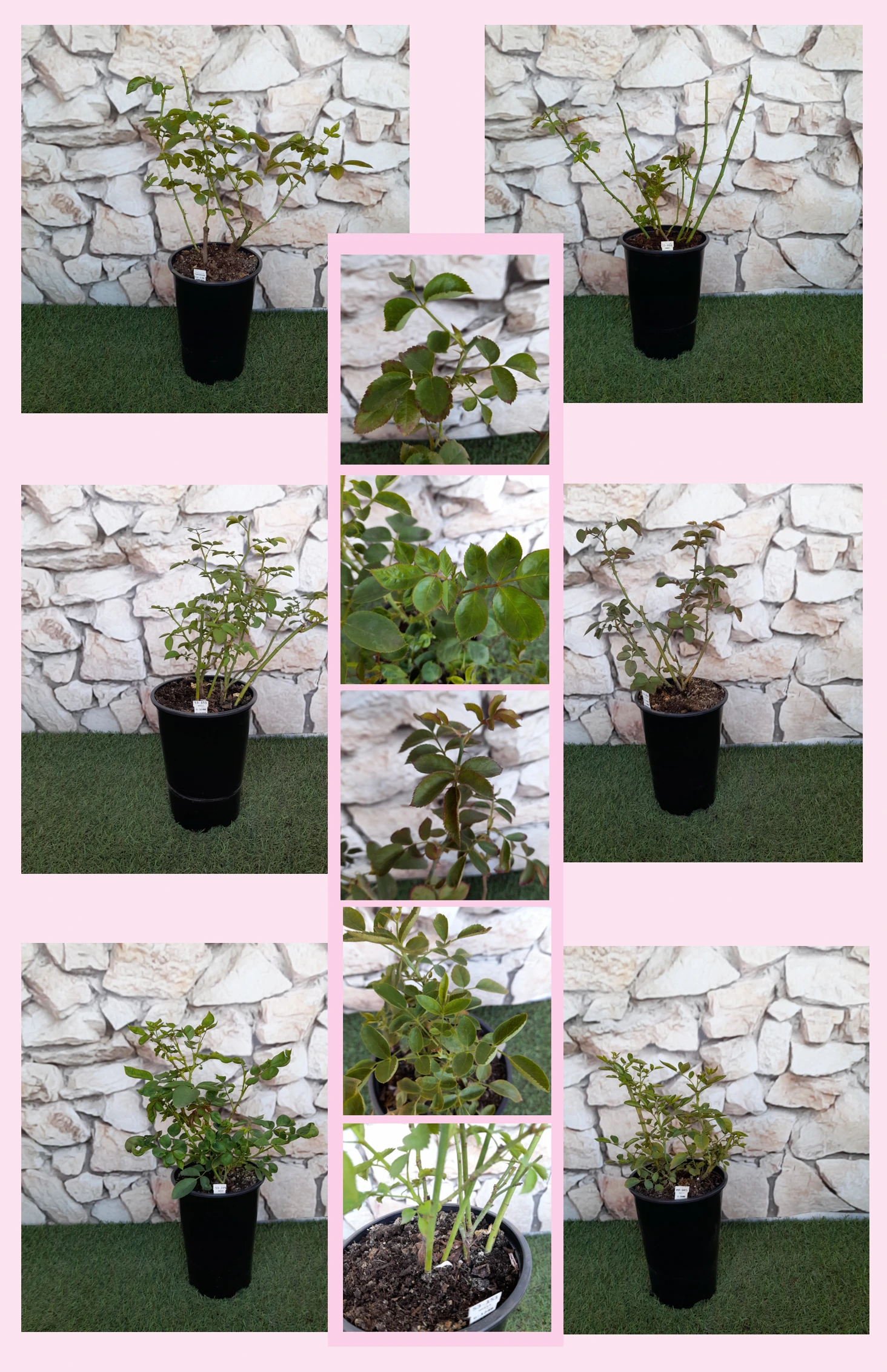
Imagine stepping outside after summer showers into soft, green light, where low mounds of glossy foliage hum with life and clusters of raspberry-red blooms create instant cheer. GÄRTNERFREUDE® is a spreading groundcover shrub rose bred for effortless ease, coping cheerfully with typical Irish rainfall and heavier soils when drainage is gently improved for long-term health. Its dense structure and strong disease resistance keep maintenance pleasantly light, so once planted you simply watch it thicken, repeating flushes from early summer into autumn. As an own-root plant it settles steadily, with roots in the first year, fuller shoots in the second, and near-complete ornamental value by the third, giving reassuring long-term security for relaxed gardeners.
Usage options
| Target area |
Reasoning |
| Front-of-border groundcover in small to medium family gardens |
This compact, spreading shrub (around 40–65 cm high) quickly knits together the front of mixed borders, hiding bare soil and reducing weeding. Dense, glossy foliage and self-cleaning flowers keep it smart with little effort, ideal for time-poor beginners. |
| Dublin terraced-house front garden edging |
Neat, low mounds and raspberry-red pompon blooms read beautifully from the pavement, giving a “girly” cottage feel without demanding intensive care. Excellent disease resistance helps it look fresh even in urban humidity, perfect for busy city-dwellers. |
| Slopes and banks that are awkward to maintain |
The spreading habit and close planting (around 3–4 plants per m²) create a living carpet that stabilises small banks and reduces the need for mowing. Once established, light pruning and basic mulching are generally enough for practical homeowners. |
| Family play-garden beds with low-maintenance planting |
Good hardiness and strong resistance to black spot, mildew and rust mean fewer sprays and less fuss around children and pets. Self-cleaning clusters drop spent blooms naturally, keeping beds tidy for relaxed, low-input families. |
| Containers and large pots on patios or small terraces |
In a 40–50 litre or larger container, its rounded form and repeat flowering create a long-season focal point by the front door or seating area. Regular watering and a yearly feed are usually enough, suiting practical, space-conscious apartment-owners. |
| Mass planting in urban or coastal-influenced beds |
Developed for tough, public-style plantings, it tolerates exposed, breezy sites and frequent rain, thriving where many roses struggle, notably in moist Atlantic air and blustery conditions typical of Irish gardens, which reassures cautious buyers. |
| Mixed cottage-style beds with perennials |
Its low height lets you weave it in front of taller perennials, giving a raspberry-red “skirt” that flowers repeatedly through the season. Long-lasting colour that barely fades in sun anchors soft, romantic schemes for creative cottage-garden enthusiasts. |
| Long-term, low-input structure in heavy-clay gardens |
Once roots are established in improved, well-drained planting holes, this own-root rose forms a durable framework that bounces back well if pruned hard or weather-damaged, building year-on-year presence for forward‑planning gardeners. |
Styling ideas
- Cottage-ribbon – Run a drift along a front path, underplanting with low catmint for a frothy blue edge and reliable, low-care summer colour – ideal for soft, romantic front gardens.
- Raspberry-swirl – Combine with Echinacea ‘Big Kahuna’ and airy grasses in a small bed for a cheerful, modern-cottage mix that flowers for months – perfect for busy urban homeowners.
- Terrace-cushion – Plant three in a 50-litre tub with trailing thyme around the rim to create a rounded, fragrant seat‑side feature – suited to compact patios and balconies.
- Bank-blanket – Repeat-plant across a sunny slope to form a low, colourful carpet that replaces mowing with light annual pruning – practical for family gardens with awkward grass banks.
- Glossy-hedgelet – Space plants at about 45 cm to make a low, curving line of glossy foliage and raspberry-red clusters – attractive for edging drives or parking bays in suburbs.
Technical cultivar profile
| Parameter |
Data |
| Name and registration |
Groundcover shrub rose, collection RigoRosen®. Registered as KORstesgli, marketed as GÄRTNERFREUDE® / Gärtnerfreude®, exhibition class groundcover shrub, commercial group Clúdach talún. |
| Origin and breeding |
Bred by Wilhelm Kordes III, W. Kordes’ Söhne, Germany. Parentage links ‘The Fairy’ and ‘Amanda’. Bred 1991, registered 1998, introduced 1999 via W. Kordes’ Söhne. |
| Awards and recognition |
ADR trial rose (2001). Gold medals at Baden‑Baden (1999) and Kortrijk (2001), silver at Kortrijk (1999). Gold Standard Award UK (2008) and Gerald Maylen Award for best groundcover. |
| Growth and structural characteristics |
Low, spreading habit, about 40–65 cm tall and 50–90 cm wide. Dense, dark green, glossy foliage, moderately thorny shoots. Forms a broad, ground-hugging shrub with good coverage. |
| Flower morphology |
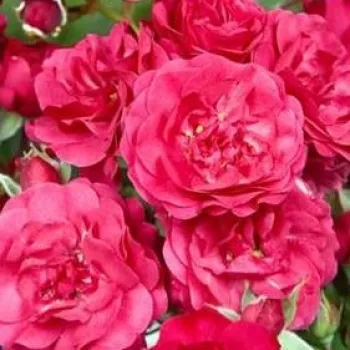
Small spherical pompon blooms, 1–4 cm across, very double with 40+ petals. Produced in generous clusters, self‑cleaning, repeatedly from early summer with an abundant second flush. |
| Colour data and phenology |
Raspberry‑red petals, ARS code DR, RHS 53A outer, 53B inner. Colour holds well in sun, fading slightly to rose‑pink as blooms age. Uniform overall effect with minimal bleaching in strong light. |
| Fragrance and aroma |
Fragrance is very weak and barely perceptible, so it is chosen mainly for colour, habit and reliability rather than scent. Primarily an ornamental groundcover rather than a perfumed feature rose. |
| Hip characteristics |
Small, spherical red hips about 4–7 mm may form, but double flowers generally reduce hip production, so overall fruiting display is light and usually not a main design feature. |
| Resistance and winter hardiness |
Hardy to around −26 to −23 °C (H7, USDA 5b, Swedish zone 4). Strong resistance to black spot, powdery mildew and rust. Good heat tolerance; water during extended dry periods. |
| Horticultural recommendations |
Suited to groundcover, mass planting, slopes, parks, containers and urban plantings. Prefers well‑drained soil; improve clay and mulch annually. Partial shade tolerant; follow suggested spacings for best cover. |
GÄRTNERFREUDE® gives low, colourful groundcover with strong disease resistance and long-season flowering, and as an own-root plant it offers durable, regenerative planting value you can choose with quiet confidence.