FRIESIA® – yellow bedding floribunda rose – Kordes
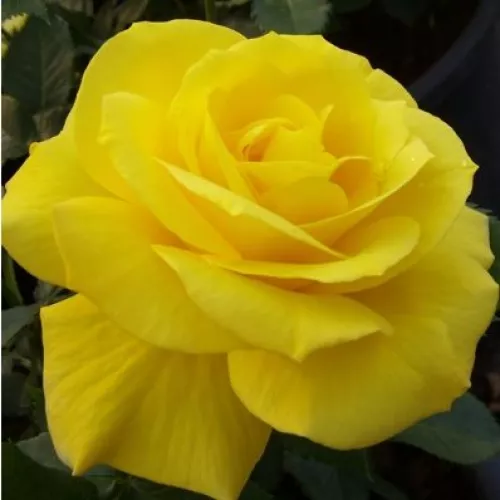
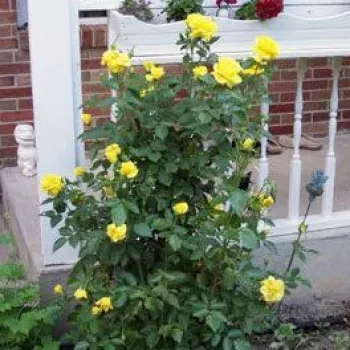
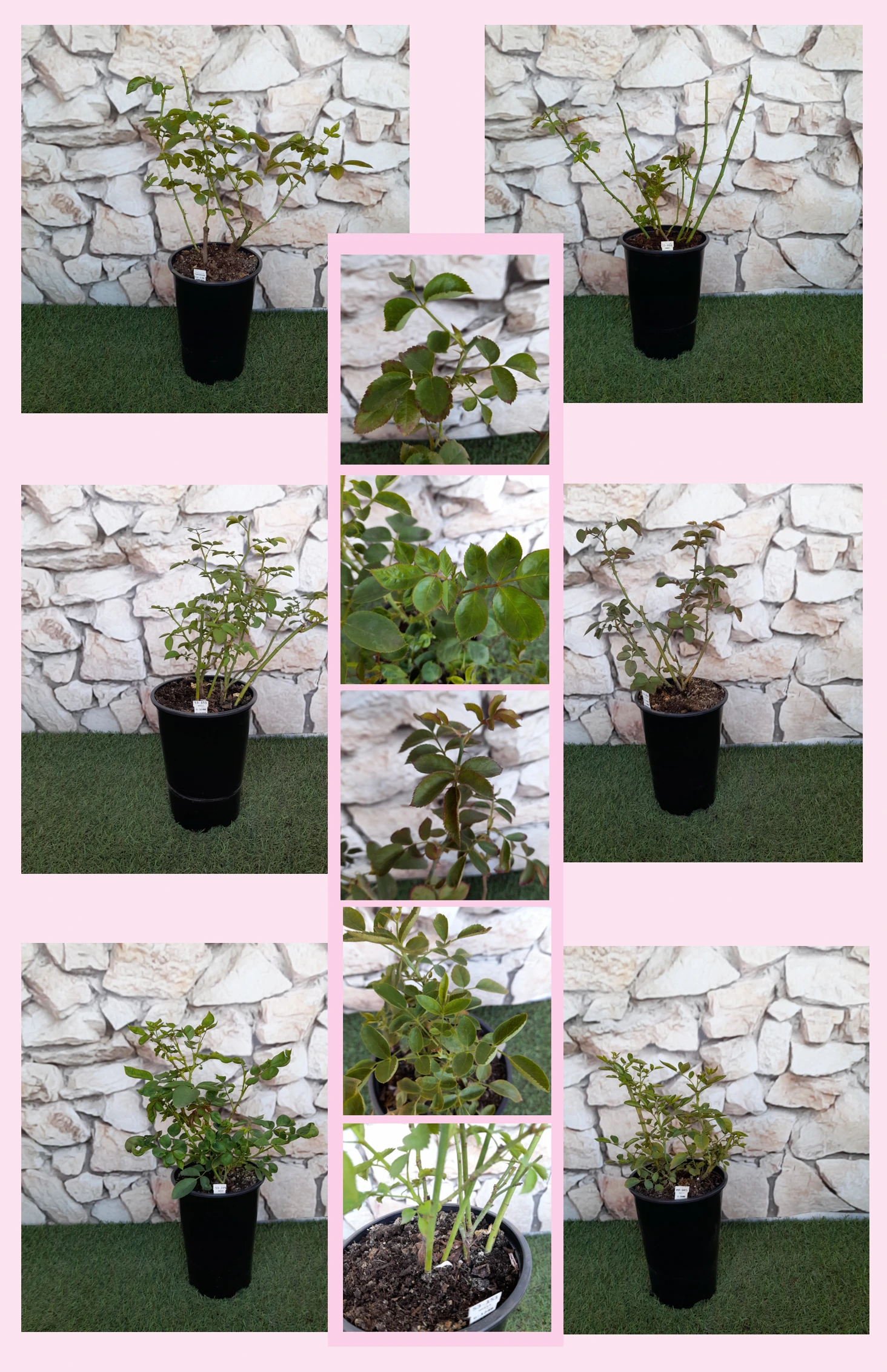
Step out to meet FRIESIA® and you are greeted by a low, sunny haze of rich lemon-yellow blooms and a strong, spicy fragrance that lifts your mood on even the dullest afternoon. This compact floribunda is bred to be genuinely easy to live with: it shrugs off common rose diseases, copes gracefully with our changeable showers and breezes, and settles well even where rainfall can leave heavier soils slow to drain. Dense dark foliage and a bushy habit make it naturally orderly in small Irish cottage plots or Dublin terrace front gardens, while its repeat flowering creates an almost continuous glow of colour through the season. As an own-root plant, it builds a deep, resilient framework that rewards you with a simple rhythm – strong roots in year one, fuller shoots in year two, and by year three a fully developed display of lasting beauty with reassuring long-term dependability in your family garden.
Usage options
| Target area |
Reasoning |
| Front garden bed beside the path |
The compact, upright, bushy habit and 60–85 cm height make FRIESIA® ideal along a front path, keeping a neat line of yellow blooms without overwhelming a small space; low maintenance and good disease resistance suit busy urban gardeners |
| Cottage-style mixed border |
Semi-double, 7–10 cm, cluster-flowered roses repeat well and pair beautifully with perennials like Agastache or Lychnis, giving a soft cottage feel that flowers for months with modest care for nature-loving beginners |
| Low flowering hedge |
Recommended spacing of about 35 cm for hedges creates a continuous, bushy ribbon of colour and fragrance; dense foliage and regular remontant flowering give a long season of structure and scent for family garden owners |
| Feature clump in a lawn or gravel |
Planted as a small group at 40 cm mass-plant spacing, FRIESIA® forms a bright “island” of uniform yellow with dark glossy leaves, acting as a cheerful focal point that is easy to look after for time-poor homeowners |
| Large container on patio or balcony |
In a 40–50 litre or larger container with good drainage, this upright floribunda offers strong fragrance and colour close to seating areas; own-root vigour and moderate height keep it long-lived yet manageable for apartment and patio gardeners |
| Family play-area border |
Resistant to mildew, black spot and rust, FRIESIA® stays healthy with little spraying, giving reliable flowers beside lawns or play spaces, while moderate prickliness and sturdy growth are practical around children and pets |
| Small rose and shrub combination bed |
With a spread of 50–70 cm and neat shape, it fits comfortably among compact shrubs such as cherry laurel, adding strong scent and colour that stands up well in our changeable wet, windy spells for low-fuss garden planners |
| Long-season display near seating |
Strong, sweet-spicy fragrance, very good colour retention and plentiful second flowering create a long, enjoyable season of scent and yellow blooms, supported by the own-root plant’s capacity to regenerate and age gracefully for fragrance-focused gardeners |
Styling ideas
- Cottage-Ribbon – edge a front path with FRIESIA® and soft blue Agastache to create a romantic, low, scented border – ideal for cottage-style enthusiasts
- Sunshine-Anchor – plant a trio in a small lawn island with gravel mulch so the yellow clusters act as a bright anchor point – perfect for small suburban plots
- Terrace-Jewel – grow one plant in a 50 litre terracotta pot near the door for easy-care fragrance and long-season impact – suited to busy city dwellers
- Girly-Mix – combine FRIESIA® with pink Lychnis and airy grasses for a playful, “girly” cottage mix that feels light yet reliable – appealing to creative first-time gardeners
- Fragrant-Hedge – set plants at 35 cm intervals along a short drive or boundary to form a low, perfumed hedge – great for families wanting easy structure
Technical cultivar profile
| Characteristic |
Data |
| Name and registration |
Floribunda bedding rose FRIESIA® (Rósra bhláthchlóis); registered as KORresia, also known as Sunsprite; exhibition floribunda suitable for both single- and multi-flowered stems in formal showing. |
| Origin and breeding |
Bred by Reimer Kordes at W. Kordes’ Söhne, Germany, from ‘Friedrich Wörlein’ × ‘Spanish Sun’; introduced and registered in 1973, combining strong colour with fragrance and garden resilience. |
| Awards and recognition |
Decorated with multiple international honours, including Baden-Baden Gold Medal, New Zealand Gold Star of the South Pacific, ARS James Alexander Gamble Fragrance Award, and RNRS Gold Medal and James Mason Memorial Medal. |
| Growth and structural characteristics |
Compact upright bush, typically 60–85 cm high and 50–70 cm wide, moderately thorny, with dense, dark green, glossy foliage providing good leaf coverage and a tidy, structured appearance in beds and borders. |
| Flower morphology |
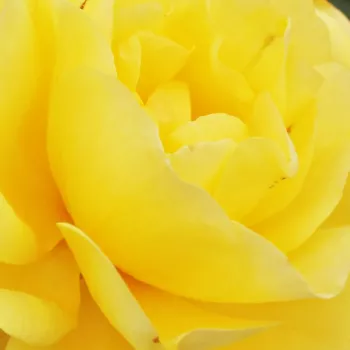
Semi-double, cup-shaped blooms with 13–25 petals, 7–10 cm across, borne in clusters; remontant habit provides a generous first flush followed by plentiful repeat flowering through the main season. |
| Colour data and phenology |
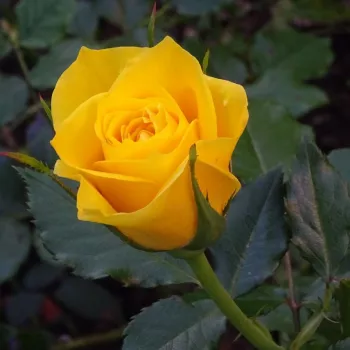
Bright, uniform sunny yellow flowers (RHS 11A/11B) with very good colour retention; only slight lightening to a softer lemon in strong sun, maintaining clear, unfaded tones from bud through full bloom. |
| Fragrance and aroma |
Strongly and richly scented, with a sweet, spicy character typical of classic yellow floribundas; fragrance is noticeable at a short distance, especially in still, humid evening air near seating areas or paths. |
| Hip characteristics |
Rose hip formation usually sparse because of semi-double flowers and regular deadheading; any hips produced are small, ellipsoid, around 8–12 mm, and bright vivid red, adding a discreet late-season accent. |
| Resistance and winter hardiness |
Rated resistant to powdery mildew, black spot and rust; hardy to around −21 to −18 °C (USDA 6b, RHS H7), with moderate heat and drought tolerance provided regular watering is given in prolonged dry spells. |
| Horticultural recommendations |
Best in full sun with well-drained but moisture-retentive soil; allow 35–65 cm spacing depending on hedge, bed or specimen use, and improve heavier clay with compost or grit to support healthy, durable root systems. |
FRIESIA® bedding rose KORresia offers strong fragrance, vivid long-lasting yellow clusters and disease-resistant, own-root reliability; an excellent choice if you seek enduring colour with minimal effort.