FOETIDA – yellow wild rose
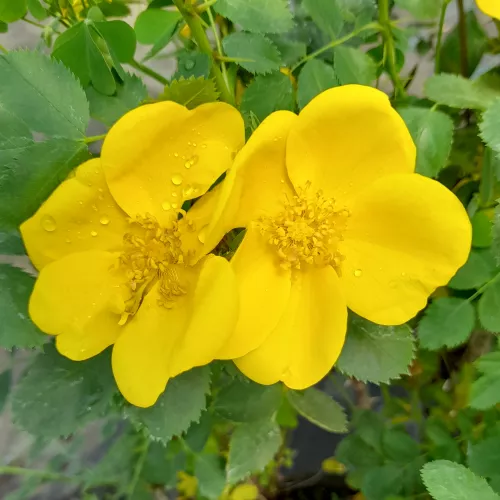
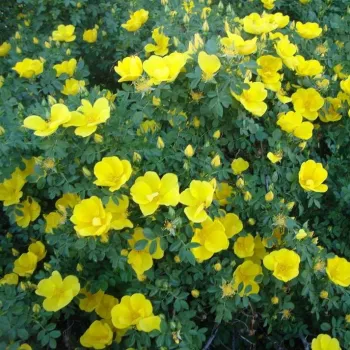
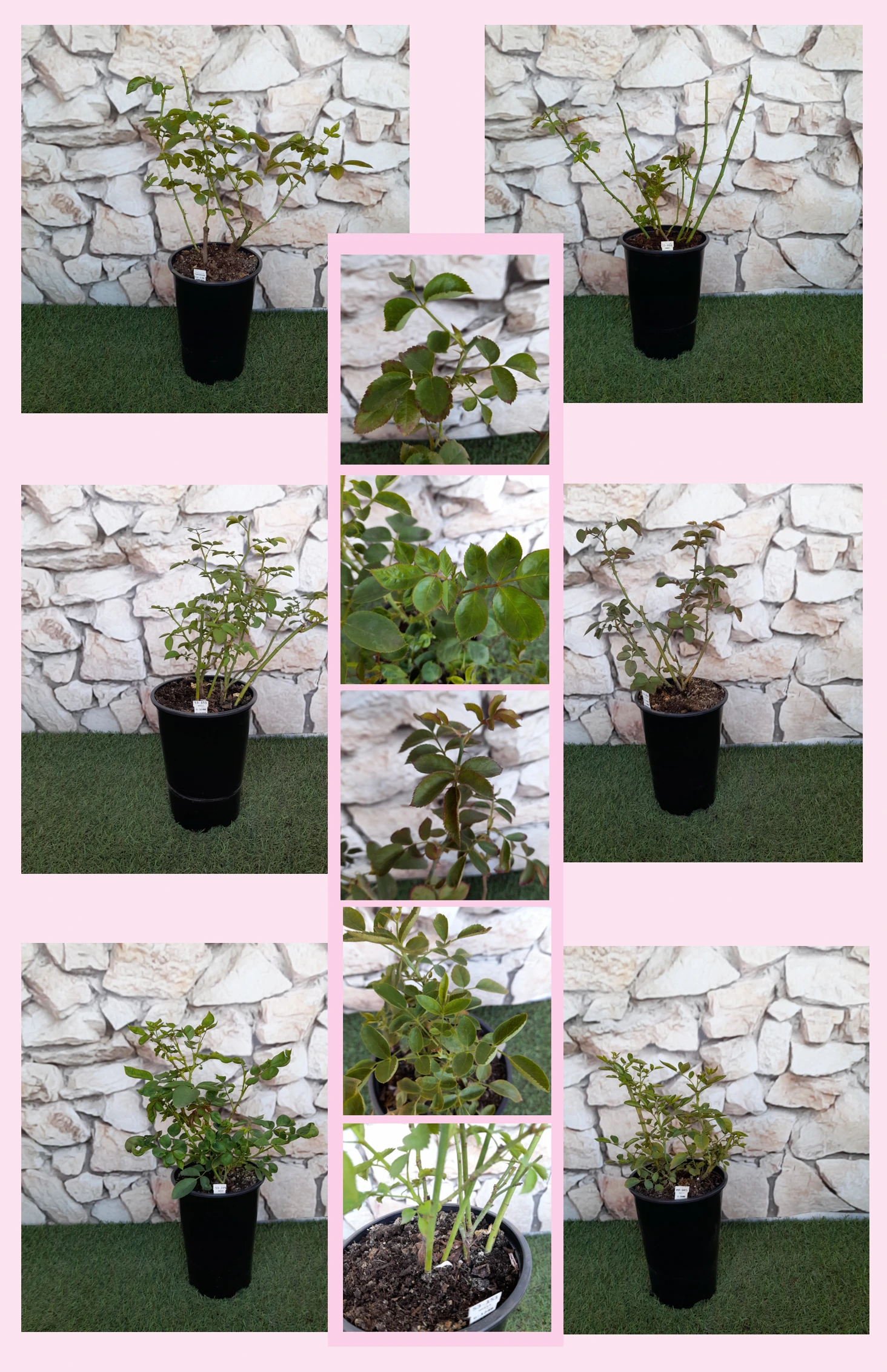
Step into a softer, greener light with FOETIDA, a historic wild rose bringing a mood of gentle contentment to Irish cottage-style spaces and compact front gardens. Its radiant, single flowers glow in deep yellow tones, then mellow gracefully, giving you weeks of evolving colour with almost no extra effort. This own-root shrub is naturally long-lived, building sturdy resilience for decades of reliable structure and charm. Once settled, it shrugs off wind and rain, coping well where gardens face cool breezes and frequent Atlantic showers. Strong disease resistance means little spraying or fuss, while its arching branches form a relaxed hedge or standout feature with very light pruning. In an easy rhythm of year 1 roots, year 2 shoots and year 3 full ornamental presence, it matures into a characterful classic that feels as if it has always belonged.
Usage options
| Target area | Reasoning |
|---|
| Cottage-style front garden focal point |
FOETIDA offers a richly coloured, once-a-year display that marks late spring or early summer with deep golden blooms, then steps back into a calm, dark green presence for the rest of the season, suiting beginners who prefer a predictable, seasonal highlight homeowners |
| Low-maintenance flowering hedge |
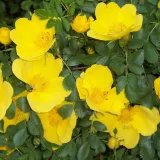
The erect, arching habit and 160–240 cm height make a loose, informal hedge with few gaps; good disease resistance and self-cleaning petals keep it tidy, while its wild character suits boundaries where you do not want constant clipping and shaping busy-gardeners |
| Long-lived structural shrub in family gardens |
As an own-root rose, FOETIDA thickens from the base over time, recovering well if cut back by weather or pruning; this gives stable ornamental value and a reassuring sense of permanence in an average-sized family garden with children and pets practical-buyers |
| Sunny park or landscape planting |
Heat and moderate drought tolerance, combined with H7 hardiness, make it reliable in exposed green spaces; once established, it keeps its shape with minimal attention, fitting public or shared areas where simple, robust planting is a priority community-projects |
| Irish cottage border with good drainage |
FOETIDA prefers sun and copes admirably where summers are short yet moist, provided its roots are not sitting in compacted clay; adding grit and organic mulch helps it stay healthy under frequent breezes and passing Atlantic rain fronts cottage-gardeners |
| Lightly scented seating-area backdrop |
Plant near a bench or path and its distinctly spicy, medium-strength fragrance drifts on the air during flowering, without being overpowering; the dark foliage then provides a calm green screen for the rest of the year around your sitting space fragrance-lovers |
| Mixed shrub border for seasonal interest |
With flowering concentrated into a single, memorable flush, FOETIDA pairs well with later-flowering perennials and shrubs, creating a layered year of interest; its arching habit helps knit mixed plantings together, keeping the border visually coherent design-minded |
| Bee-aware but primarily ornamental planting |
The single flowers allow some access for insects, though it remains only partially attractive to pollinators, so it suits gardeners who enjoy a nod to wildlife support but choose their roses mainly for colour, structure and ease of care nature-oriented |
Styling ideas
- CurbsideCharm – Line a short Dublin front garden path with FOETIDA and low fragrant sweet alyssum, letting the golden flowers and white froth soften brick and railings – ideal for urban homeowners.
- MeadowEdge – Use FOETIDA as a loose hedge at the edge of a lawn, underplanting with Verbena hastata ‘White Spires’ for vertical accents and airy movement – perfect for nature-oriented families.
- HeritageCorner – Create a small historical rose nook with FOETIDA as the main shrub, surrounded by weathered stone, terracotta pots and simple grasses for a timeless, low-maintenance feature – suited to beginners.
- SunnyScreen – Plant a staggered row of FOETIDA along a sunny boundary, allowing its arching growth to form a soft screen that needs only occasional shaping – good for busy-gardeners.
- PorchGlow – Place FOETIDA near a south-facing porch or sitting area, backing it with pale-painted walls so the golden flowers reflect warm light on overcast days – ideal for small-garden owners.
Technical cultivar profile
| Parameter | Data |
|---|
| Name and registration |
Wild botanical rose marketed as FOETIDA – yellow wild rose, trade name Rosa foetida Botanical rose; American Rose Society exhibition name Rosa foetida; part of the Rós luibheolaíoch collection. |
| Origin and breeding |
Wild species originating from the Caucasus–Iran region; breeding details unknown; first recorded in European cultivation in 1583 and later distributed by Exotic Nursery in the USA for garden use. |
| Growth and structural characteristics |
Erect, arching, bushy shrub reaching about 160–240 cm high and 120–190 cm wide; moderately thorny stems and medium-dense foliage in a dark green shade, giving robust structure in family gardens and landscapes. |
| Flower morphology |
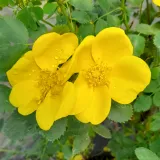
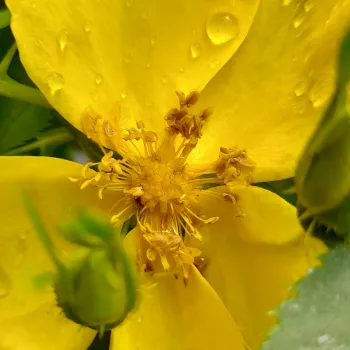
Single, flat flowers with 5–12 petals, typically 4–7 cm across, borne mostly as solitary blooms in a once-a-year flush; petals fall cleanly and are followed by occasional decorative hips where pollination succeeds. |
| Colour data and phenology |
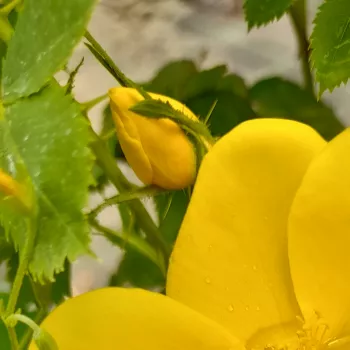
Deep golden-yellow buds open to lustrous, even yellow flowers, slightly darker at the centre; colour fades to straw yellow with a creamy undertone, faster in hot weather; classed RHS 14A outer, 13B inner, ARS yellow group. |
| Fragrance and aroma |
Medium-strength, distinctly spicy fragrance noticeable in still air, adding character around paths and seating areas; foliage also has a characteristic scent, contributing to the overall aromatic impression of the shrub in summer. |
| Hip characteristics |
Produces relatively few hips due to the flower form; when formed, hips are small, spherical, about 10–14 mm in diameter, turning red as they ripen and adding a modest touch of autumn interest to the shrub. |
| Resistance and winter hardiness |
Very hardy shrub, tolerating around −40 to −37 °C, equivalent to RHS H7 and USDA zone 3a; rated resistant to powdery mildew, black spot and rust, and able to handle summer heat with moderate drought tolerance once established. |
| Horticultural recommendations |
Best in full sun with well-drained soil; prefers open, airy sites and benefits from improved drainage on heavy clay; spacing around 90–165 cm depending on hedge or specimen use; pruning generally light, focusing on dead or crossing wood. |
FOETIDA – yellow wild rose offers a golden seasonal display, strong disease resistance and long-lived own-root reliability, making it a thoughtful choice if you value characterful colour with very little ongoing work.