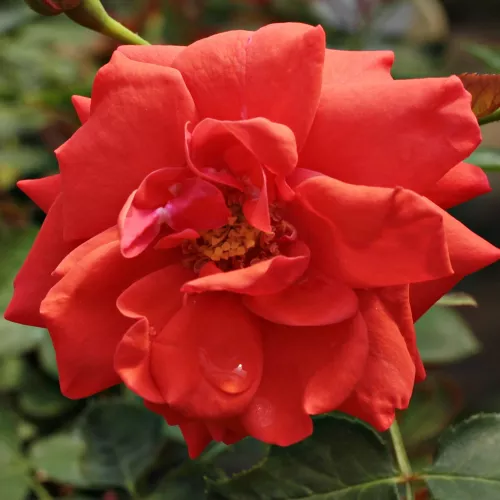
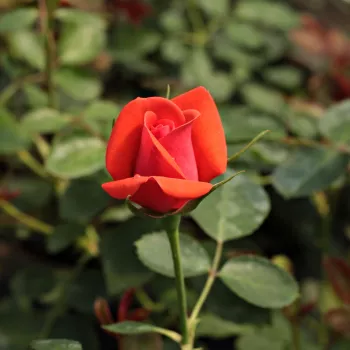
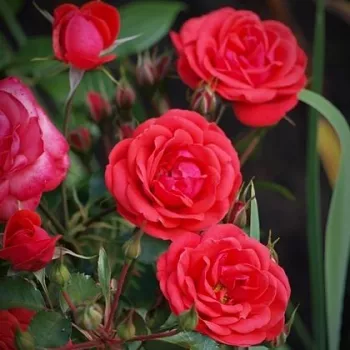
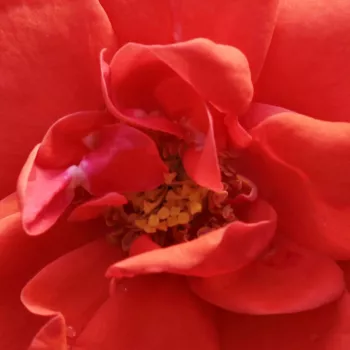
FLIRTING™ Palace® – red bedding floribunda rose on own roots
Step out to your front path after rain and meet the Flirting rose: a low, cushion-shaped floribunda that glows in soft, coral-red clusters and brings instant cottage-garden charm to even the smallest Dublin terrace or country plot. Its compact size and naturally rounded habit make it easy to tuck into narrow beds or edging strips, while repeat-flowering clusters keep the display going from early summer well into autumn, even when our bright spells are short. On its own roots, this sturdy plant builds up steadily for long-term longevity, regrowing reliably from the base if winter or pruning are a little enthusiastic. Give it reasonable drainage on heavy clay and you will enjoy year‑on‑year reliability with only modest care. In years one to three it deepens its root system and then fills out in a gentle arc, so you can look forward to increasingly generous colour and subtle, spicy fragrance with very little fuss.
Usage options
| Target area |
Reasoning |
| Front garden beds along a path or driveway |
Its compact 40–50 cm height and 55–65 cm spread create a neat, low border that won’t overwhelm narrow front gardens, yet still offers plenty of flowers for kerb appeal and easy everyday enjoyment for the busy homeowner. |
| Informal cottage-style flower beds |
Clusters of double, coral-red to peachy blooms bring a playful, “girly” note that blends naturally with perennials and grasses, while the steady repeat-flowering provides a relaxed, traditional look without complex maintenance for the cottage-garden enthusiast. |
| Small mixed rose and perennial borders |
The low, spreading cushion habit works well at the front of mixed borders, weaving between perennials without leaving gaps; its own-root form helps it thicken up year after year for the space-conscious gardener. |
| Low flowering hedge along a boundary or path |
Recommended spacings of 35–40 cm allow you to create a continuous, low hedge of colour; moderate care needs and reliable performance suit those wanting structure and flowers without constant fuss for the practical planner. |
| Sunny, sheltered city gardens and terraces |
Preferring a sunny position with regular watering in dry spells, it copes well with exposed yet enclosed urban plots, giving generous colour in changeable weather and fitting easily into compact outdoor rooms for the urban resident. |
| Large containers and statement pots (40–50 L+) |
In a generously sized, well-drained container, its rounded form and glossy dark foliage create a tidy, long-lived feature by a doorway or seating area, with own-root resilience offering good value over time for the balcony and patio owner. |
| Family gardens with children and pets |
Moderate prickliness and a low, spreading shape make it easier to position away from play routes, while dense foliage and continuous flowering bring colour that families can enjoy with straightforward seasonal care for the safety-conscious parent. |
| Clay-based gardens needing reliable structure and colour |
When planted into improved, free-draining pockets on heavier soils, this hardy floribunda provides a stable, cushion-like framework that keeps its shape and colour across seasons even where summers are cool and damp for the Irish climate gardener. |
Styling ideas
- Cottage-Edge Glow – Line a path with Flirting and interplant with lavender and low grasses for a soft, romantic edge – ideal for lovers of relaxed cottage style.
- Terrace Welcome – Grow one or two plants in 50 L terracotta pots by the front door, underplanted with trailing thyme – perfect for city dwellers wanting instant charm.
- Peach-and-Gold Drift – Combine with Rudbeckia and pale grasses so its coral-peach flowers float through warm golds – suited to gardeners who enjoy mellow, late-summer colour.
- Red Ribbon Hedge – Plant a low ribbon of Flirting along a drive and back it with taller shrubs for privacy – great for families needing structure and colour together.
- Perennial Patchwork – Weave plants through Echinacea and airy Bupleurum for a light, tapestry-like bed – attractive to hobby gardeners who like subtle, evolving borders.
Technical cultivar profile
| Parameter |
Data |
| Name and registration |
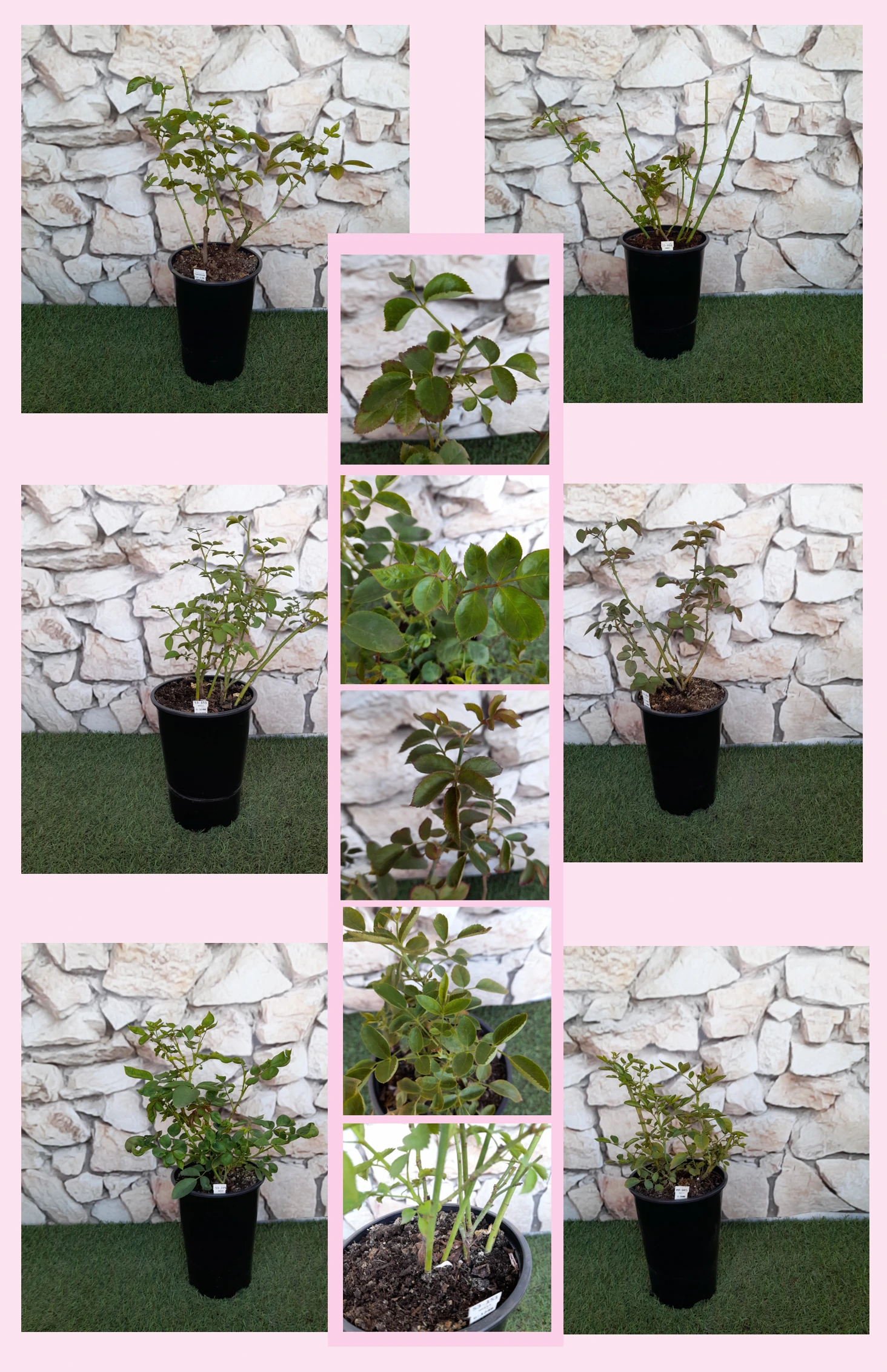
Floribunda flowerbed shrub rose, registered as POUlac011, marketed as Flirting™ Palace®; consumer garden rose supplied here as own-root, 2-litre container-grown plant. |
| Origin and breeding |
Bred by L. Pernille and Mogens Nyegaard Olesen (Poulsen Roser A/S, Denmark), breeding year 1992, introduced 2003; parentage undisclosed by the breeder. |
| Growth and structural characteristics |
Low, spreading, cushion-like bush to about 40–50 cm high and 55–65 cm wide, with dense, glossy dark green foliage and moderate thorns, forming a compact, rounded outline. |
| Flower morphology |
Medium-sized, 4–7 cm, double, cup-shaped blooms with 26–39 petals in large clusters; repeat-flowering, with a particularly abundant second flush in suitable conditions. |
| Colour data and phenology |
Initially orange-red buds (RHS 30A, 29A), opening coral-red and fading through orange-pink to soft peach, with a persistent yellowish centre halo; overall impression bright red with a warm undertone. |
| Fragrance and aroma |
Subtle, mildly spicy fragrance with a piquant character; sufficient to notice on close inspection, especially in still, humid air, but not overpowering in small or enclosed gardens. |
| Hip characteristics |
Occasional spherical hips, 10–14 mm diameter, orange-red (RHS 40A); generally incidental to garden display and easily removed during routine deadheading if not desired. |
| Resistance and winter hardiness |
Rated to approximately −26 to −23 °C (USDA 5b, RHS H7), with moderate resistance to black spot, mildew and rust; performs best with basic preventive care in very humid seasons. |
| Horticultural recommendations |
Best in sunny sites with regular watering during drought; plant 35–65 cm apart, improving drainage on heavy clay, and provide normal fungicidal protection in persistently wet, disease-prone areas. |
FLIRTING™ Palace® offers compact cushion growth, generous repeat flowering and steady own-root resilience for long-term enjoyment; a thoughtful choice if you’d like an easy, colourful bedding rose.