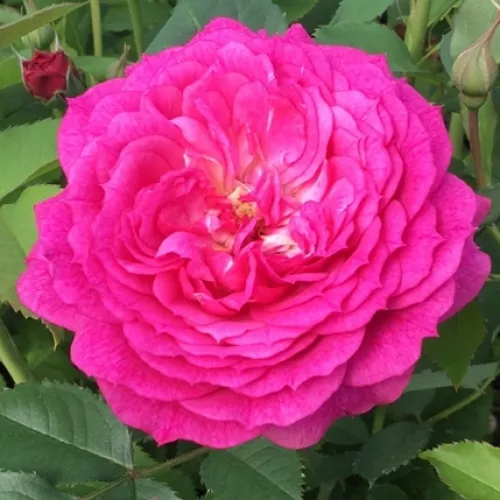
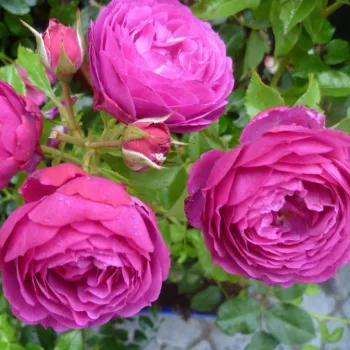
EUFEMIA – purple bedding floribunda rose – VISyodoc
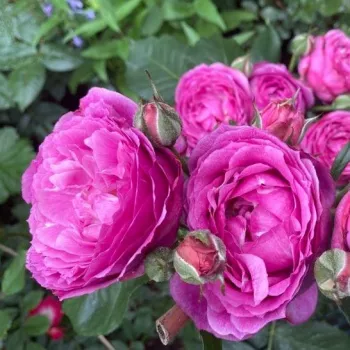
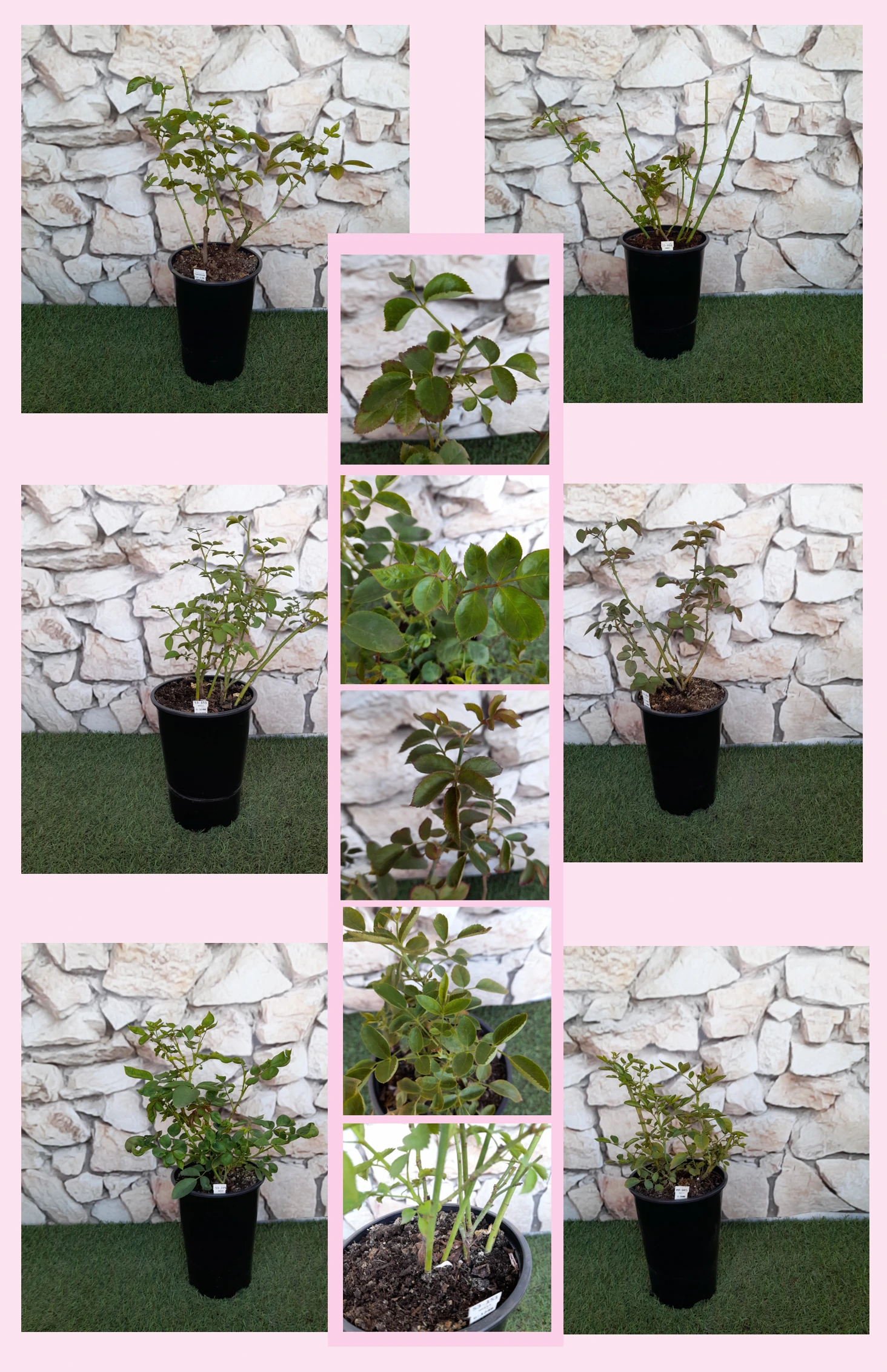
If you dream of a small, romantic space filled with soft mauve-violet petals, EUFEMIA is a compact floribunda that settles beautifully into Irish cottage borders and Dublin terraces, even where rainfall is frequent and summers feel brief. Its fragrance is rich and classic, often noticeable as you simply pass by the front path, while clusters of flowers appear in flushes from early summer well into autumn. Grown on its own roots, this rose establishes steadily and can regenerate after setbacks, giving you a reliable, long-lived shrub with stable shape and colour. Think of it as: Year 1 focused on roots, Year 2 building stronger shoots, and by Year 3 delivering its full ornamental value in your everyday garden view.
Usage options
| Target area |
Reasoning |
| Front-of-border in a small Irish cottage garden |
Compact, bushy growth to about 60–90 cm keeps EUFEMIA neatly in view without overwhelming narrow beds, while repeat-flowering clusters build a soft, romantic focal point for cottage-style schemes, perfect for fragrance-loving beginners. |
| Dublin terraced-house front garden, near paths or doorways |
The very strong, classic rose scent is noticeable even from a short distance, so placing EUFEMIA close to paths or steps turns quick comings-and-goings into scented moments, ideal for busy urban homeowners who enjoy gentle sensory impact. |
| Mixed flowerbed with perennials |
Medium-height, floriferous shrubs fit easily among perennials like common yarrow or tall larkspur, while the mauve-purple blooms provide contrast across the long flowering season, suiting hobby gardeners who want reliable colour with modest effort. |
| Feature plant in a small lawn island bed |
A single, well-shaped, bushy plant with richly shaded purple blooms offers strong ornamental presence from several angles, making a compact lawn island feel finished and intentional, attractive for homeowners seeking one clear focal rose. |
| Low informal flowering hedge |
Planted 35 cm apart, EUFEMIA forms a low, colourful line that softens boundaries and hard edges, with repeat flushes helping to mask short summers with steady colour, suiting families wanting structure without high-maintenance clipping. |
| Own-root, long-term garden investment |
Being on its own roots, EUFEMIA can live and flower for many years, regrowing true to type if stems are cut back hard or damaged, offering stable ornamental value for gardeners who prefer planting once and enjoying for the long term. |
| Containers and large patio pots |
Its compact, bushy habit and medium height make EUFEMIA suitable for generous containers of at least 40–50 litres, where good drainage supports its heat and moderate drought tolerance, well suited to balcony or patio gardeners with limited soil. |
| Family garden beds in wetter, windy areas |
Once established, EUFEMIA copes well with typical Irish conditions of regular rain and cooler summers, giving dependable flowering with only medium maintenance needs, appealing to time-pressed householders who value resilient, unfussy shrubs. |
Styling ideas
- Cottage-Romantic – weave EUFEMIA through low box, lady’s mantle and catmint for a mauve, frothy front-of-border look – ideal for nostalgic gardeners who love soft colour and scent.
- City-Rail – line a short terrace front with EUFEMIA and evergreen grasses to soften railings – perfect for urban owners wanting tidy structure with seasonal purple blooms.
- Evening-Patio – place EUFEMIA in a 50-litre terracotta pot with white lobelia to enjoy its fragrance on summer evenings – great for those who relax outdoors after work.
- Perennial-Mix – combine EUFEMIA with yarrow, St John’s-wort and tall larkspur for layered height and continuous colour – suited to hobby gardeners building a wildlife-friendly, naturalistic bed.
- Low-Hedge – repeat EUFEMIA along a path edge, underplanting with hardy geraniums to blur the base – a good choice for families wanting gentle boundaries without formal hedging.
Technical cultivar profile
| Parameter |
Data |
| Name and registration |
Floribunda bedding rose, registered as VISyodoc, traded as EUFEMIA Bedding rose VISyodoc, a shrub rose suitable for flowerbeds and exhibition floribunda classes, premium silver merit rating. |
| Origin and breeding |
Bred by Martin Vissers, Viva International BVBA, from Wild Blue Yonder × (International Herald Tribune × Marie-Louise Velge); introduced 2020 in Australia following 2016 registration in the Netherlands. |
| Growth and structural characteristics |
Compact, bushy, low floribunda shrub around 60–90 cm high and 40–60 cm wide, with dense, slightly glossy dark green foliage and moderate prickliness, forming a rounded, balanced outline in beds and borders. |
| Flower morphology |
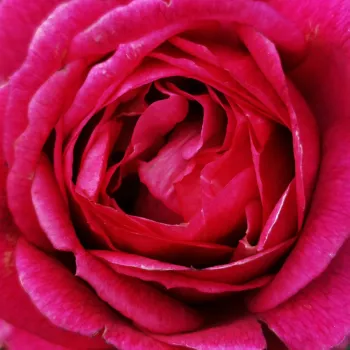
Very double, cup-shaped blooms with over 40 petals, medium-sized at 4–7 cm, borne in clusters of 3–5 per stem, repeating well with an abundant second flush under normal garden conditions. |
| Colour data and phenology |
Deep purple-violet to crimson-purple shades, ARS mau, RHS 77A outer and 71A inner; buds dark purplish crimson, fading gradually to mauve-lilac with paler petal edges as blooms age and approach drop. |
| Fragrance and aroma |
Classic rose fragrance, very strong and noticeable from a distance in still air; best appreciated near paths or seating areas where the scent can be enjoyed in passing during warm, dry periods. |
| Hip characteristics |
Rose hips form only occasionally because of the very double flowers; when present, they are bright red, spherical, about 6–10 mm across, offering small decorative accents in late season. |
| Resistance and winter hardiness |
Rated medium for resistance to powdery mildew, black spot and rust; tolerates heat and moderate drought well, and is hardy around -21 to -18 °C (RHS H7, roughly USDA Zone 6b, Swedish Zone 3). |
| Horticultural recommendations |
Best in a sunny site with well-drained soil; medium maintenance, with occasional plant protection as needed; spacing 45 cm in beds, 35 cm for hedges, 75 cm solitary, around 5 plants per square metre. |
EUFEMIA Bedding rose VISyodoc offers compact, long-season purple flowering, strong fragrance and the regenerative reliability of an own-root plant, making it a thoughtful choice if you want lasting colour with modest care.