ERNYE – pink bedding floribunda rose – Márk
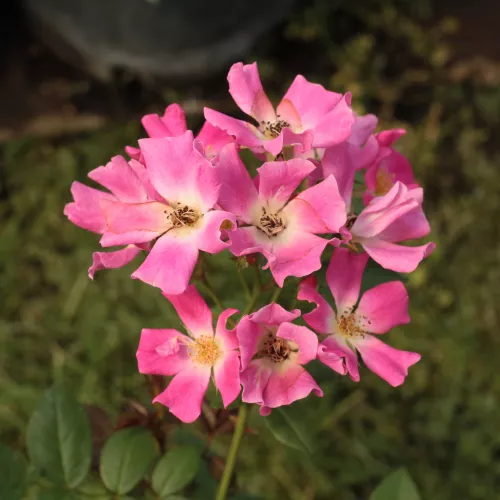
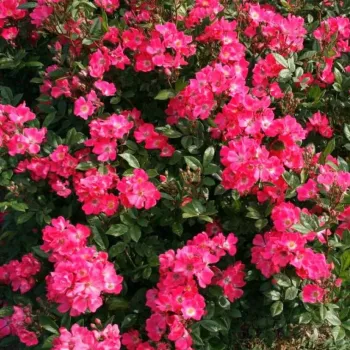
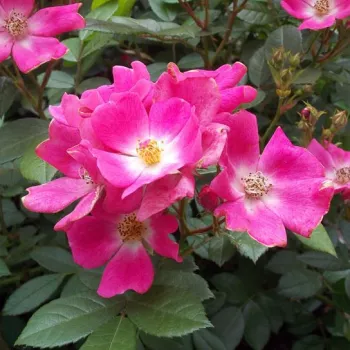
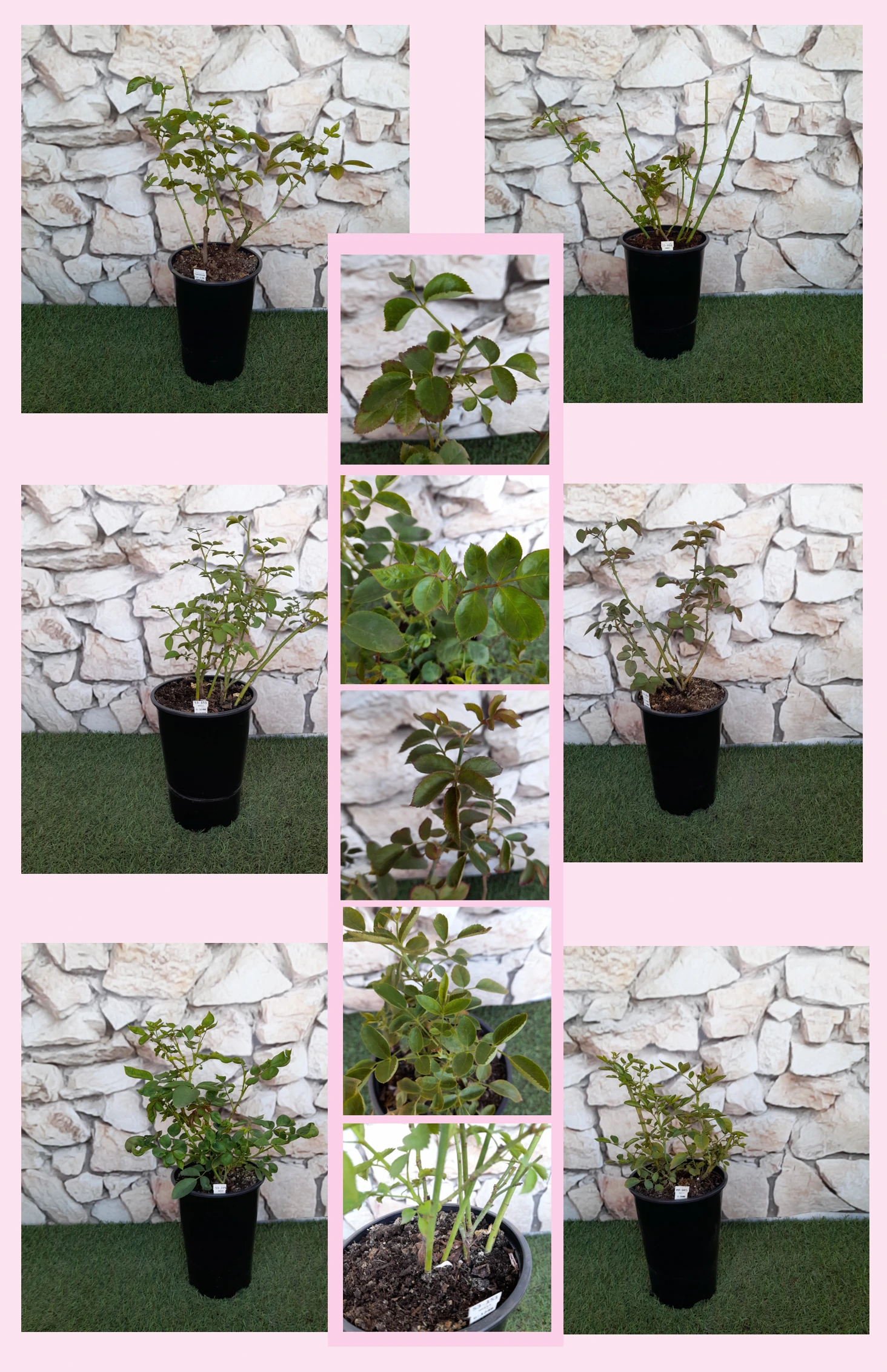
Bring an easy-going cheerfulness to your garden with ERNYE, a compact floribunda rose that thrives in Irish light, even when days are softened by rainfall and cloud. Its single, open pink blooms invite bees and other pollinators, adding gentle movement and life to cottage-style beds and terraced-house fronts. Low, spreading growth makes it ideal for neat edging or relaxed drifts of colour along a path, with bright petals that fade softly to pastel as they age. In its own-root container form, this young plant settles reliably, building roots in year one, fuller shoots in year two, and a pleasing, settled display by year three. Drought and frost tolerance help it cope with real-life garden conditions, while its long-season, remontant flowering keeps borders lively well into autumn. A naturally compact habit means there is little shaping to worry about, leaving more time simply to enjoy that gentle, green, soft-light mood outside your door.
Usage options
| Target area | Reasoning |
|---|
| Front-of-border bedding in family gardens |
ERNYE’s low, spreading habit creates a soft pink carpet that stays neat without complicated pruning, ideal for framing lawns and play spaces while keeping sightlines open for safety and supervision, suiting the needs of the practical beginner. |
| Informal cottage-style beds in Irish cottage gardens |
The remontant flowering brings repeated flushes of bright pink from early summer into autumn, echoing traditional cottage borders with a modern, easy-care twist that fits around busy weeks, particularly attractive for the time-poor homeowner. |
| Dublin terraced-house front gardens and railings |
Compact size and tidy spread make ERNYE perfect for narrow beds along railings or low walls, giving cheerful street-facing colour without overhanging pavements, a thoughtful solution for small-space urbanites. |
| Pollinator-friendly planting schemes |
Single blooms with open centres offer readily accessible pollen, helping bees and other beneficial insects while adding movement and life to small gardens, making it a satisfying choice for nature-oriented gardeners. |
| Mixed borders on heavier Irish soils |
This rose responds well where improved drainage is provided, coping with typical heavier garden soils and breezier, damp conditions near the coast, where it manages wet spells between sunny breaks, reassuring for coastal-edge residents. |
| Medium to large containers (40–50 litres+) |
Own-root plants settle steadily in generous containers, building a long-lived framework that can be refreshed with top-dressing rather than frequent replacement, ideal for patios and doorsteps favoured by low-fuss balcony-owners. |
| Low hedging and path edging |
Recommended spacings allow you to create a continuous ribbon of colour that gently defines paths or separates lawn from borders, offering structure without feeling formal, which appeals to relaxed-family-garden planners. |
| Resilient, long-term planting schemes |
Drought and frost tolerance, combined with own-root vigour, support a long lifespan and easier recovery after pruning or rough weather, making ERNYE a sound investment for sustainable, low-intervention garden-keepers. |
Styling ideas
- Cottage-Ribbon – Plant ERNYE in a soft, winding line with foxgloves and hardy geraniums to edge a lawn, perfect for romantic, low-maintenance cottage borders – for time-pressed homeowners
- Pink-Pathway – Use close spacing along a front path, underplanting with lamb’s ear to highlight the simple flowers and invite bees – for urban families who love a welcoming entrance
- Container-Charm – Grow one or three plants in a 40–50 litre pot with trailing thyme for a scented, easy-care doorstep display – for balcony and patio gardeners
- Pastel-Mix – Combine ERNYE with pale coneflowers and airy grasses for a soft, pastel drift that looks good through summer and into autumn – for relaxed, nature-focused planters
- Play-Safe-Edge – Line play-lawn edges with ERNYE, keeping height low but colourful while avoiding thorny giants near children – for family gardens needing gentle structure
Technical cultivar profile
| Property | Data |
|---|
| Name and registration |
ERNYE is a bedding floribunda rose from the Rósra bhláthchlóis group, marketed as a compact shrub for massed bedding, edging and containers in private gardens. |
| Origin and breeding |
Bred in Hungary in 1988 by Márk Gergely from the cross ‘Zsófi’ × ‘Minililla’, introduced through PharmaRosa® Ltd. and now offered as an own-root garden rose. |
| Growth and structural characteristics |
Low, spreading shrub reaching about 40–50 cm in height and 50–70 cm in spread, with moderately dense, slightly glossy medium green foliage and a moderately thorny framework. |
| Flower morphology |
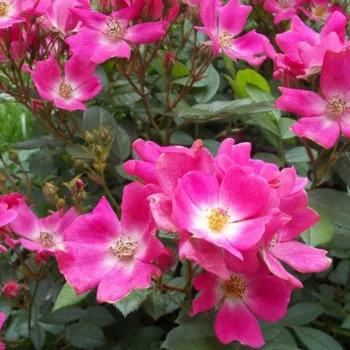
Single, cup-shaped to flat-opening blooms, 1–4 cm across, borne in large clusters, with approximately 5–12 petals and abundant remontant flowering in successive waves. |
| Colour data and phenology |
Pure, saturated light pink flowers (RHS 68B–68C) with a slightly warm tone; colour gradually softens to pastel as blooms age, giving multi-toned clusters over the season. |
| Fragrance and aroma |
No noticeable fragrance; selected primarily for garden colour, flower form and repeat performance rather than scent, allowing focus on visual impact and pollinator access. |
| Hip characteristics |
Moderate production of small, spherical orange-red hips, around 5–8 mm in diameter, adding a light decorative touch in late season without dominating the plant. |
| Resistance and winter hardiness |
Hardy to approximately -21 to -18 °C (H7, USDA 6b) with moderate resistance to black spot, mildew and rust, and good tolerance of heat and drier spells in summer. |
| Horticultural recommendations |
Best in sunny sites with improved drainage; spacing 35–65 cm depending on use, suited to beds, borders and 40–50 litre containers, with occasional plant protection as needed. |
ERNYE offers long-season pink flowering, a compact habit and reliable pollinator appeal in a durable own-root form, making it a thoughtful choice for relaxed, enduring Irish family gardens.