EDDIE'S JEWEL – red wild rose - Eddie
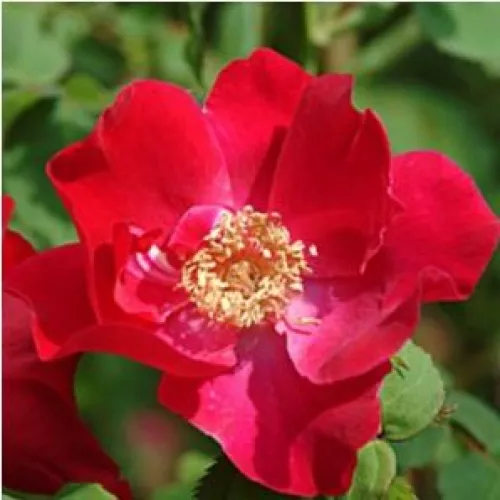
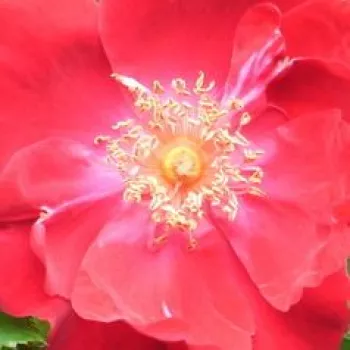
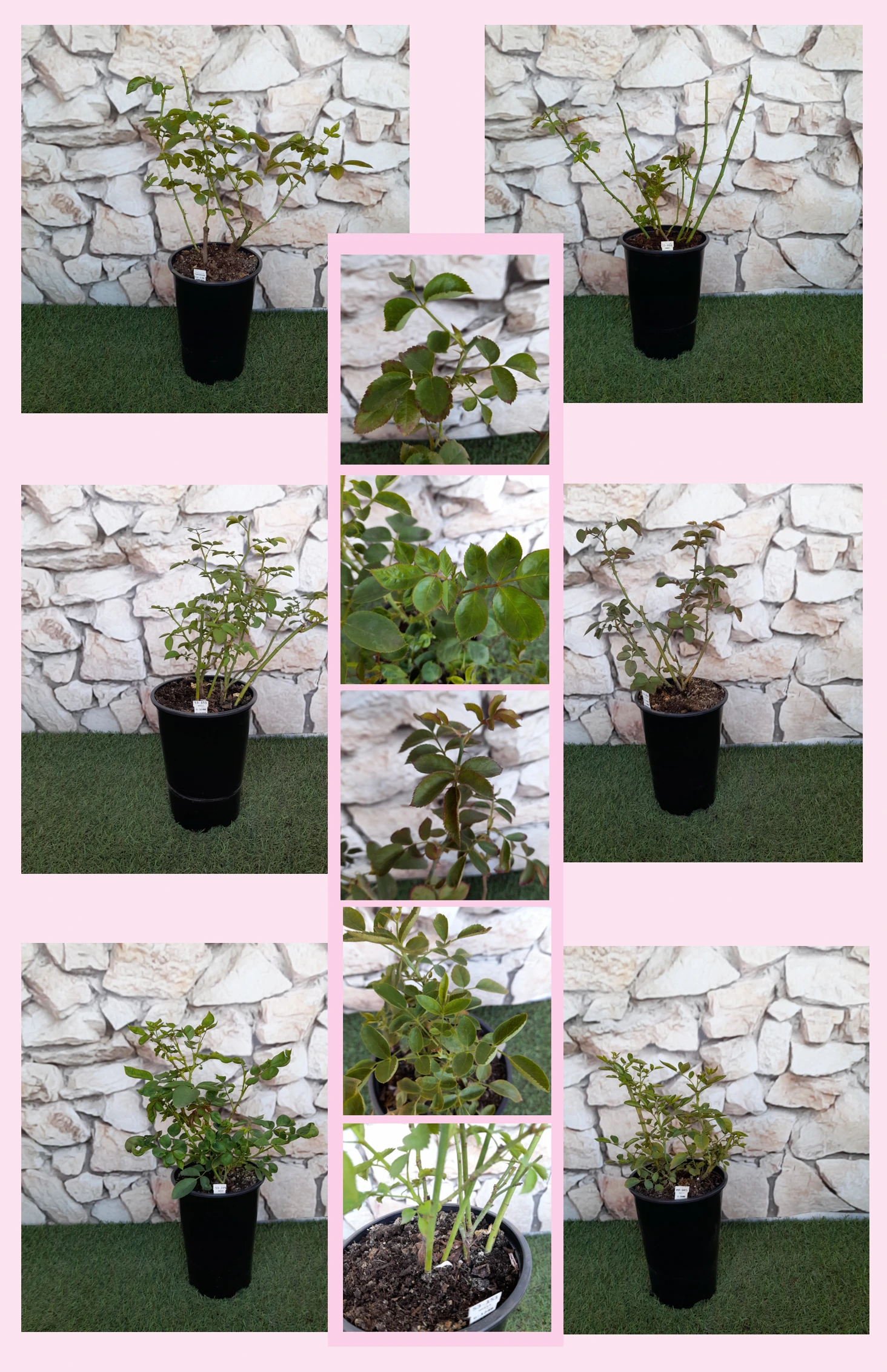
If You would like a rose that feels like a gentle, drizzly walk in a green Irish lane, Eddie’s Jewel offers natural-looking hedges, cheerful colour and barely any thorns to worry about. Its tall, upright shape and airy, matt foliage give an easy, cottage-garden character that suits both Dublin terraces and rural borders, while the single ruby-red flowers invite bees and hoverflies to feast. After flowering, the plant is covered in vivid red, bottle-shaped hips that glow through autumn and into winter, adding structure when other plants fade, and coping steadily with wet, breezy Irish weather and heavier garden soils if You provide decent drainage. As an own-root shrub it settles in for the long term, building roots in year one, strong shoots in year two and a full, rewarding display by year three for relaxed, low-fuss garden enjoyment.
Usage options
| Target area | Reasoning |
|---|
| Untrimmed wildlife hedge |
Once-flowering, single blooms followed by masses of bright red hips give a natural hedge line that feeds birds and shelters wildlife with minimal clipping, ideal for those who prefer soft, seasonal structure and nature-friendly gardening for the family. |
| Pollinator strip in a front garden |
The open, single flowers provide easy pollen access for bees and other beneficial insects, creating a lively, buzzing strip along a path or low fence and pairing beautifully with cottage perennials, suiting nature-oriented beginners in the city. |
| Statement shrub in a small lawn |
Its tall, upright form and moderately dense foliage make a strong focal point without demanding complex pruning; it stands well on its own and keeps its shape, appealing to homeowners who want impact from a single, reliable shrub for the long-term. |
| Irish cottage-style mixed border |
The wild rose character and shifting red tones blend easily with traditional perennials and grasses, creating a relaxed, romantic look that echoes old Irish cottage gardens yet remains easy to maintain for busy but style-conscious gardeners. |
| Low-maintenance urban green strip |
Moderate disease resistance, tolerance of partial shade and a strong framework suit narrow planting beds in towns where conditions are less than perfect, especially where wet, breezy spells and heavier soils are common near Irish streets for local residents. |
| Seasonal colour-and-hip display |
From deep ruby buds to flame-red flowers and then vivid red hips, the shrub offers a long visual story even though it blooms once, giving reliable seasonal punctuation with very little intervention for relaxed, time-poor garden owners. |
| Naturalistic boundary in family gardens |
The tall, upright habit and relatively sparse prickles create a friendly boundary that is easier to live with than thorny hedges, good for marking play areas or garden edges without feeling harsh, suiting families who value gently structured spaces. |
| Large country or community planting |
Suited to wide spacings for hedges or mass plantings, it builds a durable shrub framework whose own-root nature supports recovery and longevity, steady even in breezy, rain-washed Irish conditions with heavier soils, ideal for shared or low-budget projects. |
Styling ideas
- Cottage-Hedge Charm – run a loose hedge along a front boundary, interplanting with baby’s-breath and low euonymus for soft texture – ideal for families wanting a friendly, informal welcome.
- Wildlife Focus – mix with native shrubs and grasses to create a wildlife corner where hips feed birds and flowers draw bees – perfect for nature-focused households and school gardens.
- Ruby Accent – use a single shrub as a lawn focal point, underplant with spring bulbs and summer lobelia to highlight its red tones – suited to small urban gardens seeking simple drama.
- Country-Border Frame – place at the back of a mixed border, letting its height and hip display frame perennials like foxgloves and hardy geraniums – great for cottage-style enthusiasts.
- Shared-Space Screen – plant in staggered rows in community or estate gardens for a soft, semi-transparent screen that needs little shaping – ideal for residents’ groups and housing associations.
Technical cultivar profile
| Property | Data |
|---|
| Name and registration |
Eddie's Jewel is a park-shrub wild rose from the Rósra páirce - toir group, marketed as a shrub rose under the trade name Eddie's Jewel – red wild rose - Eddie. |
| Origin and breeding |
Bred by J. H. Eddie in Canada from 'Donald Prior' × Rosa moyesii hybrid, introduced and registered in 1962, representing a carefully selected Hybrid Moyesii shrub rose lineage. |
| Growth and structural characteristics |
Tall, upright shrub reaching about 210–310 cm in height and 150–220 cm spread, with moderately dense, matt medium-green foliage and relatively few prickles along the shoots. |
| Flower morphology |
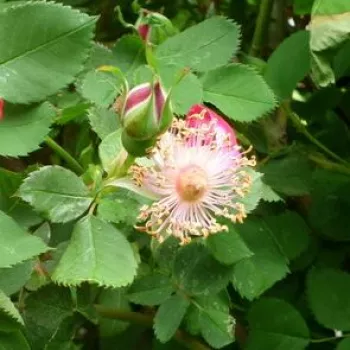
Bears small, flat, single flowers 1–4 cm across, typically 5–12 petals in airy clusters, non-remontant and blooming once, with spent blooms often retained to develop rose hips. |
| Colour data and phenology |
Colour shifts from dark ruby buds to bright flame-red, then carmine and dark maroon; very good colour retention with ARS code mr and RHS shades 53A–53B over the flowering period. |
| Fragrance and aroma |
Provides a very light, barely noticeable floral aroma; the visual display and wildlife value are its main features rather than strong perfume, suiting those not focused on scent. |
| Hip characteristics |
Produces abundant, vivid red, bottle-shaped hips about 15–25 mm across, forming a striking autumn and early winter display and adding wildlife interest where flowers once stood. |
| Resistance and winter hardiness |
Hardy to about -21 to -18 °C (H7, USDA 6b), with moderate resistance to powdery mildew, black spot and rust; prefers reasonable drainage and standard rose care in damp climates. |
| Horticultural recommendations |
Suited for parks, specimens, informal hedges and urban spaces; space plants 110–205 cm apart, allow light pruning, and monitor occasionally for pests and common fungal issues. |
EDDIE'S JEWEL brings natural wild-rose character, vivid seasonal colour and long-lasting hip display in a durable own-root shrub, an appealing choice if You would like relaxed structure and wildlife interest for years ahead.