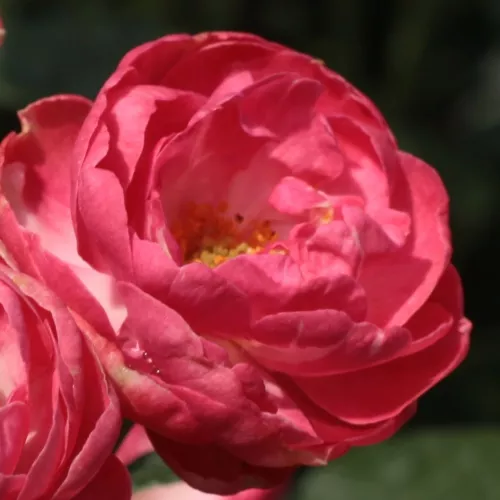
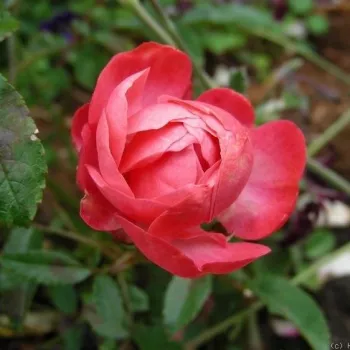
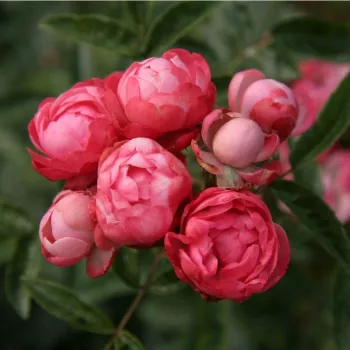
DICK KOSTER™ – pink flowerbed polyantha rose
Bring a touch of old-world charm to your front garden with DICK KOSTER™, a compact polyantha rose that loves Irish showers and shrugs off cool, damp weather. Its dainty, ball-shaped clusters of deep-to-powder pink blooms flower repeatedly, keeping beds and borders in soft colour from early summer into autumn with hardly any gaps. The tidy, low, glossy mound suits narrow cottage borders and Dublin terrace fronts where space is at a premium, while its moderate disease tolerance and own-root vitality make it a reassuringly easy long-term companion. In a well-drained, improved clay soil it quickly settles, and in a generous 40–50 litre container it forms a neat, low hedge of pompon blooms. Over the first years it quietly builds roots, then bushy shoots, before reaching full ornamental density, so you can enjoy reliable, low-effort, pink summer drifts in a real family garden.
Usage options
| Target area | Reasoning |
|---|
| Front-of-border edging in a small family garden |
Its compact, low, bushy habit and 35–50 cm height create a tidy edging that doesn’t overwhelm narrow beds, while repeat flushes keep colour going for much of the season, ideal for beginners who want a reliably pretty border, especially homeowners. |
| Mass bedding in Irish cottage-style planting |
Planting at 35 cm spacing forms dense, sparkling drifts of deep-to-powder pink clusters that read as a soft carpet from the path, giving that traditional cottage-garden look without complex pruning, perfect for romantic, colour-loving beginners. |
| Low hedge along a path or driveway |
At 40–60 cm spread and naturally rounded, this rose lines paths with a low, flower-laden barrier that remains neat with only light shaping, letting you define spaces elegantly in everyday family gardens, well suited to time-pressed urban gardeners. |
| Container planting on a terrace or doorstep |
In a 40–50 litre pot with good drainage, its compact roots and bushy top stay in scale, providing months of pink colour right by the front door with modest feeding and deadheading, a pleasant option for busy city-dwelling balcony owners. |
| Long-season colour in small urban front gardens |
Remontant flowering, with a particularly abundant second flush, keeps a steady show in short Irish summers, offering cheerful structure even on grey days and coping well with frequent light rain, which suits practical, style-conscious town-house residents. |
| Pollinator-friendly family beds |
Semi-double, 13–25 petal blooms offer moderately accessible pollen, so repeated clusters provide regular small-scale forage when mixed with other nectar plants, adding wildlife interest suitable for nature-curious children and their parents. |
| Low-maintenance, long-lived planting schemes |
As an own-root rose, it ages steadily without graft-related suckers, can regenerate from the base if cut back, and maintains its compact form with simple annual tidying, ideal for those wanting years of value with limited fuss, especially older gardeners. |
| Clay-soil family gardens with improved drainage |
Once planted in a sunny position with loosened, compost-enriched clay and surface mulch, its moderate disease resistance and tidy foliage cope reliably even in cool, moist Irish conditions, making it reassuring for cautious first-time rose buyers. |
Styling ideas
- Cottage-Edging Drift – Run a wavy line of DICK KOSTER™ along a path, interplanting with low catmint and lady’s mantle for soft pink, blue and lime froth – for romantic cottage-garden enthusiasts.
- Terrace-Rose Pot – Grow a single plant in a 40–50 litre clay pot with trailing thyme and ivy spilling over the rim for easy doorstep charm – for busy urban dwellers.
- Playful-Pink Border – Mix with Gypsophila ‘Festival Pink Lady’ and pale foxgloves for a light, “girly” pastel scheme that still feels natural – for families creating a child-friendly front garden.
- City-Front Ribbon – Use as a low hedge beneath taller shrubs like hydrangeas, giving year-round structure with a band of dependable pink in summer – for terrace-house and townhouse owners.
- Soft-Meadow Edge – Combine with Carex flacca ‘Blue Zinger’ and panicled phlox to blend lawn edges into a loose, airy flower-and-grass tapestry – for nature-oriented, low-fuss gardeners.
Technical cultivar profile
| Characteristic | Data |
|---|
| Name and registration |
DICK KOSTER™ is a polyantha bedding rose (bush, cluster-flowered), registered as ‘Dick Koster’, also exhibited under this name; part of the Rósra bhláthchlóis bedding collection. |
| Origin and breeding |
A sport of ‘Anneke Koster’, bred by D. A. Koster & Sons in Boskoop, Netherlands, introduced in 1929; an unregistered cultivar widely used as a reliable bedding polyantha. |
| Awards and recognition |
Holder of the Raleigh Rose Society Polyantha Spray Award (2001, USA), reflecting its enduring performance and appeal in exhibition-class cluster-flowered polyantha groups. |
| Growth and structural characteristics |
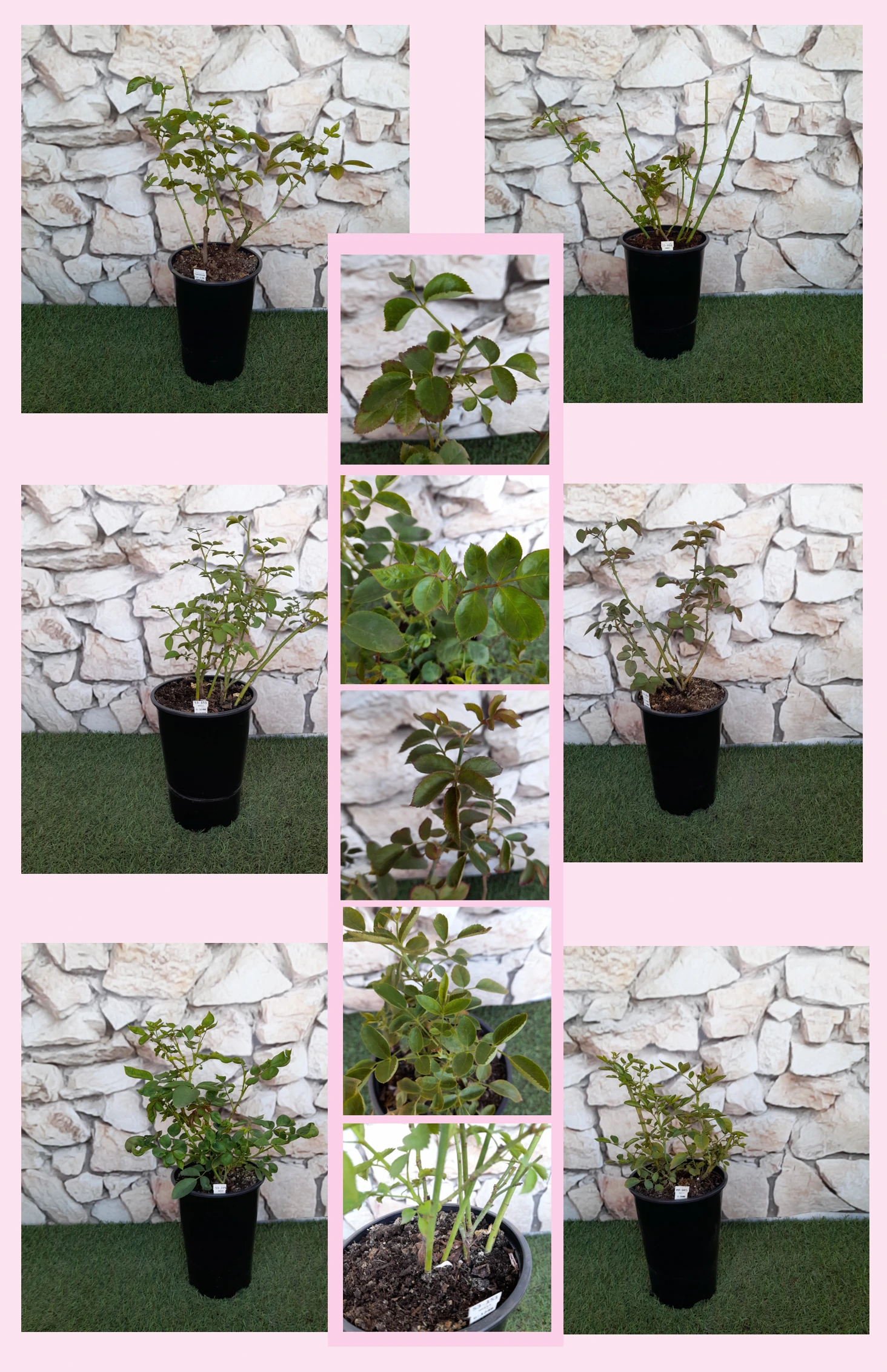
Compact, bushy shrub 35–50 cm high and 40–60 cm wide, with dense, glossy dark green foliage and moderate prickliness; self-cleaning is medium, occasional deadheading improves appearance. |
| Flower morphology |
Semi-double, ball-shaped pompon blooms, 1–4 cm across, borne in tight clusters; around 13–25 petals per flower, with remontant flowering and a notably abundant second flush in season. |
| Colour data and phenology |
Deep pink with slight raspberry tinge (RHS 55A outer, 55B inner), opening with a paler centre, maturing to powder-pink before petal drop; colour retention moderate with gentle fading as blooms age. |
| Fragrance and aroma |
Fragrance is very weak and barely perceptible; chosen more for its reliable flower production, form and colour effect in beds and borders than for scent-driven planting designs. |
| Hip characteristics |
Forms small, spherical orange-red hips 5–7 mm in diameter in moderate quantities, offering a discreet late-season feature without dominating the plant’s compact outline. |
| Resistance and winter hardiness |
Hardy to about −26 to −23 °C (H7, USDA 5b, Swedish Zon 4); disease resistance medium to powdery mildew, black spot and rust, benefiting from good air circulation and basic care. |
| Horticultural recommendations |
Best in full sun with fertile, well-drained soil; spacing 30–55 cm depending on use, 8.2–9.4 plants/m² for mass planting; water during prolonged dry spells and trim lightly to maintain compact form. |
DICK KOSTER™ offers compact long-season pink clusters, modest pollinator appeal and dependable own-root longevity, making it a thoughtful, easy-care choice for understated cottage and city gardens.